Nebraska lawmakers chosen for nonpartisan fellowship for Midwest political leaders
Jun 08, 2026 | 3:53 pm ET
Description
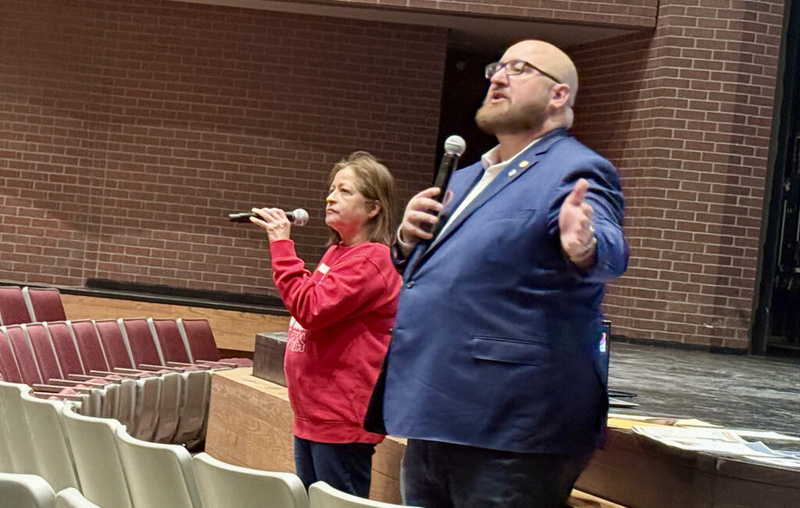
State Sen. Margo Juarez and State Sen. Dunixi Guereca, both of Omaha, hold a town hall in South Omaha in April 2025. (Cindy Gonzalez/Nebraska Examiner)
LINCOLN — Two Nebraskans are among 39 state lawmakers selected to participate in a bipartisan training program that each year “identifies and assists promising state leaders” in the Midwest.
Sens. Margo Juarez and Dunixi Guereca, both of Omaha, will gather with other participants July 17-21 in Madison, Wisconsin, for the Council of State Governments’ 31st annual Bowhay Institute for Legislative Leadership Development .
Lawmakers from Nebraska and 10 other Midwestern states and four Canadian provinces were chosen through a competitive, nonpartisan process. They’ll tackle a curriculum designed to develop leadership skills and analyze a variety of public policy issues. Juarez and Guereca are both Democrats in the largely Republican but officially nonpartisan 49-member Nebraska Legislature.
Iowa Sen. Amy Sinclair, co-chair of the institute’s steering committee, called the Bowhay Institute one of the premier training programs in the country.
“The legislatures in the region have benefited greatly from the skills their members have gained through this unique educational experience,” she said in a statement. “Many of the graduates now hold key leadership positions in their state.”
Since 1995, when the institute was founded, more than 1,000 lawmakers have graduated from Bowhay, including about 75 Nebraskans. Husker graduates include U.S. Sen. Deb Fischer, R-Neb., and Reps. Mike Flood, R-Neb., and Adrian Smith, R-Neb., who participated when they were members of the Nebraska Legislature.
In addition to Nebraska and the Canadian provinces, this year’s participants represent Iowa, Illinois, Indiana, Kansas, Michigan, Minnesota, North Dakota, South Dakota, Ohio and Wisconsin.
The institute was founded to help new legislators meet demands of increased policy responsibility being shifted to states and as many states face high legislative turnover and term limits.
The institute is named in honor of the late James Bowhay, longtime director of The Council of State Governments’ Midwestern Office. The program is funded through grants from foundations and corporate sponsors and an in-kind contribution from the council.
Lincoln, NE