Fate of Medicare, Medicaid emerge as key issue in 2nd District race
Jul 31, 2026 | 4:03 pm ET
Description
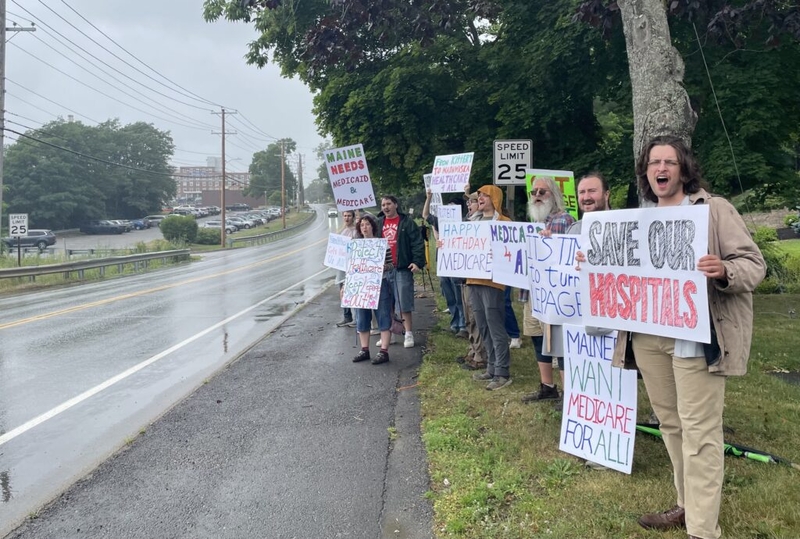
A dozen members of the Maine People’s Alliance gathered at Cascade Park — just down the street from Northern Light Eastern Maine Medical Center — to commemorate the 61st anniversary of Medicaid and Medicare on July 30, 2026. (Photo by Kaitlyn Budion/Maine Morning Star)
On the 61st anniversary of President Lyndon B. Johnson signing Medicaid and Medicare into law, the fate of the healthcare programs are emerging as a key issue for the candidates looking to replace Congressman Jared Golden.
Republican nominee Paul LePage has said he will protect Social Security and Medicare, but has a history of opposing Medicaid expansions while he was governor. In contrast, Democratic nominee Matt Dunlap is campaigning on support for Medicare-for-all.
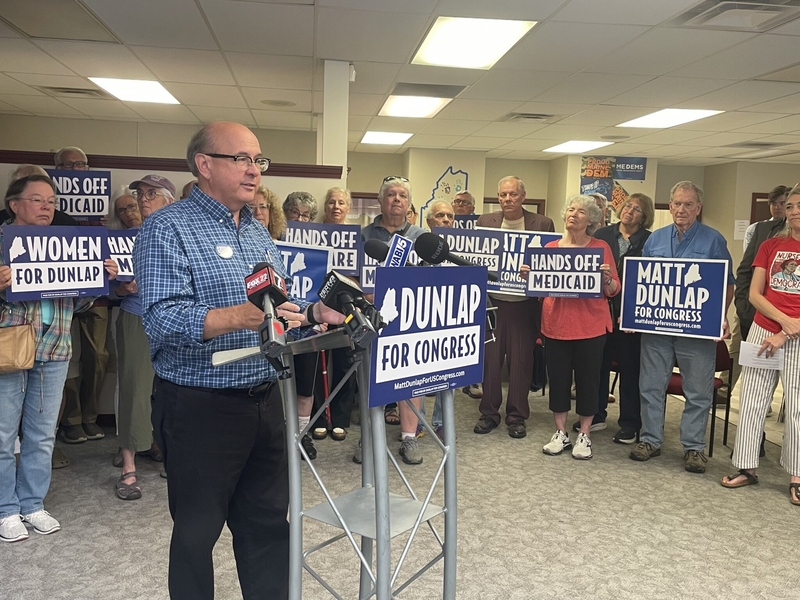
“There are some places where economic gain and greed just do not belong, and that is the care of our neighbors,” Dunlap said at a press conference in Bangor Thursday. “People should not have to live in fear of a slip and fall on the ice driving them into bankruptcy.”
Dunlap said healthcare is the issue he has heard about the most on the campaign trail. He said it’s important to celebrate the anniversary, but also focus on the future of Medicare and Medicaid, federal programs that elderly, low income and people with disabilities rely on. President Donald Trump’s administration has made large cuts to Medicaid in particular, leaving millions without healthcare.
“Where we go next is going to be a long effort to bring national healthcare — Medicare for all, universal healthcare, whatever you want to call it — so that people can finally get that burden off their shoulders of how they take care of themselves and their families,” he said. “So that they can use their energy and their drive and their abilities to make their lives better for themselves and their families, instead of constantly living in fear that they’re going to go bankrupt because they just got a diagnosis.”
Dunlap criticized LePage for his record on healthcare while serving two terms as governor. While in office, LePage oversaw dramatic cuts to the state’s healthcare programs, significantly reducing coverage for low-come adults.
He vetoed five bills that would have expanded MaineCare, the state’s Medicaid program. And after voters in 2017 approved a referendum to expand MaineCare with 59% support, LePage refused to implement it.
At the time, LePage said he was not obligated to expand the program until it was funded, but he vetoed a bill that would have funded the expansion. Several groups challenged LePage’s refusal in court, but the legal battles dragged the issue out until the end of his term.
The expansion only began Democratic Gov. Janet Mills took office in 2019, using her first executive order to implement it.
Dunlap also criticized LePage’s support for many of President Donald Trump’s healthcare policies passed in the massive 2025 government funding package. These included new Medicaid work requirements and other changes to eligibility impacting disabled and elderly people, unhoused people and some immigrants.
Maine legislators tried to make up for some of those cuts this session, but failed to pass a sweeping $250 million bill that would have reinstated some lost federal healthcare benefits at the state level.
“He mentioned that the Big Beautiful Bill was the greatest thing in the world for people in Maine, and I just don’t see it,” Dunlap said. “I don’t see how taking things away, resources away from our working families, does anything but drive them further into doubt and uncertainty.”
Brent Littlefield, spokesperson for LePage’s campaign, said in a statement that Dunlap, the former Maine secretary of state and current state auditor, has “failed to show he understands healthcare or government funding.”
He said, if elected, LePage will prioritize keeping hospitals open, and medical practitioners in Maine.
“Paul LePage has gone on record repeatedly with concerns that government-run healthcare programs will not properly reimburse healthcare facilities for their real costs and the chickens have come home to roost with hospital service impacts,” Littlefield said.
Last year, the advocacy group Protect Our Care estimated that 330 hospitals nationwide — including two in northern Maine — were at risk of immediately shutting down due to reductions in Medicaid funding included in congressional Republicans’ tax law.
Last year, national nonprofit Third Way estimated that Medicaid cuts would cost Maine hospitals more than $66 million per year in revenue, and $24 billion nationwide.
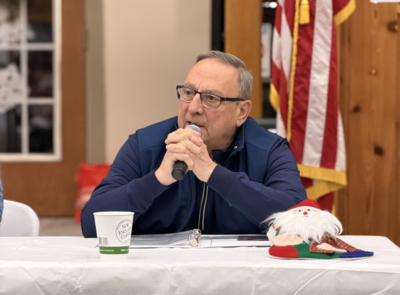
Littlefield also cited LePage’s record as governor, particularly when the state government paid off $750 million in debt to hospitals.
LePage’s 2011 supplemental budget included $70 million in state funds to pay the hospitals, which was matched by federal money resulting in $248 million in payments to dozens of hospitals.
He also signed a 2013 bill to pay off an additional $183.5 million debt to Maine hospitals, which drew an additional $307 million in federal matching funds. But Democrats at the time criticized LePage for stalling the payments, after he vetoed an earlier bill that would have made the payments and expanded Medicaid.
LePage blamed the hospital debt on the state’s 2002 Medicaid expansion under former independent Gov. Angus King, who now serves as the state’s junior U.S. senator, which was funded by a cigarette tax increase.
“Paul LePage literally saved hospital services, and healthcare, for Mainers,” Littlefield said. “Matt Dunlap has done nothing.”
Allegations of fraud
State and national Republicans have targeted Medicaid programs in Maine and elsewhere as having what they describe as extensive “waste, fraud and abuse.”
Both the state and federal government are investigating claims of improper payments made to some providers.
On a May visit to Bangor, Vice President JD Vance said the Trump administration will be cracking down on Medicaid fraud in the state. Vance urged the crowd to vote for LePage and other Republicans, while criticizing Democrats as difficult to work with.
Addressing the crowd before Vance’s arrival, LePage said, “JD Vance being here today is a warning shot to every fraudster, scam artist and corrupt bureaucrat protecting our broken system.”
In the most recent federal review, Maine’s Medicaid payment error rate was 2.4%, which is lower than the national average of 3.2%. And only about 0.1% of total program spending was confirmed by federal reviewers to be definitively incorrect.
Dunlap said Thursday that the claims of fraud are really meant as broad attacks on Medicaid.
“They’re not interested in rooting out fraud,” Dunlap said. “They’re interested in getting rid of Medicaid. So let’s not be fooled by the rhetoric that’s coming out of the administration.”
What others are saying
During Thursday’s press event, Dunlap supporters spoke about the importance of expanding Medicare and Medicaid, and said that Dunlap is the right candidate for the job.
“We can do better,” said Erin Oberson, a nurse with the Maine State Nurses Association, which represents 4,000 nurses and caregivers. “We can guarantee high-quality healthcare to everyone in this country. As we celebrate Medicare’s birthday, let’s remember that this fight is not over. Let’s take with us the spirit of the activists that won in 1965 and carry that into our fight today.”
Dr. Noah Nesin said in his 40-year career, he has seen how important Medicare and Medicaid is to help people afford healthcare. And he knows how devastating the recent federal cuts will be.
“The cuts coming out of Washington from the Big Beautiful Bill will strip coverage from tens of thousands of Mainers, push our rural hospitals even closer to the brink and stretch nurses, doctors and caregivers even thinner than we already are,” he said.
But Republican leadership has argued that LePage is the best option to tackle healthcare for Maine.
National Republican Campaign Committee spokesperson Maureen O’Toole said no one is stronger on healthcare.
“He kept hospitals open, ensured Mainers had access to care and did it all without raising taxes a single cent,” she said in a statement. “Meanwhile, out of touch Democrat Matt Dunlap wants to completely decimate Maine’s health care system by implementing socialist policies like government-run healthcare that undermine access to care.”
Maine Republican Party senior advisor Jason Savage echoed the sentiment.
“Democrats complaining about the current state of Maine’s healthcare after single-party control needn’t point fingers at Paul LePage, who left the system stabilized — all they have to do is look in the nearest mirror,” Savage said in a statement.
VP Vance rails against Democrats, immigrants at anti-fraud rally in Bangor
Just a few hours after Dunlap’s press conference, a dozen members of the Maine People’s Alliance gathered at Cascade Park — just down the street from Northern Light Eastern Maine Medical Center — to commemorate the anniversary.
They held signs, and as passing cars honked in support, chanted, “Protect our healthcare, no more warfare.”
Gabriel Veilleux, a field canvasser for the progressive political action group, said that a fifth of Maine residents in the 2nd Congressional District have MaineCare and the Trump administration’s cuts to Medicare and Medicaid are unacceptable.
“A lot of people can’t even afford insurance, and without it, they’re terrified of getting sick,” Veilleux said. “A lot of people on MaineCare are losing their coverage, and a lot more will lose coverage if the budget cuts keep unfolding the way they are. This is not the way that things should be, and Paul LePage in Congress would just make it 10 times worse for us.”
Thomas Poling, a field manager for the Maine People’s Alliance Bangor canvass team, said he speaks with people every day who are terrified of losing their coverage, or already can’t afford their insurance. And that LePage has already hurt Mainers when he was governor.
“We think that in his time as governor, he did a lot of damage to Maine’s social safety net and to social programs that lots and lots of people all over the state rely on,” Poling said. “And we think that to have him in Congress in Jared Golden’s former seat would be damaging not just for Maine, for the whole country.”
Eesha Pendharkar contributed to this reporting.
Augusta, ME