ER visits for tick bites on the rise throughout the Midwest
Jun 10, 2026 | 3:06 pm ET
Description
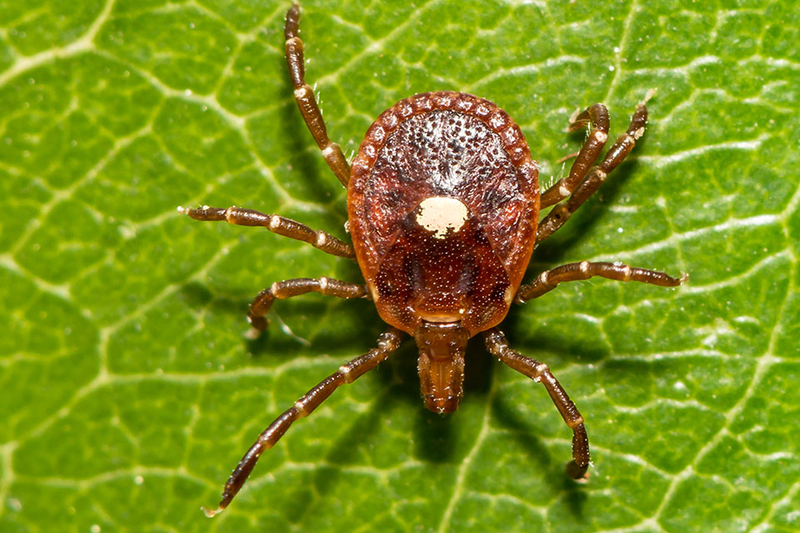
The Lone Star tick is responsible for most cases of alpha-gal syndrome, a red meat allergy that's appearing more and more in Kansas. (Kansas State University Research and Extension.)
TOPEKA — Emergency rooms in most parts of the United States saw more tick bite-related visits than usual in April.
For every 100,000 emergency room visits in the Midwest in April, 137 were for tick bites, according to the Centers for Disease Control and Prevention.
As of May, Midwest emergency rooms have seen 332 visits for tick bites per 100,000 visits in 2026, putting the region on track to surpass the 628 visits per 100,000 recorded in 2025. Instances of tick-borne illnesses in Kansas have been tracking higher since 2020, when illnesses dropped significantly, according to Kansas Department of Health and Environment data.
“While most tick bites do not result in illness, tick bite prevention remains the most effective way to reduce the risk of disease,” said Erin Petro, Kansas’ state public health veterinarian, in an April news release.
The most frequently contracted illness in Kansas is ehrlichiosis, a group of diseases most often spread by the lone star and blacklegged ticks, two of four common tick species in the state. Ticks in Kansas can also transmit anaplasmosis, Lyme disease, Rocky Mountain spotted fever, tularemia and alpha-gal syndrome. The state tracks all of these illnesses except alpha-gal syndrome, which is transmitted by the lone star tick and can cause a life-changing red meat allergy.
Other common tick species in Kansas include the American dog tick and the Gulf Coast tick.
Tick-borne illnesses in Kansas have varied in frequency over the past 10 years, according to KDHE data. Numbers trended higher before 2020, and while instances of illness have increased in recent years, totals are around half the pre-2020 numbers. There were 311 instances of tick-borne illnesses in 2019, 80 instances in 2020 and totals have ranged from 111 to 156 since then.
While ehrlichiosis has been the most commonly found tick-borne illness in the past five years, Rocky Mountain spotted fever, or spotted fever rickettsioses, was by far the most common before 2020.
Susan Nelson, clinical professor and veterinarian at the Kansas State University Hill’s Pet Health and Nutrition Center, said in April that regularly grooming pets can help owners to more easily find and remove ticks.
Alison Hinckley, an epidemiologist and Lyme disease expert with the CDC’s vector-borne diseases division, said in April that EPA-registered insect repellent and permethrin-treated clothing can help prevent tick bites. Hinckley recommended doing tick checks when spending time outdoors and removing any attached ticks as soon as possible.
“These simple steps can go a long way in protecting you and your family from diseases spread by ticks,” Hinckley said. “And if you develop a rash or fever in the days to weeks after a bite, or after being in an area with ticks, seek medical care promptly.”
KDHE recommends wearing bug repellent that contains DEET, picaridin, IR3535 or oil of lemon eucalyptus. Wearing long sleeves and long pants, tucking pants into socks, and walking in the center of trails can reduce the likelihood of tick bites. KDHE said a tick should be disposed of after removal by flushing it down the toilet, placing it in alcohol or placing it between two pieces of tape.

Topeka, KS