Eight children, two mothers and Shreveport’s unanswered ‘why?’
Apr 24, 2026 | 6:00 am ET
Description
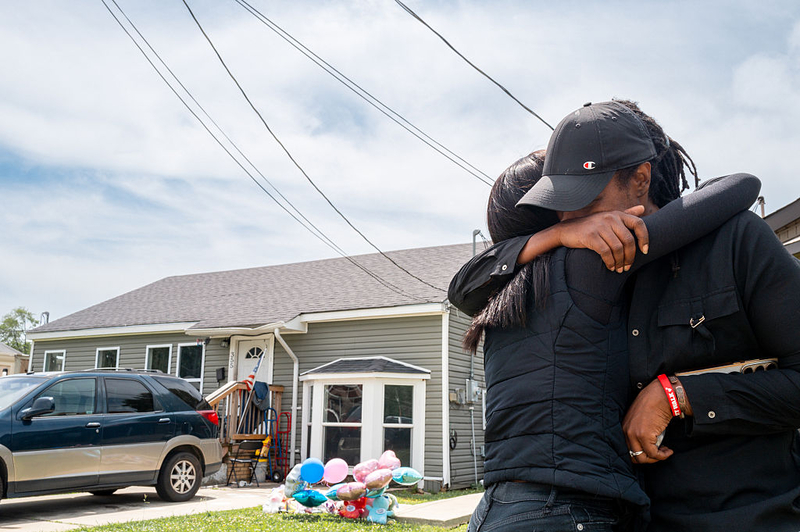
People grieve in front of the home where a shooting spree occurred on April 20, 2026 in Shreveport's Cedar Grove neighborhood. Eight children were killed and two women were wounded at two homes during a domestic violence incident in the early morning hours on April 19, according to local authorities. (Photo by Brandon Bell/Getty Images)
Sunday’s fatal shooting of eight children in Shreveport, and the figurative and literal pain of their mothers, will linger like a persistent heartbeat.
The city’s Cedar Grove community will still be wrestling with the disbelief that this happened where they live. And the question will remain for months and years to come: Why?
Why did eight children die at the hands of a man, the father of seven and uncle of one, who was supposed to protect them?
Why are two mothers, still recovering from their physical wounds, forced to grieve for their children far too soon?
Why haven’t been able to wake up and insist on meaningful change?
Their names must stay on our lips. Jayla Elkins, 3, Shayla Elkins, 5, Kayla Pugh, 6, Layla Pugh, 7, Sariahh Snow, 11, Khedarrion Snow, 6, Braylon Snow, 5, and Mar’Kaydon Pugh, 10
Five girls. Three boys. Asleep when Shamar Elkins, 31, walked in with an assault‑style weapon and shot them. One child reached the roof but couldn’t escape.
Family members told NBC News that Elkins was arguing with his wife, Sheneiqua Pugh, over divorce papers, after which police said he shot her, then drove to the home of Christina Snow, mother of his oldest children, and shot her multiple times.
Both women lay in hospital beds as neighbors lit candles a block away in remembrance for their children. Mother’s Day is three Sundays from now. For these mothers, there will be no cards, no small arms around their necks.
Relatives told the New York Times that Elkins’ wife had been warned for years: If she tried to leave, he would kill her, the children and himself. He kept the promise he made in rage.
In 2019, court records indicate Elkins pleaded guilty to a firearms charge and was sentenced to probation for 18 months. This could have been the moment when our criminal justice system restricted his ability to get another gun. It wasn’t.
Elkins was a member of the Louisiana National Guard for seven years but never deployed. His family told KTBS-TV he attempted suicide a few months ago and had sought mental health help from the Department of Veterans Affairs.
Cedar Grove will carry this burden longer than the nation will notice, but the neighborhood has had to rebuild its spine before.
In 1988, a riot broke out in Cedar Grove after 17-year-old Tamala Vergo, who is white, killed a Black man, David McKinney. Police said McKinney, 22, was an innocent bystander hit by gunfire after a botched drug deal at a convenience store parking lot.
The fuse for the riot had been lit weeks earlier when 20-year-old Jason Willis, a white man, killed Darren Lewis, a Black teen. Police said Willis was given the gun he used on the scene by his father, KTBS-TV reported. The neighborhood grew more combustible when charges were dropped against a Willis family member — just hours before the shooting that killed McKinney.
The people of Cedar Grove are why this story cannot be allowed to cycle out.
What links 1988 to today is not the violence itself; it’s the intervention point before the violence.
In 1988, it was when the justice system could have held the Willis family accountable.
In 2019, it’s after felony firearm conviction did not prevent Elkins from getting another gun.
And months ago, it’s when the VA could not help him through a mental health crisis.
Each time, the system had a moment to act. Each time, it didn’t.
What these public institutions owe Cedar Grove now is a full accounting of what was — or was not — in place to stop a vulnerable, volatile Elkins before he walked armed and agitated into a home of sleeping children early Sunday morning.
The 1988 riot led to the creation of the Shreveport Biracial Commission and helped raise a generation of Black civic leaders, including the city’s first Black mayor, Cedric Glover, in 2006.
This was the neighborhood’s answer to institutions that did not show up, but it cannot be their answer alone.
Eight children are dead. Two mothers are wounded. The institutions built with Cedar Grove’s tax dollars must stop waiting for the next name before they act.
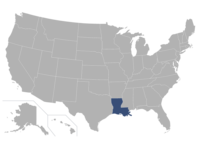
Baton Rouge, LA