As economic damage from climate change grows, NC experts urge ‘pre-recovery’ planning
Sep 30, 2026 | 4:14 pm ET
Description
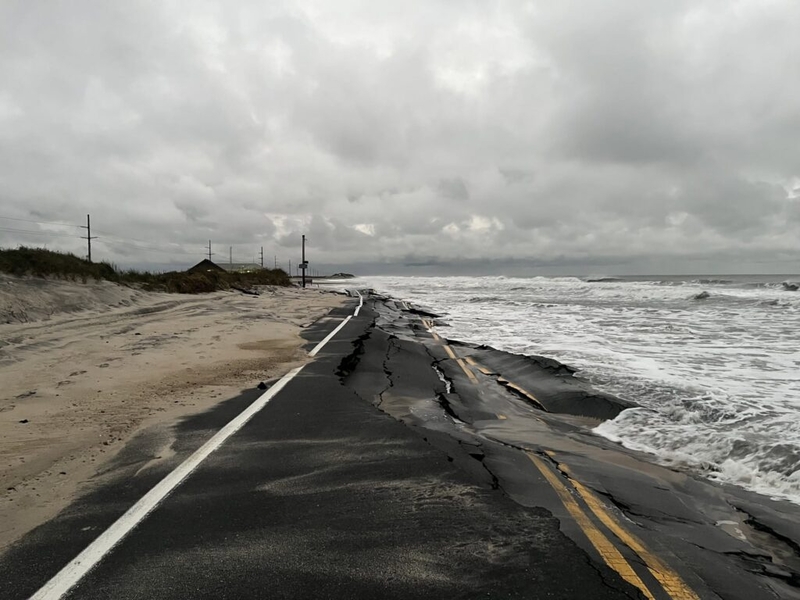
NCDOT crews will once again replace sections of Highway 12 after an early season nor'easter in Sept. 2026 heavily damaged the scenic roadway. (Photo: NCDOT)
When a slow-moving nor’easter battered the Outer Banks last weekend, the North Carolina Department of Transportation worked around the clock to remove broken asphalt, rebuild the dunes and shore up the vulnerable stretch of NC 12 near Pea Island.
It’s a scene that’s played out many times over the past few years.
NCDOT engineers estimated at a March hearing that over the last 15 years, the state agency has spent nearly $51 million to maintain the NC 12 “hot spots” in Dare County. Emergency repairs for last week’s nor’easter alone have been pegged at $2.5 million.
The emergency repairs won’t last – they never do. But they’re the only solution when residents are clamoring for a return to normalcy.
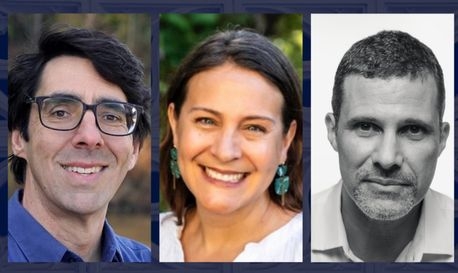
A trio of Duke University climate experts who met with journalists Tuesday said the early-season nor’easter, Hurricane Helene, and scorching summer temperatures all underscore the need for communities and governments to rethink their approach to the changing climate.
Brian McAdoo, a climate science professor, said last weekend’s events were especially unfortunate for the Outer Banks. The nor’easter coincided with a full moon that created extremely high tides.
“[The ocean] had no choice but to wipe out the road,” said McAdoo. “The road’s only a couple feet above sea level, so it’s going to get wiped out again.”
The road keeps getting rebuilt because it’s an economic engine, said McAdoo. While NC 12 is a frequent victim of ocean overwash, the scenic stretch is critical in bringing in an estimated $2.2 billion in annual tourism spending.
‘We’re dumping money into the ocean’: Outer Banks seeks state help for long-term NC 12 fix
But just because the roadway can be rebuilt over and over again doesn’t mean it should, McAdoo said. “I always wondered, why on Earth would somebody want to put a solid structure out on a mobile spit of sand that gets hit by hurricanes and nor’easter all the time?”
Duke’s Climate Leader in Residence is Victoria Salinas, a former FEMA administrator. She said many small and rural communities know where their problem areas are, but lack the resources to fix them.
“They don’t have engineers. They don’t have staff. They don’t have the capacity to do that,” said Salinas. “For others, it may be that they don’t have the revenue.”
That makes building resilience exceedingly hard in this country, Salinas said.
Mark Borsuk, a professor in civil and environmental engineering at Duke University, said the key is to recognize that communities do not need to predict the future perfectly to make good decisions.
“Rather than asking what exactly conditions will look like in 2075, we should really be asking which decisions are likely to work reasonably well across the range of possible futures that we might face,” said Borsuk.
Building back better
Salinas points to building codes as one area where state governments can increase safety from weather-related hazards.
For years North Carolina lawmakers have delayed efforts to strengthen building codes, reasoning that increased regulations would increase costs. They also pushed back on a statewide standard for steep slope construction.
Salinas said stronger building codes would have helped in the aftermath of Hurricane Helene, because FEMA rebuilds to meet existing local codes. “So the communities that have stronger codes actually will get additional resources.”
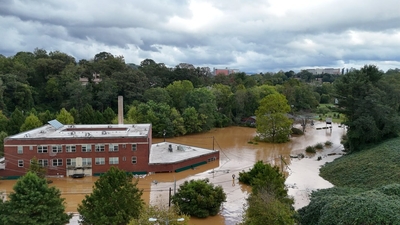
It may cost a little bit more to make a building safer, but it will be safer for the next several decades, she said.
“In a post-disaster setting like Helene in North Carolina, having an outdated code in place really reduces the collective leap forward to resilient recovery,” said Salinas. “It’s a huge opportunity for communities post-disaster to rebuild not for yesterday’s storms, but for the ones they know are coming.”
Borsuk says elected officials face tremendous pressure to restore homes and roads quickly after a climate-related disaster, so that’s not the ideal time to start debating resiliency.
“The planning needs to start early,” said Borsuk. “Communities need to ask themselves in advance of a disaster: What do we need to restore quickly? What should we rebuild differently? What might we decide not to rebuild at all in the same place?”
Charting a new path
McAdoo, the climate science professor, says poorer communities need more help with climate resiliency.
“We really need to start thinking about how we proactively invest in these smaller, rural, underfinanced communities and figure out clever ways of financing and getting resources to them and improving building codes from the ground up,” said McAdoo.
McAdoo said one community that’s getting it right is Enfield, North Carolina. The small Halifax County town, founded in 1740, has fewer than 2,000 residents, but its leaders have an ambitious vision to improve its aged energy grid.
When the U.S. Department of Energy terminated Enfield’s clean energy grant earlier in the year, Mayor Mondale Robinson and others secured nearly $300,000 in seed money from the nonprofit BuildUS foundation to pilot a geothermal energy system to reduce rising energy costs.
“The geothermal energy network will increase efficiency in the town using geothermal heat pumps,” said McAdoo on Tuesday. “There are insane capabilities to really reduce people’s electric bills here by up to 60% while also reducing carbon footprint.”
A weatherization hub will also offer residents do-it-yourself energy-efficiency workshops to reduce soaring utility costs.
McAdoo said Enfield is thinking proactively about the next climate crisis that isn’t on many people’s radar yet.
“After this year’s El Niño, there will be increased heating in the summer of 2027,” McAdoo said. “It’s really going to be the hottest summer on record.”
Raleigh, NC