Don’t turn our backs on our Haitian neighbors who’ve built a life in Ohio
Jan 29, 2026 | 4:30 am ET
Description
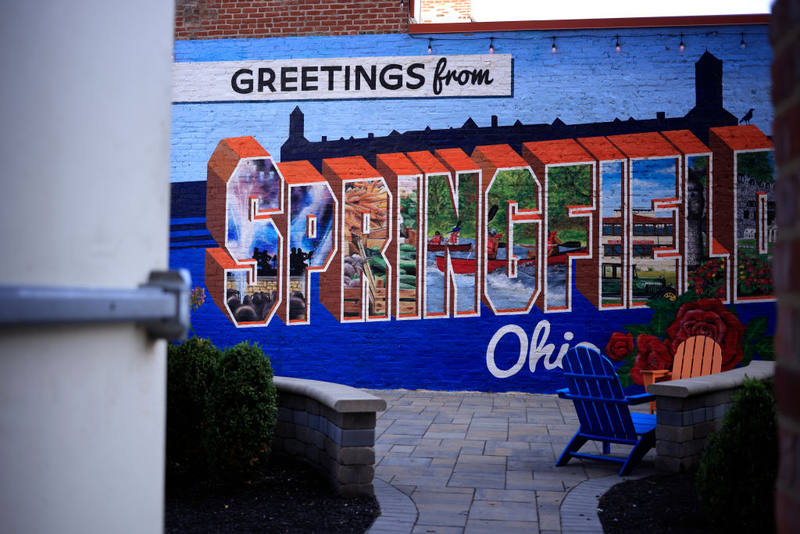
A mural is displayed in an alley downtown in Springfield, Ohio. (Photo by Luke Sharrett/Getty Images.)
The termination of Temporary Protected Status (TPS) for Haitians in the United States is set to take effect on Feb. 3. This decision will destabilize thousands of law-abiding families in Ohio — undermining local economies and endangering people who cannot return safely.
At present, TPS protects approximately 330,000 Haitians living in the United States.
These individuals have relied on TPS for legal status and security, and Springfield, Ohio is home to around 12,000 Haitians.
The scheduled termination of TPS will directly affect many of them, raising concerns about their future residency and stability.
It will also impact the Springfield economy. TPS holders are authorized workers filling existing labor gaps.
Ohio Gov. Mike DeWine has expressed concern about the consequences of Haitians no longer being eligible for employment, warning that “some of the economic progress that we have made, that Springfield has made, would go away.”
While manufacturing in Springfield will be hit the hardest with the ensuing labor shortage, logistics/warehousing, food service, hospitality, and residential housing will also experience significant negative effects.
Carl Ruby, senior pastor at Central Christian Church in Springfield, says that, with the upcoming labor shortage due to the termination of TPS, companies in Springfield are finding it difficult to make competitive bids for work.
The economic fallout could be catastrophic.
The Department of Homeland Security asserts that the decision to end TPS for Haitians is based on improved conditions in Haiti and the determination that it is safe for Haitians to return.
That determination has been widely disputed and has been challenged in court.
Haiti continues to struggle with severe political instability, widespread violence, and inadequate access to basic services.
These persistent challenges have led many experts and advocates to maintain that returning Haitians would face significant risks and hardships.
One of us (Viles Dorsainvil) is a Haitian pastor and missionary whose family remains in Haiti.
He says the administration’s claim that it is safe to return is simply false.
His family remains trapped in Haiti and has pleaded with him not to come back.
His brother, who pastors a church near the U.S. Embassy in Port-au-Prince, describes worsening conditions.
He says the gangs commit murder, have raped family members of his congregants, kidnap for ransom, and vandalize homes.
According to the U.S. Citizenship and Immigration Services (USCIS), the gangs have expanded “their influence and geographic reach,” have blocked roads into Port-au-Prince, and attacked the airport.
These gangs have more money and firepower than local police who have been weakened by corruption.
According to the United Nations, these heavily armed groups wield AK-47s, AR-15s, and Galil rifles — weapons largely trafficked from the United States.
Even the U.S. Embassy has severely limited operations, warning staff to remain indoors for safety.
Meanwhile, the collapse of Haiti’s economy has deepened dependence on family members living abroad.
Many Haitians rely on relatives with TPS in the United States to send money home for food, medicine, and survival.
The fear gripping Springfield’s Haitian community is palpable.
Parents worry about being torn from their children.
According to Casey Rollins, executive director of Springfield’s St. Vincent de Paul, deportations will lead to family separations and leave children without parents.
Casey has worked with the Haitian community in Springfield since 2016 and calls the uncertainty “heartbreaking.”
TPS was created by Congress in 1990 to protect people from countries facing armed conflict, natural disasters or other extraordinary conditions.
Revoking it while those dangers persist contradicts its very purpose.
The administration should re-evaluate the conditions in Haiti and the decision to end TPS for Haitian immigrants.
We come to this issue as people of faith.
In addition to leading the Haitian Community Help & Support Center, Viles serves as an elder at Central Christian Church, where he ministers to Haitian members alongside Pastor Ruby.
“Viles has preached more on Sunday mornings than anyone except me,” Ruby said.
Like so many immigrants who come to the United States, the majority of Haitians are Christians (87% identify as Christians – 52% Protestant; 35% Catholic).
Viles draws strength from his Christian faith.
“Haitians have never had a country to enjoy. There is an American dream, but there is no Haitian dream,” he said.
Our prayer is simple — that Haitians will be allowed to remain in Springfield, build a legacy, and continue contributing to the community they now call home.
It’s a prayer every American should echo.
Matt Bevere is a ministry consultant (Great Lakes Region) with the National Association of Evangelicals and lives in Canton, Ohio.
Viles Dorsainvil is a Moravian pastor, missionary, and co-founder and executive director of the Haitian Community Help & Support Center in Springfield, Ohio.
Columbus, OH