DNRC program builds wildland fire vehicles
Sep 15, 2026 | 8:37 am ET
Description
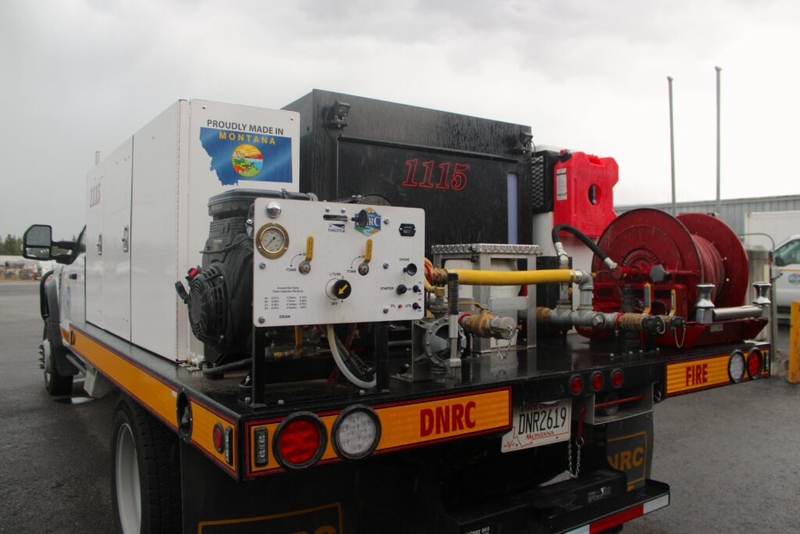
A Department of Natural Resources Type 5 wildland engine is pictured on Wednesday, Sept. 2, 2026 in Missoula, MT. (Jordan Hansen / Daily Montanan)
MISSOULA — One of the most common trucks in the State of Montana’s vehicle fleet — the Department of Natural Resources Type 5 wildland engine — is, in part, built in Missoula by some of the very same people who operate them.
The trucks, which are often equipped with water tanks and hoses and carrying initial response crews, arrive at the DNRC’s Equipment Development and Communication Center in Missoula as a cab and chassis. They leave as a fully operational wildland fire vehicle.
This saves the state money and helps them put vehicles into service suited to Montana’s landscape, said A.J. Angelo, a DNRC program manager for the Equipment and Development and Communication Center.
It’s also a key component of the state’s wildfire strategy, which combines county and state resources on larger incidents.
There are currently 257 Type 5 engines associated with the County Co-op program spread throughout the state. The direct work with the counties is important for the DNRC, programming it highlights often, and Angelo calls it the “backbone” of the state’s wildfire program.
The trucks and the crews who use them are often some of the first responders to wildland fires, and are responsible for helping tamp down hundreds of small fires per year.
“The basis behind our design and what we do is to keep the engines as simple as possible,” Angelo said. “And the reason we do that is so they can be used in our County Co-op Program and by rural fire departments across Montana.”
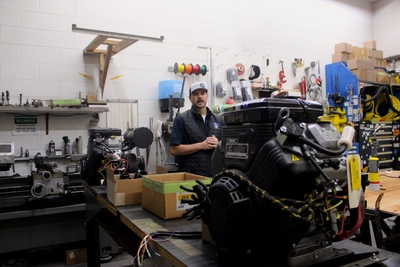
Many of the people who work in the Equipment Development and Communication Center program also are wildland firefighters themselves, Angelo said, meaning they’re using the same equipment they build.
That was exactly where Angelo started — as a part-time firefighter with the state.
“Very much like a lot of our mechanics, I grew up on a ranch and just am very much into building my own stuff,” Angelo said. “I’m very big into the off-road, four-by-four type of world. That just kind of drew me in. And now I’m here.”
Angelo added that a number of his coworkers have some pretty neat rigs and hot rods, and the job attracts people who hold a wide variety of technical skills.
“I think it’s more of a passion than anything,” Angelo added.
The fire program builds around 20 new trucks per year and works on a great deal more, servicing DNRC vehicles throughout the state. The facility in Missoula is large, connected to a broad swath of land the state has for several programs off Spurgin Road.
It’s funded and supplied through the federal government and money from the state. In 2025, the Legislature passed House Bill 833, which was signed by Gov. Greg Gianforte and funneled more than $60 million into firefighting operations in the state, including $800,000 into the Equipment Development and Communication Center.
It’s cheaper to build trucks this way than to buy a more expensive vehicle that might not specifically suit the needs of the state, DNRC staff said. A Type 5 wildland fire engine can run up to $300,000 and the state can build one for a third of that, with Angelo saying the cost is about $100,000 per vehicle.
“Everything we do in house really keeps those costs down,” said Brian Hall, who is the shop foreman for the Equipment Development and Communication Center.
Different vehicle bays throughout the facility are used for different stages of work. For starters, a custom bed is fabricated, storage is added, and the rig is painted. If a water tank is being put in the vehicle — the state uses 500 gallon water tanks in its Type 5 vehicles — the water system is also added.
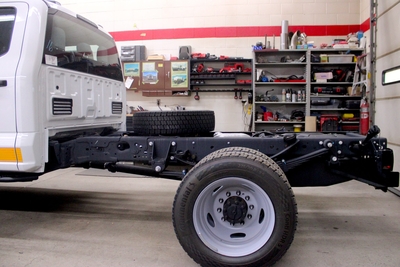
Start-to-finish, a truck can be built and put in service in about two work weeks.
The vehicles are also tested by the DNRC before being sent out around the state. Importantly, the state also works with all 56 counties through its County Co-op Program, lending and repairing state fire vehicles that are strategically spread throughout the state.
Maintenance on the vehicles is no small task either. Four staff members are spread regionally throughout the state for repairs and maintenance, but the trucks are designed with grabbing car parts at the nearest available automotive store in mind.
“The parts and pieces can almost all be acquired at your local hardware place or something like that,” Angelo said.
There are, of course, exceptions and some parts do have to be specially ordered, but they keep a pretty good parts stock, DNRC staff said, and offer the repair at no cost to whatever county the truck is in.
Generally, wildfires are first fought at the county level and if the incident becomes more severe, counties ask the state for help.
Those same counties are also eligible for two federal programs that the Equipment and Development Communication Center also runs that transfer excess federal equipment to states who then can divide it among fire agencies throughout the state.
Those two federal grants are the Forest Service Federal Excess Personal Property program and the Department of Defense Fire Fighter Program. The Department of Defense program has transferred more than $100 million in federal equipment to Montana, according to the DNRC.
The defense program — referred to as “FFP” — has sent the state military trucks, which they turn into Type 2 tactical water tenders with large water reserves.
More than two dozen of those Type 2 trucks are spread throughout the state, and several more military-style trucks were parked outside the DNRC’s building earlier this month, ready to be turned into more Montana wildland fire equipment.
“Our biggest focus is staying made in Montana,” Angelo said, “And saving the taxpayers as much money as we can.”
Helena, MT