Digital tools expedite road and bridge work repairs. Make them eligible for federal highway funds.
Jul 20, 2026 | 5:15 am ET
Description
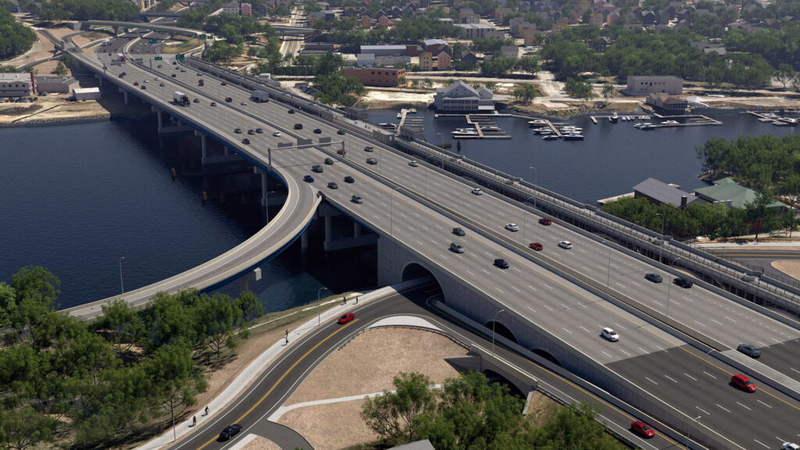
An aerial view of the rebuilt Washington Bridge connecting East Providence and Providence over the Seekonk River by computer generated graphics from modeling software. (RIDOT website)
Rhode Island may be small, but our traffic problems are huge. When the major Route 6/10 interchange or a bridge needs repairs, drivers pay the price. A single lane closure can back up commutes across half the state, turning a typical 20-minute drive into an hour-long ordeal. Because Rhode Island’s infrastructure is among the oldest in the country, repairing it is as constant as it is disruptive.
We know we need to fix our crumbling bridges and roads. But the slow, paper-heavy construction methods of the past aren’t the answer. We need to overhaul how we manage these massive projects behind the scenes.
Fortunately, a quiet but important shift in federal policy could soon give Rhode Island the green light to do just that.
Currently advancing through Congress with strong bipartisan support, the BUILD America 250 Act didn’t dominate cable news, but it is a massive potential win for public works. For years, state agencies have faced hurdles when trying to use federal highway dollars for anything other than physical materials. This proposed legislation would change the rules, formally clarifying that core federal transportation funds can, and should, be used to invest in advanced digital project delivery tools.
This federal shift couldn’t come at a more critical time for the Ocean State. Like much of the country, Rhode Island is grappling with a major shortage of civil engineers and project managers. Our public agencies are being asked to oversee historic levels of infrastructure investment with a shrinking workforce.
Upgrading to advanced construction software isn’t about replacing these workers with automation. It’s about throwing them a lifeline. By shifting away from physical blueprints, disjointed emails, and manual data entry, we can strip away the administrative friction that bogs down project timelines. Digital tools allow our engineers to work smarter, communicate more easily, and catch errors long before concrete is poured.
For years, state agencies have faced hurdles when trying to use federal highway dollars for anything other than physical materials.
We already have local proof that a digital-first approach is the only way forward. Take the situation with the Washington Bridge. As Brown University engineering professor Vikas Srivastava pointed out, our ability to maintain safe bridges relies on digital sensors and technology, not just visual inspections. RIDOT is already putting this into practice with a digital Weigh-in-Motion system to safely monitor stress on the remaining span in real time.
But monitoring is just the start. Now that physical, in-water construction is underway on the $427.9 million Washington Bridge rebuild, using collaborative, cloud-based systems is allowing contractors and engineers to review digital plans simultaneously. This isn’t just theoretical. Right now, engineers are building highly detailed digital models of 13 replacement bridges across the state so they can work out the kinks before a single shovel hits the dirt.
We’ve seen the payoff of this kind of prep work before. During the East Shore Expressway project, precise digital coordination allowed crews to build the new bridges off-site and literally slide them into place. They turned what could have been a year-long traffic nightmare into an 80-hour weekend job.
Much like we saw during the Route 6/10 interchange project, this kind of modernization cuts design review times from months to weeks. It prevents the kind of miscommunication that usually leads to budget overruns, and keeps complex projects moving forward without unnecessary delays for Providence drivers.
Federal initiatives like the Advanced Digital Construction Management Systems (ADCMS) program helped spark this digital transition in pilot phases, but the BUILD Act would make it a permanent fixture of how we can fund infrastructure moving forward.
As Rhode Island leaders and transportation officials allocate budgets for the coming years, they must prioritize investments in these digital platforms and the training required to use them.
We have a rare opportunity to move past the era of endless, sluggish roadwork. By fully embracing modern construction technology, Rhode Island can relieve the pressure on our engineering workforce, protect taxpayer dollars, and get commuters out of construction traffic and back home much sooner.
Providence, RI