Delaware General Assembly roundup: Housing reforms
Jul 14, 2026 | 6:00 am ET

Description
Photo courtesy of Spotlight Delaware
Why Should Delaware Care?
Housing costs are rising in Delaware, leading to strained budgets, longer commutes and an increase in the homeless population. This year, lawmakers tried to address this issue – which has become among the biggest facing people’s pocketbooks – by mandating local zoning reforms and easing road upgrade rules.
Lawmakers took steps this past legislative session to address the state’s shortage of affordable housing, despite pushback from localities.
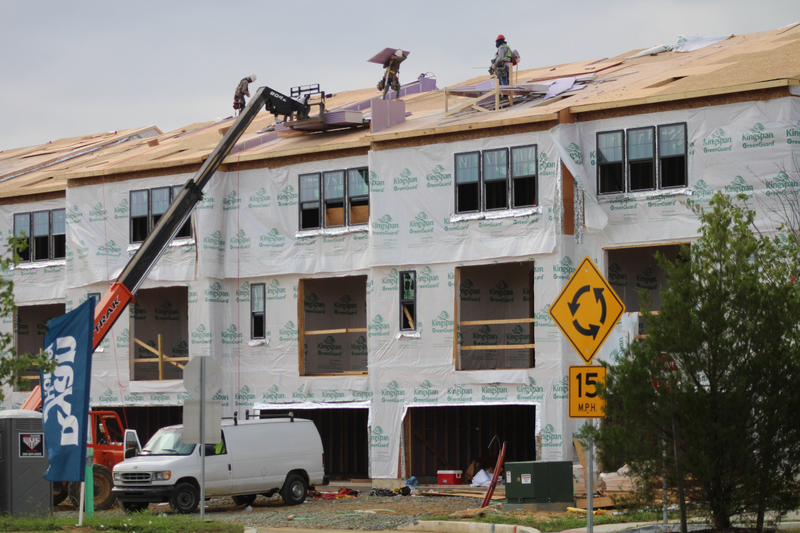
One controversial bill would encourage the construction of smaller, more dense housing as well as mandate that local governments choose from a menu of actions to lower costs. Those include reducing parking requirements in areas with bus service, and expediting approvals for income-restricted apartments and other affordable homes.
Another bill would speed up approvals for dense housing developments by removing a requirement that developers conduct traffic studies for certain projects. Instead, developers would pay a general traffic impact fee.
A third piece of legislation establishes a process for addressing consumer complaints about home improvement fraud.
There is a general consensus among lawmakers and advocacy groups that building more houses and maintaining existing ones could push prices down. A 2023 study conducted by the Delaware State Housing Authority reported that Delaware is short almost 20,000 rental homes for households that earn less than half the region’s median income.
That study also showed that half of renters in the state are defined as “cost-burdened,” meaning they pay more than what they can reasonably afford for housing.
While legislators sought to encourage new housing, they notably did not pass legislation to prevent Delaware police from arresting or fining homeless people for sleeping in tents or parked cars – or otherwise lingering in public places.
Gov. Matt Meyer’s policy director John Kane quietly pushed back against the bill before it came up for debate, citing “property rights concerns,” the potential for lawsuits against cities, and the possibility of jeopardizing federal housing dollars.
Common-sense reforms or seizing local control?
The most controversial and consequential housing bill the legislature passed was Senate Bill 23, dubbed “The Housing for Every Delawarean Act,” which would require most localities to increase housing density and adopt other measures to make homes more affordable.
Sponsored by Sen. Russ Huxtable (D-Lewes), Senate Bill 23 primarily reforms state requirements for comprehensive plans — which are roadmaps for future growth the state requires counties and municipalities to update every 10 years.
Comprehensive plans can have enormous impacts on what is and isn’t allowed to be built because it guides zoning changes, transportation investments and natural resource protection.
Under the bill, counties, cities and towns with a population more than 2,000 residents would have to add an affordable housing plan to their comprehensive plans.

“This bill helps ensure those plans lead to action,” Rep. Kendra Johnson (D-Bear), the bill’s cosponsor, said.
That affordable housing plan would have to increase the maximum density of residential areas and remove barriers to constructing smaller houses, such as townhomes and duplexes.
Senate Bill 23 lists nearly a dozen other measures meant to make housing more affordable or easier to find. Local governments would have to choose at least five of them to include in their plan.
Those measures include waiving impact fees for income-restricted housing, allowing more transitional housing and speeding up the approval process for affordable homes.
The stated goal of the bill is to make 20% of a municipality or county’s housing affordable. Delaware’s State Housing Authority would release annual reports on the progress towards that goal.
Many local government officials opposed Senate Bill 23 because they saw it as part of an erosion of local control, a long-running point of tension between local governments and the Delaware legislature.
But Meyer indicated that he supports the bill, meaning it will most likely go into law in the coming weeks.
Fewer traffic studies, more impact fees
The legislature also passed House Bill 450 last month, which is designed to expand on Meyer’s recently-created permit accelerator for affordable housing and other priority projects.
The bill would raise the bar for when the state Department of Transportation, counties and municipalities could require traffic impact studies.
The new threshold for whether the study would be required is an additional 500 car trips during peak travel hours.
Currently, whether a traffic study is required is based on how many car trips a development would generate throughout the entire day.
The bill also requires DelDOT to establish and collect transportation impact fees that would fund off-site road improvements and other transportation infrastructure upgrades. The revenue from those fees would have to be spent in the same county they were collected.
It also establishes a 2% surcharge on that fee that would go towards open space and farmland preservation, as well as coastal restoration.
Meyer has not said whether he supports the bill.
Home contractor complaints
Finally, both chambers of the legislature unanimously passed House Bill 89, which establishes a mandatory mediation process when consumers complain to the Delaware Department of Justice Consumer Protection Unit about home contractors.
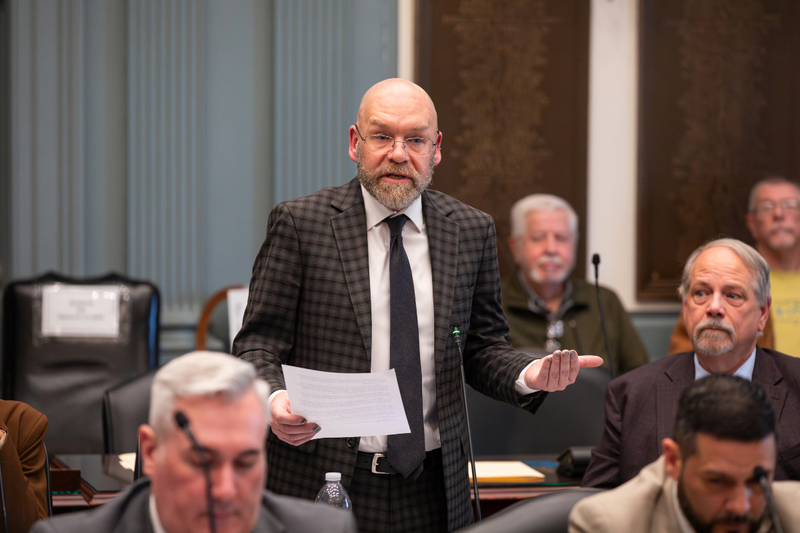
The bill’s prime sponsor, Rep. Eric Morrison (D-Glasgow), said some home contractors in Delaware take advantage of the elderly, individuals with disabilities and other underserved communities.
Morrison said the customer protection unit currently does not have the capacity or a formal process to address home improvement fraud complaints.
The bill would establish a process to address these complaints and allow the state DOJ to hire a lawyer and two staff members to implement that process.
Meyer has not said whether he supports this bill, either.
Dover