Decision on potential $2.7B sale of SC nuclear reactors could be 2 years away
Jul 07, 2026 | 10:05 am ET
Description
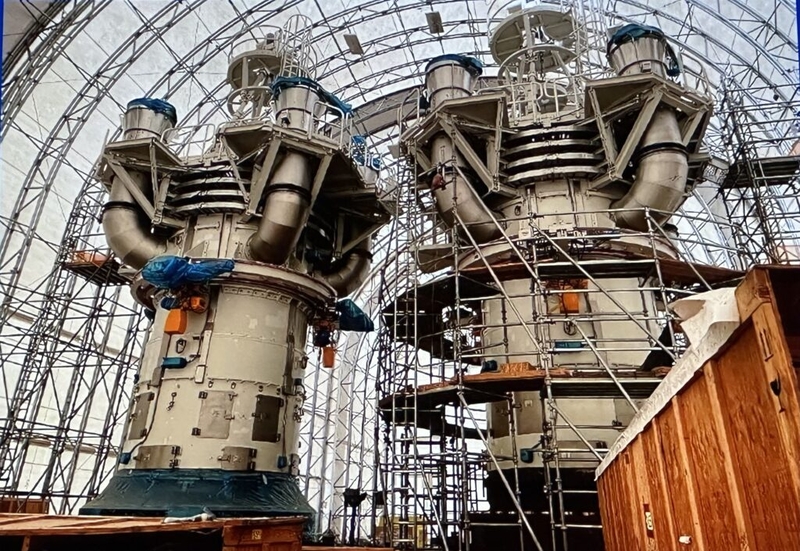
Nuclear reactor assemblies pictured Sept. 12, 2024, in storage at V.C. Summer nuclear site near Jenkinsville in rural Fairfield County, South Carolina. (Photo courtesy of S.C. Nuclear Advisory Council)
South Carolina’s state-owned utility company set a key deadline for the potential $2.7 billion sale of a pair of partially built nuclear reactors in the Palmetto State.
Santee Cooper will know by the end of March 2028 whether the deal to revive the state’s failed nuclear expansion will officially go through.
The utility set the final decision deadline with New York investment firm Brookfield Asset Management late last month for the purchase of two partially built nuclear reactors at the V.C. Summer nuclear plant in Fairfield County.
That means the payment, which Santee Cooper plans to use to remove reactor-related debt from customers’ power bills, could be at least 21 months away. That’s if Brookfield ultimately signs off.
Under the negotiated terms, Santee Cooper will maintain an ownership interest in the reactors of up to 25%. This would give customers access to the power the reactors would produce if completed.
Leaders of South Carolina’s electric cooperatives, which make up Santee Cooper’s largest customer base, say they’re remaining “cautiously optimistic.”
“We want to make sure that the risk is truly protected as Santee Cooper and Brookfield pursue this endeavor,” said Cole Price, executive vice president of member services at Central Electric Power Cooperative. “Everything that we see in here would suggest that the risk is being handled appropriately.
Financial backers call VC Summer restart a ‘no brainer’ for the future of nuclear energy
“The due diligence, the site visits, and really the amount of effort that’s being put into it, seems like they’re doing everything that critics might argue should have been done the first time,” Price said.
Santee Cooper and the now defunct South Carolina Electric & Gas started construction on the two first-of-their-kind nuclear reactors alongside an existing unit near rural Jenkinsville in early 2013. But the project was riddled with delays, cost overruns and fraud that led to multiple federal convictions of former executives.
The utilities abandoned the plant’s expansion in summer 2017, but not before jointly spending $9 billion on the reactors that never produced a single megawatt.
Santee Cooper’s share of the debt was $3.6 billion, which customers so far continue to pay for on their monthly bills. The cooperative customers’ cover about 70% of the cost, Price said.
The Brookfield deal could erase all but $1 billion of that. And Santee Cooper customers won’t bear any further construction costs beyond what they’ve already paid.
“That comes off co-op members’ bills, Santee Cooper’s members’ bills right away, as soon as that payment’s made,” Price said.
But a lot of work remains between now and then that could easily sideline the deal.
The project must still go through feasibility, engineering and other due diligence studies, as well as the federal regulatory process to license the reactors. And they need to find a company willing to operate the reactors should they get built.
“There’s a lot involved in here,” Mike Finissi, Santee Cooper’s chief operations officer told the utility’s governing board members at their June 26 meeting.
Brookfield also plans to apply for loans from the federal government to help finance the project.
Meanwhile, the U.S. Department of Energy announced last month it would finance a portion of up to five large-scale nuclear projects at $3.5 billion each.
The $17.5 billion in so-called American Nuclear Supply Chain Loans aims to incentivize the development of new nuclear reactors in the country by making it easier to obtain hard to get parts.
Under the terms of the loan, Westinghouse, a subsidiary of Brookfield and the designer of the reactors, would have to chip in $500 million, as would the qualifying energy company that applies.
It is unclear whether the V.C. Summer expansion would qualify or if Brookfield plans to seek financing under a different Energy Department loan program.
Brookfield plans to file loan applications at the end of this year and at the end of April 2027.
An initial cost estimate for the project is expected at the end of next year, Finissi said.
Even if everything goes according to plan, Price said, “it’s going to still be a minute before those units come online and they’re producing power.”
“There’s still a long road ahead,” he said. “Let’s be realistic and have managed expectations about what that means.”
Still, Price said, if Brookfield can manage to turn the 2017 fiasco into a benefit for the state: “That’s a big win if the risk is handled correctly.”
Columbia