Death row inmate facing Wednesday execution in Georgia makes final pleas for a reduced sentence
Sep 15, 2026 | 7:31 pm ET
Description
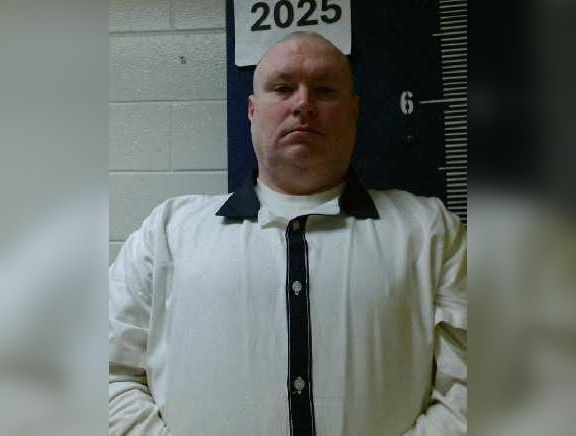
Death row inmate Stacey Humphreys is scheduled to die by lethal injection Wednesday. Photo courtesy of the Georgia Department of Corrections
The fate of convicted murderer Stacey Humphreys is in the hands of a Cobb County judge after the state Board of Pardons and Paroles denied a clemency request Tuesday.
Humphreys, 53, was convicted in 2007 of the kidnapping, robbery, assault and murder of Cyndi Williams and Lori Brown, real estate agents working in a model home in a new subdivision in Cobb County. Prosecutors said Humphreys forced the women at gunpoint to strip and tell him their PINs before killing them and withdrawing money from their bank accounts. He did not deny committing the crimes.
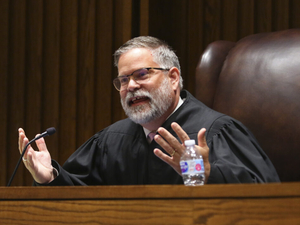
Cobb County Superior Court Judge Tyler Browning is set to rule on whether Humphreys is entitled to a hearing under a new state law designed to help victims of abuse. The Georgia Survivor Justice Act, which was signed into law by Gov. Brian Kemp last year, received broad bipartisan approval in the state Legislature. Under the new law, some defendants can petition for reduced sentences if they were the victim of severe abuse that led to the crime.
Humphreys’ attorneys argued that Humphrey experienced extreme abuse as a child, including an injury to his skull, cigarette burns, neglect, exposure to drugs and alcohol and serial sexual abuse from his great-grandmother.
Experts testified in Humphreys’ original trial that his difficult childhood contributed to his mental illness and criminal behavior.
“Homicides don’t occur out of the blue,” said Brian Kammer, an attorney representing Humphreys, in court Tuesday. “They often happen in the context of people who have suffered severe abuse and violence in their growing up years.”
“I think what the Legislature’s responding to, that survivors of abuse are not getting that abuse recognized as the severely devastating problem that it is,” he added.
Prosecutor Sabrina Graham with the Georgia Attorney General’s office told the judge that the law was not intended for defendants like Humphreys but for people who retaliate against their own alleged abusers.
“The purpose, again, was to give victims of domestic violence who harmed the people who abused them a chance to come back and say, ‘This is what happened,’” she said. “And that makes sense. That’s a laudable goal. It was not to give people another chance to present mitigating evidence that they already presented at trial and then ask the court to re-sentence them based upon that.”
In a phone call with the Georgia Recorder, the bill’s author, Blairsville Republican state Rep. Stan Gunter, agreed with Graham.
“The intent was for if they retaliated against their abuser or if the abuser coerces them into participation in a criminal act by threat and they go along with that,” said Gunter, who chairs the House Judiciary Committee. “That’s mainly what it was for. It was not for somebody that had been abused 20 years ago or more and committed a crime because of, as they allege, that abuse.”
Humphreys is set to be put to death by lethal injection Wednesday evening.
If the execution goes through as planned, Humphreys will be the 78th person executed in Georgia since 1983, when the state resumed the death penalty after a 1972 U.S. Supreme Court decision temporarily paused executions nationwide.
Executions were again paused during the COVID-19 pandemic, and no Georgia inmates were put to death between January 2020 and March 2024.
Claims of a tainted juror
Anti-death penalty advocates argue that Humphreys did not receive a fair hearing during his trial for the 2003 murders.
According to U.S. Supreme Court documents, one of Humphreys’ jurors did not disclose that she had been the victim of a similar attack. The jury foreperson said that juror “had her mind made up” from the beginning that Humphreys deserved to die and would not consider a life sentence.
Jurors said that they voted 11-1 for a life sentence without the possibility of parole, but deliberations broke down when the holdout screamed and threw photographs of the victims at jurors. She also falsely told fellow jurors that if they did not reach a unanimous verdict, Humphreys would be released on parole and allegedly altered a note from the foreperson to the court stating they were unable to come to a unanimous decision.
Justice Sonia Sotomayor wrote that the juror’s actions “constitute a likely violation of Humphreys’ Sixth Amendment right to an impartial jury” in a dissent to a Supreme Court decision declining to hear the case, in which she was joined by Justices Elena Kagan and Ketanji Brown Jackson.
“One juror’s lies and intimidation are the only reasons for Humphrey’s death sentence,” said Lauren Luxenburg, director of Georgia Conservatives Concerned, a coalition of right-leaning Georgians who oppose the death penalty, in a statement before the decision was announced. “The Board should commute Mr. Humphreys’s sentence accordingly — not as an act of leniency, but because Georgia’s authority to impose its most extreme punishment rests entirely on getting the process right. Here, it didn’t.”
A reduced clemency board
Advocates have also criticized the clemency process. Humphreys’ execution was postponed last year amid claims that two board members had conflicts of interest.
A Fulton County Superior Court judge ordered board member Kim McCoy to recuse herself from the hearing. She served as director of the victim witness unit for the Cobb County district attorney’s office from 1999 to April 2024, where she helped victims and their families, including the families of Williams and Brown.
The judge also considered asking Board of Pardons and Paroles Vice Chair Wayne Bennett to recuse himself but did not do so. Bennett was previously sheriff of Glynn County, where Humphreys’ trial was held because of pretrial publicity.
Bennett told the judge his department was involved with housing Humphreys, transporting him to and from the courthouse and with managing the jury, but that he had no personal interaction with Humphreys.
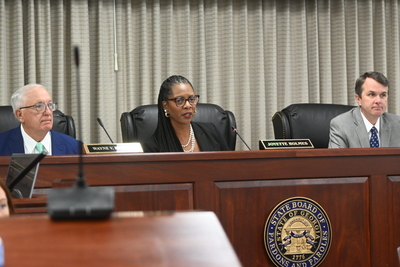
Georgia law requires three votes to commute a sentence, and Georgians for Alternatives to the Death Penalty executive director Vanessa Griddine-Jones said limiting the pool to four board members means Humphreys had to meet a higher threshold than any other death row inmate.
“There’s supposed to be five, and five people should be up there to make the decision, not four,” she said. “It essentially gives him a no vote from the start.”

Atlanta, GA