In Dearborn, a growing Muslim community shapes how Eid is celebrated
Mar 20, 2026 | 6:40 am ET
Description
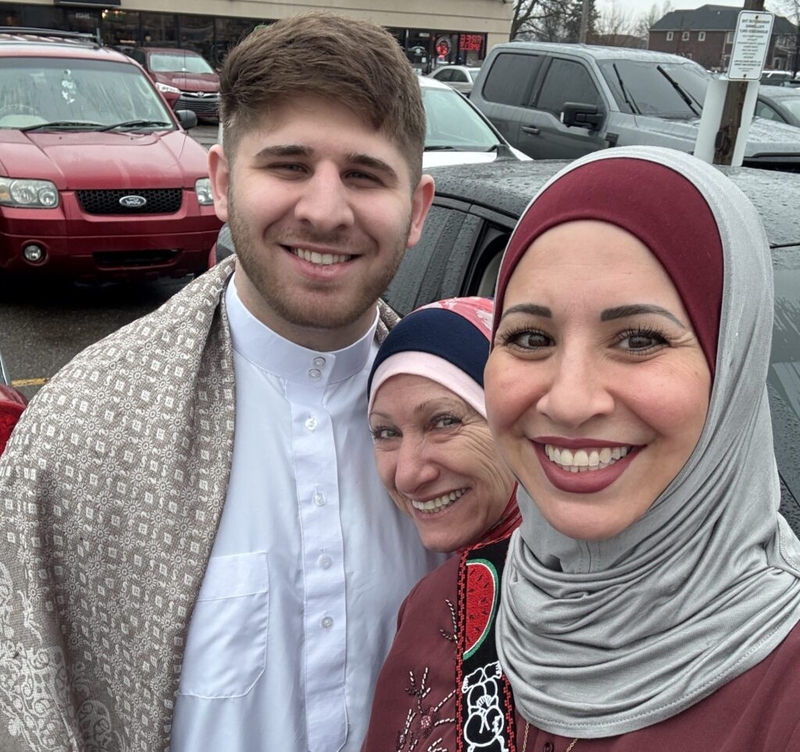
Suehaila Amen (at right) smiles with her mother and nephew outside the Islamic Institute of America on the morning of Eid al-Fitr. The feast marks the end of Ramadan, a thirty-day period of fasting during daylight hours for muslims. | Photo from Suehaila Amen
People start to file into the expansive room, claiming their spots before the crowd rushes in.
Allahu akbar, or “God is great,” echoes through the hall.
Kids weave in and out of the lines, giggling as they chase each other through the rows.
The chant then continues, La Ilaha IllaAllah, “There is no one worthy of being worshipped but Allah.”
Women embrace old friends and pick up conversation with new ones, passing time as they wait, while men gently hum the Takbeerat, the chant saved for this day.
Allahu Akbar.
A sea of color fills the hall as rows of people pack together, feet lined up and shoulders brushing.
Wa Lillahihil Hamd, “All praise belongs to Him.”
The Imam centers the microphone, raises his arms, and Eid prayer begins.
Eid al-Fitr marks the end of Ramadan, a sacred month of prayer, Quran, fasting, and charity for Muslims. Celebrated by billions around the world, Eid is a time of joy, reflection, and connection, filled with diverse cultural traditions and meaningful gatherings.
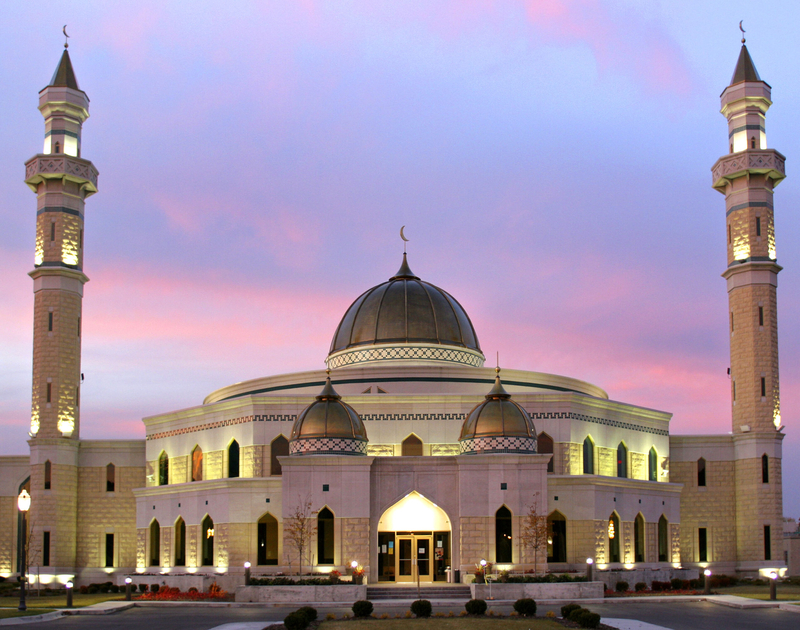
Dearborn, home to one of the highest concentrations of Muslim residents in the United States, brings its own distinct spirit to Eid celebrations.
The deep-rooted Muslim presence is reflected not only in community traditions, but also in city policy. In 2023, Dearborn became the first city in the United States to recognize Eid as a city-wide holiday, giving municipal employees a paid day off.
“Instituting Eid al-Fitr as a City holiday is a reflection of our commitment to a Dearborn that works for everyone. This decision honors the significance of the holiday for our community and ensures that our workforce can celebrate with their loved ones without having to choose between their faith and their career,” Abdullah H. Hammoud, the mayor of Dearborn, said.
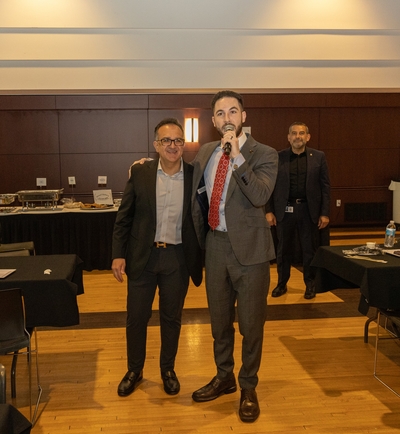
For many families in Dearborn, cultural holiday celebrations start long before the mosques fill for prayer on Eid morning.
“It starts the night before, where my family will get together and make Kleicha,” Ghadeer Alrubaye, a Dearborn native, said. “Ever since I was a kid, we’d do this. The night before, we make Kleicha. The morning of, we bake them and we go to the mosque.”
Kleicha, a traditional Iraqi cookie often stuffed with dates, coconut, or walnuts, is an Eid staple for many Dearborn families.
Khawla Obahi, a Detroit local who moved to Dearborn a few years ago, also starts her Eid preparation with desserts.
“About two to three days before, we start making the Eid cookies,” she said.
Obahi’s family makes Kaak, a Yemeni dessert left plain or stuffed with dates. The family also makes Basboosa, a moist cake soaked with rose water or orange blossom water.
Her family often makes the cookies a few days before Eid, and then they sit, encased in plastic wrap, until the holiday.
“We put them on the display platters and then have them in Saran wrap and they sit on the table. So for about three days, you’re just looking at all the sweets and desserts for you, but you’re not allowed to touch. It’s like the forbidden table,” she said.
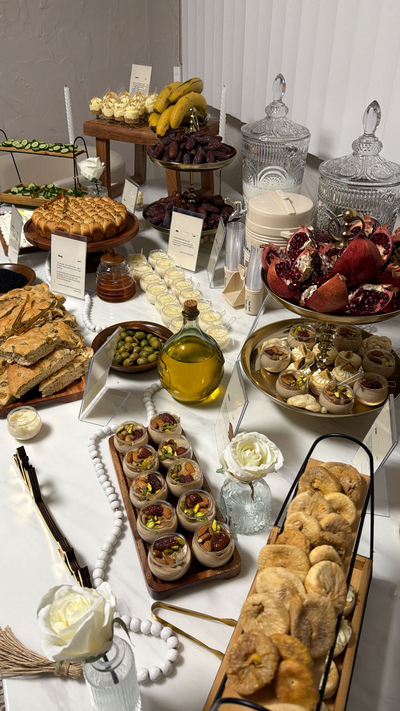
On Eid morning, Obahi can finally tear back the plastic wrap and bite into the smooth dough before rushing to the mosque.
Eid morning can only be described as “hectic,” Obahi said.
“It’s always a very busy, busy morning. I can never look back and say that it was just a smooth morning for us. It’s never a smooth morning,” she said.
Her family scrambles out of the house, arms filled with goody bags made the night before for children at the mosque, to arrive in time for Eid prayer.
There are multiple Eid prayers to accommodate for the large Muslim population in the city.
“One of the biggest issues is that there’s nowhere big enough for the community,” Obahi said. “The community just keeps growing, and so you have to accommodate in any sort of way.”
Dearborn is home to many mosques, including The Islamic Center of America, the largest mosque in North America.
The American Moslem Society, the oldest mosque in Michigan and one of the oldest in North America, is also housed in Dearborn.
I watched the way the community grew and flourished and started to encompass more activities as our community grew exponentially.
The Islamic Institute of America is another popular location for Eid prayer. The community grew so fast that the center opened a second location, which they hope will limit overflow from Eid prayer, according to a representative from the mosque.
Suehaila Amen, a local who grew up in Dearborn, witnessed the growth firsthand.
“I grew up in a Dearborn that was diverse in the 80s and 90s. And then as the community continued to expand and more Arabs were coming and more Muslims were coming to the community, we watched the change of traditions and activities,” she said.
As the community grew, so did the scope of celebrations, which Amen said have expanded from attending mosque and then visiting with family and eating together, to now having Eid fairs and bazaars.
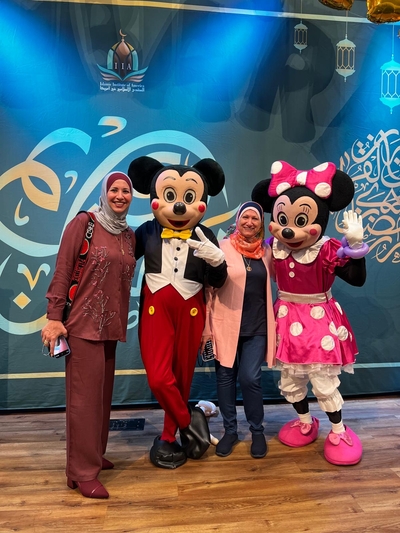
“I watched the way the community grew and flourished and started to encompass more activities as our community grew exponentially,” Amen said.
Other mosques in the city have experienced similar bursts in attendance as the Dearborn Muslim population grows. Despite the crowd, the mosque serves as a community hub for many Muslims celebrating Eid in Dearborn.
“It’s been really nice the last couple of years to go to the mosque with my family and you just see everyone from the community there. People that you haven’t seen in years from high school or people in college that have moved out, you kind of see everybody,” Alrubaye said.
Many people spend hours catching up in the mosque after prayer, talking to old friends and enjoying the holiday with their family.
“You’re just trying to catch up with everyone. It’s from Eid to Eid that we see each other at times,” Obahi said. “We all talk like we’ve never talked before or seen each other in years.”
In Dearborn, many view the mosque as the epicenter of the community and a place to develop spiritual strength in difficult times.
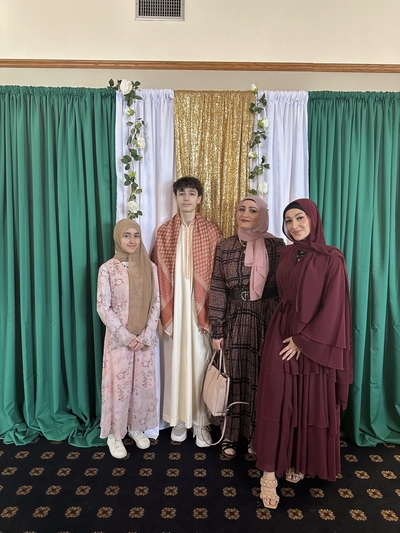
“Especially with the last couple of years with everything going on back home, the mosque has been a nice place to just feel like you don’t have to worry about whatever–the media, or whatever is happening overseas. You can just be comfortable being Muslim and comfortable celebrating with other people,” Alrubaye said.
Over 54% of the city’s population identifies as Arab or Arab-American, and many residents are personally affected by rising conflict in the Middle East. The large Arab population serves as comfort for many residents in the diaspora, providing a home away from home.
Once the mosques clear out and people part ways, the second wave of Eid festivities begins.
For some, the next stop is brunch or a Yemeni coffee shop, one of Dearborn’s staples.
“It’s really just coffee, but I don’t know. It’s just the thing about it. It goes with the day, it’s part of the routine,” Obahi said.
For others, the midday Eid nap is a necessity.
“Everyone is just tired and exhausted because you’re literally running a marathon the night before,” Obahi said.
People will often round out the holiday by spending time with family, going out to eat, or seeing friends.
For some, previous Eid traditions have evolved with time.
“Sadly, being older now, a lot of our elders have passed,” Amen said. “Having to come to that realization that the world is changing, and we’re losing people we love that used to be a strong aspect of our Eid.”
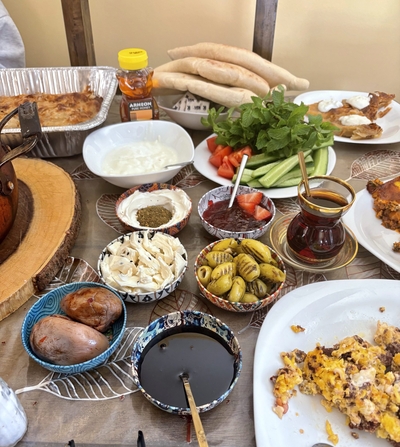
Amen tries to make Eid memorable for her children by surrounding them with family, even if it is different from how she used to celebrate, she said.
Dearborn has a specific community that is difficult to replicate elsewhere.
Obahi spent Eid in 2017 in South Carolina, where she lived 45 minutes from the closest mosque and did not have access to her Eid traditions.
“I was so nostalgic to come back to Michigan; I was heartbroken,” she said, noting that where she grew up in the Detroit area, the mosque was just a few houses away and she could hear the Eid chants from her bed.
“We have it so easy, and we often take it for granted, having such a beautiful and diverse Muslim community,” Amen said. “I pray that people continue to hold on to their traditions and understand that this is a gift that we’ve been able to hold space for one another and uplift and empower each other.”
Alrubaye, who celebrated Eid in Washington D.C. last year, felt the same.
“It just doesn’t feel the same. I feel like it’s not like there’s Muslims everywhere celebrating with you. I think in Dearborn, because it’s everyone, you kind of don’t look twice,” Alrubaye said. “It’s like the whole city is celebrating together.”
On Friday, the scent of freshly baked Kaak and Kleicha will drift through Dearborn homes and mosques will line with worshippers as the city comes together to celebrate Eid al-Fitr.
Lansing, MI