Data center battles started in the states. Now it’s Congress under siege.
May 22, 2026 | 5:00 am ET

Description
Community members protest ahead of a special Box Elder County Commission meeting to discuss the Stratos project, a massive data center proposed for an unincorporated area in Box Elder County, Utah, on May 4, 2026. (Photo by Alixel Cabrera/Utah News Dispatch)
WASHINGTON — Higher electric rates? Massive data centers looming over neighborhoods? Ugly political fights over what to do about them?
The future of data centers and their huge appetite for electricity is quickly escalating as a political flashpoint from coast to coast, moving from cities and states now to the nation’s capital.
Bills are under debate in Congress. The Trump administration has weighed in. Lobbying is intensifying. The Environmental Protection Agency is proposing changes.
But finding consensus on how to proceed in D.C. is tough, with the industry spreading around millions to make its case, some lawmakers pushing a moratorium, and others looking for ways to ease the burden on Americans without halting development.
At the grassroots, intense opposition continues breaking out. In early May, community members screamed and booed when commissioners in Box Elder County, Utah, unanimously approved two resolutions in support of a 40,000-acre data center campus proposed for an unincorporated site in the county.
Asked if he sees any momentum in Congress to do anything significant about the potential spread of data centers, Sen. Josh Hawley, R-Mo., said in an interview, “Only with voters.”
Hawley and Sen. Richard Blumenthal, D-Conn., are pushing a plan to assure consumers they will pay no increases in utility rates because of data centers.

Getting Congress to act is more complicated. “Some communities may have too many, but some would like the opportunity to have one of these data centers that pay a lot of local taxes,” Sen. Tim Kaine, D-Va., who represents a state embroiled in its own fight over the issue, said in an interview.
There is general agreement that the issues need exploring, and fast.
“Demand for reliable energy is rising faster than at any point in history. Clearly, we will need more generation and transmission, and a great deal more of it,” said House Energy Subcommittee Chairman Robert Latta, R-Ohio, at a May 13 hearing.
The Data Center Coalition, the industry’s membership association, says it’s eager to work with lawmakers and consumers.
“Data centers power modern life—from telehealth and digital classrooms to banking, air travel, financial transactions, and online shopping. With the average household using more than 20 connected devices, this infrastructure is not optional; it is foundational,” said Cy McNeill, coalition senior director of federal affairs.
“The data center industry is committed to being a good neighbor in communities where it operates, which includes the responsible use of key resources like water and energy,” he said
What are data centers?
Data centers in 2023 used about 4.4% of total U.S. electricity, according to a report from the Lawrence Berkeley National Laboratory.
It predicted that percentage could double or triple by 2028 to meet the needs of growing amounts of data, notably artificial intelligence.
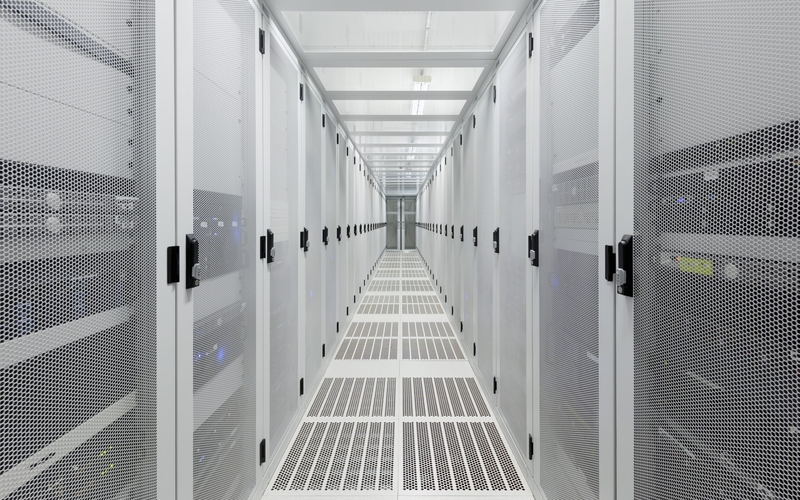
A data center is “a physical facility that houses and runs large computer systems,” said a report from the nonpartisan Congressional Research Service.
As AI needs grow, CRS said, so have hyperscale data centers. These tend to contain at least 5,000 computer servers and at least 10,000 square feet of space, roughly four to five times the size of a standard single family home.
All this can impact consumers. A ratepayer’s bill is generally determined by how much it costs to generate electricity and to deliver it. Rates are generally set by state or local regulators.
CRS found in its May 12 report that in most areas of the country, “little evidence existed that data center demand was affecting electricity rates nationwide.”
Can data center development be stopped?
Sen. Bernie Sanders, a Vermont independent, and Rep. Alexandria Ocasio-Cortez, D-N.Y., are sponsoring moratorium legislation.
Their plan would bar new AI data centers until “strong national safeguards are in place” that ensure AI is safe and effective and the economic benefits of AI and robotics will benefit workers.
The government would also have to guarantee that AI does not increase electricity or utility prices or harm the environment.
That idea has gained little traction. A moratorium “would be suicidal for the country,” said Rep. Gary Palmer, R-Ala., a House Energy Subcommittee member.
Kaine explained the concern: ”The idea of a moratorium basically would be saying to all our competitors in the world we have an edge on this now but we’re going to let you catch up and race ahead of us.”
One area where he thought lawmakers could find common ground involved permitting reform. Data centers now can need different permits, depending on their location, function and other factors.
Tackling permit reform could be complex, as most of the process falls to states. As CRS wrote, “Data centers require permits for various aspects of their construction — such as roads, buildings, telecommunications, and utilities “
That can include permits for connections to the local electric grid, any on-site electricity generation, and backup electricity facilities, CRS said, as well as connections to the local natural gas pipeline system.
The Environmental Protection Agency on May 11 took one step, proposing making it easier for data centers and other projects to start construction even though they haven’t yet received federal clean air permits.
“The change will support the development of Artificial Intelligence infrastructure and power generation” an EPA statement said.
It called the proposal “a significant step forward in the Trump EPA’s efforts to provide affordable baseload power for American families and to advance the data centers essential to making the U.S. the AI capital of the world.”
In addition, the White House in March announced a “Ratepayer Protection Pledge” aimed at companies involved with centers. Major tech companies agreed to its points.
It says that “Companies will build, bring, or buy the new generation resources and electricity needed to satisfy their new energy demands, paying the full cost of those resources whether by building, or buying from, new or otherwise additive power plants.”
Where possible, these companies will also add more capacity that serves the broader public by increasing supply.
Congress wants more guardrails
Saying “a handshake and a promise from these tech companies is not enough” Rep. Greg Landsman, D-Ohio, last month introduced legislation to guarantee data centers “pay the full cost of their energy demands and infrastructure needs (and) studies the environmental impacts of data centers.”
Other legislative initiatives include:
–The Energy Bills Relief Act. With 148 Democratic sponsors, led by Reps. Mike Levin, D-Calif., and Sean Casten, D-Ill., it would ensure that “facilities like data centers are paying for their own costs because it’s not fair for their expenses to be pushed onto your household if one opens in your area.”
–The Guaranteeing Rate Insulation from Data Centers (GRID Act). The Hawley-Blumenthal plan would guarantee no increase in consumer utility prices due to data centers, and make sure that new data centers “use energy from power generation sources that are separate from the grid.”
–The Power for the People Act, which has Democratic support in the House and Senate. It would direct the Federal Energy Regulatory Commission to make sure data centers pay for local transmission upgrades they need.
The bill “balances the need for data center development without pushing those costs onto consumers,” said Rep. Paul Tonko, D-N.Y., its chief House sponsor.
–The Fair Allocation of Interstate Rates Act. Sponsored by Rep. Julie Fedorchak, R-N.D., It would “prevent households from being forced to subsidize transmission projects built to satisfy another state’s green energy goals.”
Currently, regional transmission groups spread costs of big interstate lines to consumers throughout the region.
Latta, the subcommittee chairman, called it “a practical solution to place the burden of renewable portfolio standard costs on the states that choose to adopt those requirements.”
What’s standing in the way?
Politics and, as Hawley put it, “M-o-n–e-y.”
OpenSecrets, a nonpartisan organization that tracks money in politics, found “The electric manufacturing and equipment sector, including firms like Microsoft and Oracle, has poured more than $226 million into lobbying activity in 2025.”
That spending is aimed in part at backing what OpenSecrets called “the rapid growth of data centers and to address the resulting strain on the nation’s power grid.”
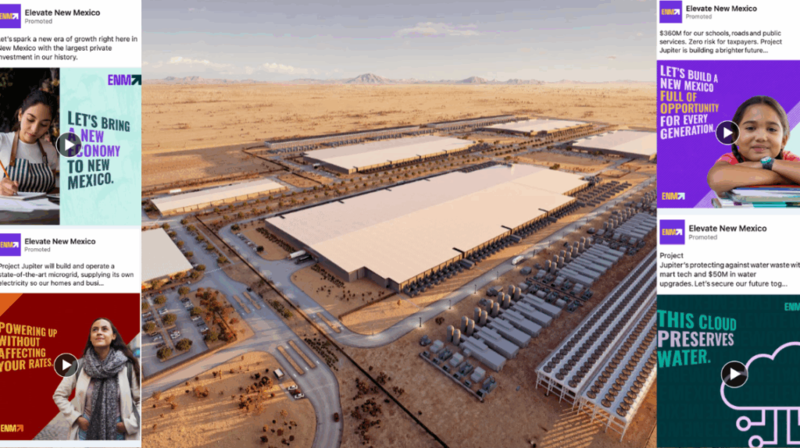
The Data Center Coalition’s McNeill said the industry “is committed to working with communities, local officials, and state and federal leaders to ensure the continued responsible development of this critical industry while protecting families and businesses.”
The Data Center Coalition, he said, “will continue to provide education on the data center industry and look forward to continued engagement with the administration, Congress, and other key stakeholders.”
Also, the data center issue has become bound with other incendiary matters.
Discussing the moratorium idea, Rep. August Pfluger, R-Texas, said in an interview, “Of course they (Democrats) are pushing for that. They’re anti-building, they’re anti-American, they’re anti-everything. They’d rather see Iranian oil be sold in the United States.”
Democrats charge that Republicans are resisting meaningful regulation.
At one of the House hearings, Rep. Jenn McClellan, D-Va., tied the problems to the war in Iran.
“Not until the Trump administration carelessly ensnared the United States in a reckless and costly war of choice with Iran pushing energy prices up even higher,” she said, “that we focused a hearing specifically addressing the alarming impact that data centers could have on energy affordability going forward.”
All States Newsroom content is free to republish. Read our republishing policy for more information.