Cuts, uncertainty over NIH grants disrupt innovation in health fields, researchers say
Sep 15, 2025 | 6:14 am ET
Description
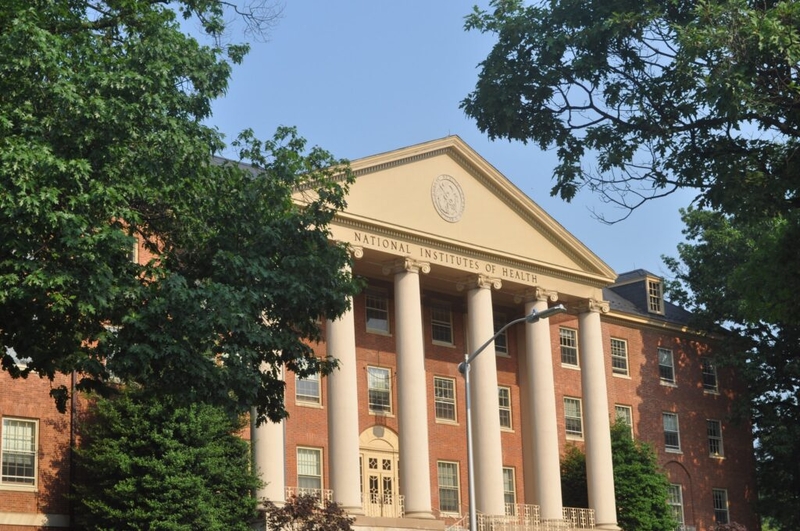
The James H. Shannon Building (Building One) on the National Institutes of Health campus in Bethesda. (Photo by Lydia Polimeni/National Institutes of Health)
A University of Maryland program that encourages undergraduate minority students to research communication sciences and disorders was making strides to help people learn and communicate better — until its grant, like 78 others in Maryland, was cut in May.
UMD-REACH —Research, Equity, and Access in Communication and Hearing — was one of the lucky 47 projects in the state that have seen their National Institutes of Health grant reinstated since the initial May cut by the Trump administration. But program officials said the delay came with a cost.
“We’re happy about the reinstatement, but at the same time, it’s taken a lot of time and work for a bunch of people who would rather be helping people learn things and helping people be healthier,” Matthew Goupell, a co-director of the UMD-REACH program, said.
While UMD-REACH is once again receiving funds from NIH following the July reinstatement, its research and student training has slowed down. The organization is among dozens in Maryland that have seen funding abruptly turned off and then reinstated, disrupting research and programs.
“We had to all spend a lot of time dealing with the uncertainty, and that just takes away from the ability to progress the science,” said Goupell. “It’s about a limitation on our time and our productivity for these slowdowns.”
UMD-REACH was told its grant was being terminated because NIH policy does not prioritize research programs as part of diversity, equity and inclusion, or DEI, efforts, according to an email Goupell received from NIH.
U.S. Supreme Court gives go-ahead for Trump to cancel $783M in NIH research grants
This spring, President Donald Trump (R) and his administration terminated hundreds of science and research grants supported by the NIH, in an effort to drastically slash government spending and reduce federal support for initiatives that focus on DEI, LGBTQ+ issues and other underserved populations.
But in the following months, the administration has reversed its decisions on some grant terminations, while court rulings forced it to reinstate other grants, making the landscape of tracking whether the money is flowing to those research programs difficult.
“Funding terminations and delays are a significant obstacle for researchers at Johns Hopkins and other universities,” Johns Hopkins University said in a written statement. “The university will continue strongly advocating for our research mission, the benefits it provides to our community here in Baltimore, and the value of lifesaving discoveries for people all across the country.”
Grant Witness is an attempt to follow the changing landscape on NIH grants, by collecting firsthand testimony from researchers who no longer have access to funding and referencing official announcements from the Trump administration.
For Maryland, Grant Witness reports that a total of 79 grant programs were terminated throughout the year, affecting $67.5 million in funds.
The database says that 32 of those grants were still terminated as of September, freezing $16.5 million in research grants. The other 47 of those terminated programs may have been reinstated due to court proceedings or administration decision reversals – potentially freeing up about $51 million.
But some programs still face challenges even if NIH funding for those programs have been reinstated, said Dr. Georges Benjamin, executive director of the American Public Health Association.
“Some of these studies were in progress and had to come to a screeching halt,” he said, noting that some studies needed consistent updates that couldn’t be completed while funding was frozen. “Those experiments are ruined at that point.”
The American Public Health Association is currently in a legal battle challenging the grant terminations saying that the terminations were discriminatory in nature. Some of the suspended research grants were reinstated following APHA’s legal challenge to the NIH.
But even then, Benjamin said, the Trump administration has been slow-walking the grant funds for some of the programs that should be receiving funding again.
“Innovation is being stifled,” he said. “The administration is slow-walking a lot of them out the door.”
Johns Hopkins agrees, saying that “many federal agencies have significantly slowed the release of new research awards and the renewal of existing awards, leading to a sharp drop in federal research investment at Hopkins and other universities.”
“From late January through late May of this year, new research funding awards were down by nearly two-thirds as compared to the same period in 2024,” said the statement from Hopkins, one of the biggest losers of grant funding.
Benjamin said that the administration’s targeting of DEI research was “fundamentally being racist and discriminatory.”
“These programs are designed to address health inequity,” Georges said, noting that cutting those grants undermines programs looking to improve health for underserved communities and women.
Court challenges continue.
In August, the U.S. District Court in Maryland issued a temporary injunction for the termination of hundreds of NIH grant programs related to LGBTQ+ issues, agreeing with the plaintiffs would succeed in their claims that the terminations were discriminatory in nature.
Omar Gonzalez-Pagan, senior legal counsel and health care strategist for Lambda Legal, said that he hopes that the NIH complies with the injunction and chooses not to appeal the decision, though there is still time for the agency to file an appeal.
“It guarantees that, at minimum, LGBTQI health-related research won’t be completely stalled under this administration for the time being,” he said.
Annapolis, MD