Critics say NC’s property tax amendment could do more harm than good
Sep 23, 2026 | 12:57 pm ET
Description
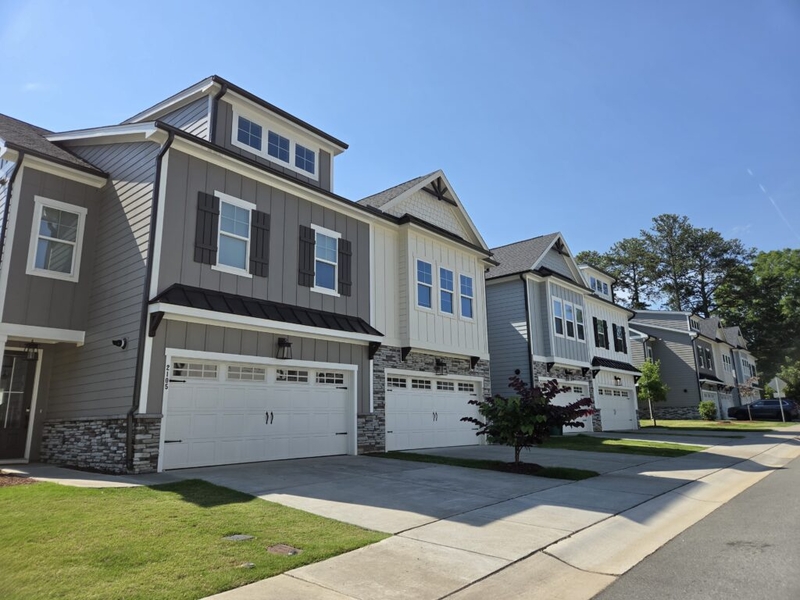
(Photo: Clayton Henkel/NC Newsline)
There will be much at stake in November when North Carolinians go to the polls.
The state has one of the nation’s most closely-watched U.S. Senate races. A win by former North Carolina Gov. Roy Cooper — a Democrat matched against Michael Whatley, former chairman of the Republican National Committee — could help change the balance of power in the Senate.
But for some homeowners, particularly those living on fixed incomes, rising property taxes will also be top of mind on Election Day. That’s when voters will be asked to consider a Republican-backed constitutional amendment requiring state lawmakers to pass laws limiting the maximum amount that local leaders can increase property taxes.
The amendment, Republican leaders said, grew out of homeowners’ growing discontent about high property taxes. Seniors in particular are having a tough time aging in place because high property taxes are forcing them out of homes, they said.

“It was because of the outpouring of concern over years … from constituents, mostly seniors, but pretty much everybody,” State Rep. Erin Paré (R-Wake) told NC Newsline. “I think even my friends from the other side of the aisle can attest to that, that they [constituents] just were seeing their property tax bills go up, and it was kind of unpredictable.”
As NC Newsline previously reported, the House Select Committee on Property Tax Reduction and Reform recommended adding the constitutional amendment to the ballot. House Speaker Destin Hall (R-Caldwell) created the committee to examine tax reform as a result of constituent complaints.
Hall and other Republican leaders blame local governments for excessive increases.
“Families are getting ripped off as some, but by no means all, local governments rake in billions more than inflation and population growth warrant,” Hall said in the spring.
Local government officials, progressive advocacy groups and Democratic lawmakers who oppose the measure say that limiting the amount of tax revenue local governments can collect could have dire consequences for local governments, which could be forced to cut services.
Local property taxes help pay for vital needs like public safety, education, and public health.

“It would undermine local decision-making about how communities fund schools, emergency services, libraries, and more, even as communities are trying to respond to rising costs.” Alexandra Sirota, executive director of the NC Budget and Tax Center, said in a statement.
Sirota added that the property tax amendment “wouldn’t provide meaningful relief to homeowners” but would “give outsized breaks to corporate property owners and high-value properties.”
The League of Women Voters NC also weighed in against the property tax amendment, expressing concern that “restricting local property-tax revenue could affect funding for public education, elections and other local services and/or increase reliance on fees.”
“LWVNC opposes the property-tax levy amendment because it would shift greater authority over local funding decisions to the state while leaving the actual limits, formulas and possible exceptions to future legislation,” the organization said in a statement.
A recent report by the NC Housing Coalition, a nonprofit housing advocacy group, estimates that counties and municipalities would have lost nearly $1 billion for essential services if a 2% levy limit had been in place during the most recent revaluation cycle.
Meanwhile, the average homeowner would have only saved $7 a month or $84 a year. But Duke Energy would have saved $10 million, and several data centers more than $1 million each, according to the coalition’s analysis.

“Supporters of this bill are arguing that this is going to substantially relieve the property tax burden, especially on vulnerable homeowners,” said Samuel Gunter, executive director of the housing coalition. “We wanted to investigate that claim.”
The housing coalition also found that 73 of North Carolina’s 100 counties would have lost property tax revenue under a 2% levy and that 24 counties would have seen tax revenues fall by 10% or more.
The coalition used a 2% levy limit to make its case because the Tax Foundation, a conservative-leaning tax policy nonprofit, used that number when it pitched the idea of a levy limit to the House committee looking into property tax reform.
“We’re not saying that this would be the exact impact on a county or on a city of a future levy limit, but instead trying to help us see what it would have really looked like, and what its impact would have been, and what could that tell us about this proposed amendment,” said Hudson Vaughan, the primary author of the coalition’s analysis.
Paré said it’s important to remember that the amendment only gives lawmakers the authority to set a levy limit. The General Assembly will work out the details if voters approve the amendment, she said.
“That could be a wide variety of things going into some type of formula that gives us whatever levy limit we believe makes sense,” Paré said. “That could be well beyond 2%, that could be some sort of population growth, plus inflation, plus something else formula. It’s just very, very early to say what that could look like.”
NC groups launch campaign to defeat two tax amendments on November ballot
Despite that uncertainty, and even though the housing coalition’s analysis shows individual homeowners aren’t likely to save much and could lose critical services, the amendment looks likely to win approval.
A recent Elon University poll found that 72% of likely voters favor the amendment limiting property tax increases, while 14% oppose it. Another 14% were unsure.
Two other amendments — one requiring photo IDs for all forms of voting and another lowering the cap on the state’s personal income tax rate from 7% to 3.5% — are also likely to be approved.
“All the amendments on the ballot, we’re finding have much stronger for than against,” Jason Husser, director of the Elon University Poll, told NC Newsline.
Vaughan acknowledged that it will be difficult to defeat the amendments.
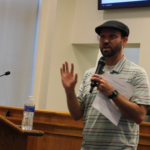
“I think it will be an uphill battle to defeat them because of how misleading they are, and how challenging it is to reach the general public about the complexities of what these really are and what they mean,” Vaughan said. “There’s a lot of folks who are understandably struggling right now, and so anything that seems like it will cut the amount that they have to pay for something is going to be appealing.”
A more immediate remedy for the property tax dilemma is to improve and expand existing programs that give tax breaks to seniors and disabled taxpayers, Vaughan said.
“Fixing those programs would go a long way towards really helping the folks who need it most, and keeping folks who are on fixed income and who are struggling to stay in their homes in their homes and in their communities that have greatly benefited from their presence for a long time,” Vaughan said.
Paré has also championed legislation to improve programs that provide tax breaks for seniors and disabled citizens. She said more flexibility is needed in the state’s homestead exemptions programs because current exemptions are inadequate for urban areas where properties often carry higher values.
“I think the biggest pressure is coming from seniors who have been living in their homes for 50 years, and especially in Wake County,” Paré said. “You’re in your 80s and you paid off your house decades ago and you have to pay for property taxes that you can’t afford now because your tiny house in downtown Raleigh is worth all this money.”
Raleigh, NC