The crisis in higher education leadership: Why stewardship must triumph over disruption
Feb 16, 2026 | 11:45 am ET
Description
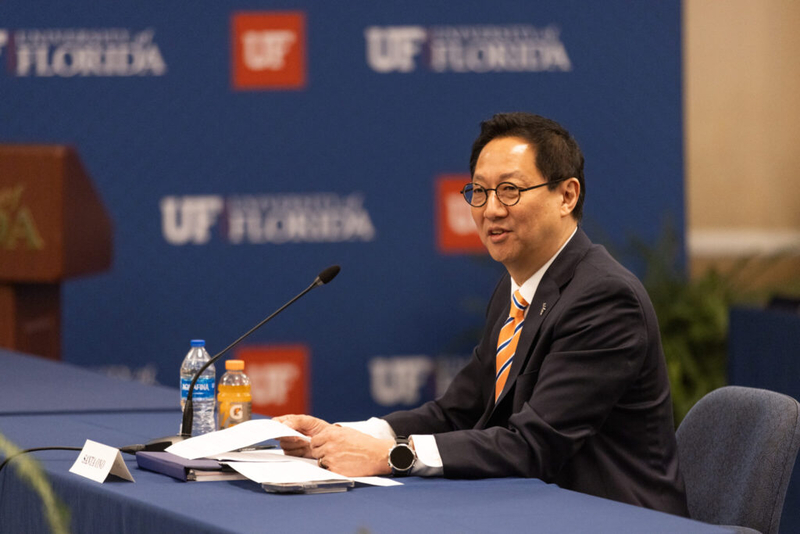
University of Florida President Santa Ono takes questions from trustees before they unanimously approved him as the school’s president-elect on May 27, 2025. He was rejected by the state Board of Governors on June 3, 2025. (Photo courtesy of University of Florida)
Imagine a trembling undergraduate standing before the president of a university.
“It will take me more than 10 years to earn your one year’s salary with a degree from your institution.”
Her words, landing like a ton of bricks, are a signal to the Board of Trustees, senior leadership of the university, parents, and faculty alike that the institution about to confer her with a degree is failing its most precious stakeholders – students.
The presidency of a public institution of higher education is a tough job. Many failed or derailed presidencies result from scandal, mismanagement of internal political unrest, defeat by insurmountable budget deficits, or simply inheriting an institution that was previously run poorly. Whatever the specific cause, presidential mistakes are greatly visible and open to public scrutiny.
A Michigan-specific example of repeated presidential derailment is the short order turnover of two presidents of the University of Michigan, and the subsequent rejection of one, Santa Ono, from the presidency of the University of Florida. After the departure of Ono, the Regents of the University of Michigan made a promising new presidential hire in January of this year, Dr. Kent Syverud – an alumnus and former faculty member at the University of Michigan with 12 years of experience as a successful chancellor and president of Syracuse University.
The regents set an example for the 14 other public institutions in Michigan and nationwide by finally choosing a chief academic leader whose credentials and promise of intellectual and institutional stewardship befit the role of president as opposed to scandal makers, disruptors, and others confused about the importance of academic leadership in society.
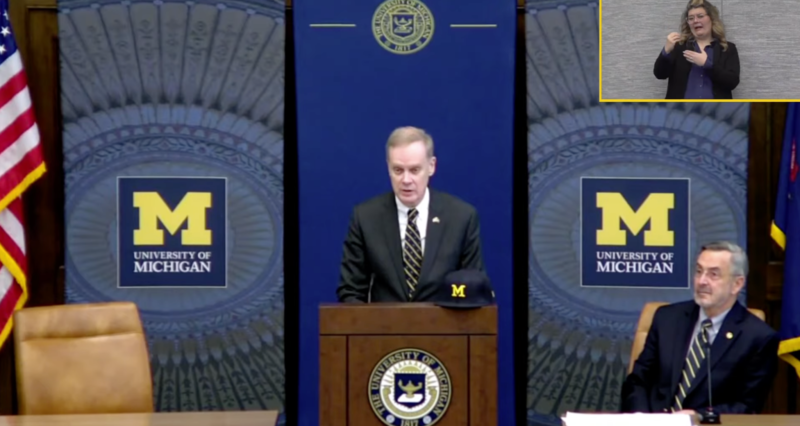
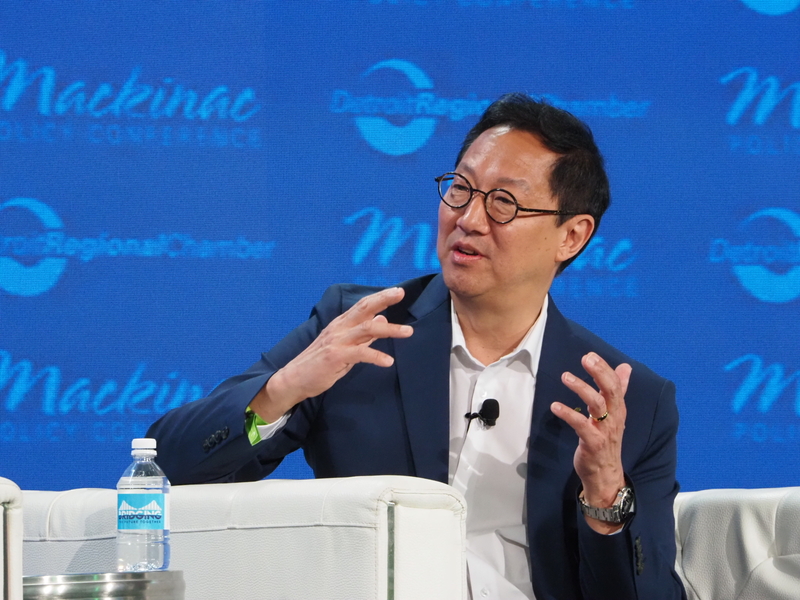
Mark Schlissel, a recent former President of the University of Michigan (2014-2022), was removed by the Board of Regents because of an inappropriate relationship with a subordinate. The subsequent president, Santa Ono (2022-2025), faced much criticism from both sides of the political aisle.
At first Ono was a staunch supporter of DEI initiatives for which the University of Michigan was nationally famous and financially heavily invested. After the Trump administration took office, President Ono closed the central DEI offices at the University of Michigan, handled pro-Palestinian campus protests poorly such as using plainclothes officers to observe students, and violated academic freedom with disciplinary actions against protesting faculty.
In essence, he was described as “weathervane Ono” twisting in whatever direction the wind blew from political pressures to donor preferences.
In contrast, what successful Presidents have in common is their recognition of the need to go back to first principles when challenges arise. They know when it is time to go back to the drawing board. They realize it is only when one invests in refining the fundamental techniques of any endeavor that one can rebuild a solid new foundation.
The most important of the first principles related to success of academic institutions is making student educational needs top priority. That involves upholding high standards for student admission and success, maintaining and supporting a strong cadre of faculty, developing rigorous and relevant curriculum, creating scaffolding and remediation structures for struggling students, and implementing viable plans for graduation in a timely manner.
Other first principles include creating an environment conducive to generating new knowledge, technologies, and all types of creative work; developing institutional pride and morale through sports and arts; fiercely defending academic freedom at all levels of intellectual endeavor; cultivating strong relationships with faculty and faculty governance; and committing to budget transparency and accountability.
Once the focus shifts to first principles, only then can the institution recapture its reputation, stabilize its budget, and attract generous donors.
So, the new president of the University of Michigan, Dr. Syverud, is an excellent choice for its recovery. In his introductory video, Syverud speaks of how much he values the success of students and the generation of new knowledge, how much pride he takes from his institution, and how sincerely dedicated he is to administrative competence.
Another example of first principles leading to institutional recovery is LaSalle University. They turned around their enrollment deep dive in just two years by “retooling” their enrollment operations, revamping financial aid, and adding sports teams. The President behind their success, Daniel J. Allen, stated “There’s no magic, shiny new toy out there” and “My big idea was we’re going to run a really good university, and keep our focus on our mission and how we serve our students.”
Similarly, with the leadership of President John Carmichael, success was achieved at Evergreen State University with several years of consecutive enrollment rise since 2020 after plummeting enrollments resulting from poorly managed student unrest over social injustice issues in 2017. They focused on faculty-led recruitment efforts, curriculum renovation, and enhancing their student support services.
So, why then do some boards hire presidents who are drama-driven disruptors, scandal makers, or who shift with every political breeze coming their way over those who are competent stewards rising from faculty ranks?
First, members of college boards tend to consider the North Star for university leadership as “transformation” instead of “stewardship;” secondly, competence and high emotional intelligence on the part of the president are considered “boring” traits when disruptors can make colorful headlines for the University; thirdly, most college presidents (74%) are hired without prior experience as president; additionally, recent hiring trends require only a doctorate to be eligible for President instead of faculty rank; and finally, many members of boards bearing the responsibility for the welfare of the institution are unpaid volunteers carrying only one or maybe no academic degree.
While the lack of academic credentials of board members and presidents may sound like an unreasonable critique or even a desirable trait from the perspective of an academic outsider, for the faculty responsible for educating the students and for the tuition payers footing the bills, this phenomenon is as ludicrous as assuming one can run an elementary school well because they finished one. And, to quote a former dean, Frederick Antczak (College of Liberal Arts and Sciences at Grand Valley State University): “The highest academic rank is Professor. All other titles are temporary roles.”
So, a bearer of a doctorate is not by default an academic.
The professional competence, intellectual leadership, and compensation of college presidents are of great importance to the public because institutions of higher education perform three core societal functions: creating an educated work force; growing a socially, politically, and scientifically literate populace; and generating new knowledge.
Moreover, the salaries of presidents of public institutions ($350,000 to over $3,000,000 annually) are paid with taxpayer and tuition dollars; universities are the bastions of diverse democracy; and quality higher education creates the capable leaders of the future.
What makes higher education worth its high costs is its promise.
The internet is rife with courses, educational journeys, and master classes – all available for particular fees – but higher education offers more than simply a series of courses serving as modular transactional units.
Instead, college offers high-impact, experiential learning opportunities that build cognitive reserve, critical thinking and problem-solving skills, and knowledge and know-how. Moreover, colleges and universities are intellectual and social communities designed to encourage connection and belonging.
Oftentimes, the damage to the perceived value of higher education in the public’s eye is caused by college boards hiring “disruptors” for presidents who focus myopically on “crises in higher education” instead of providing students with opportunities to realize their academic and professional dreams.
A disruptor in university leadership can be invaluable if they can shift defunct paradigms into successful strategies for fostering intellectual and creative growth and innovation.
However, when a university president disrupts the status quo by re-defining the primary goal of the institution as becoming a business enterprise or contributing to the economy of the state, then the strategy for success goes where the money is.
This results in institutions taking extraordinary measures like creating more programs for adult learners, investing heavily on digital technologies, or reducing the standards for admission and enrollment – all generally without a viable business plan, and none with the best educational interest of the students at heart.
In a nutshell, college presidents are public figures and should act like public servants and institutional stewards. Their authority, influence, and exposure can bring about both positive societal change and hefty liabilities.
University presidents work with various stakeholders and have broad exposure rendering their victories and failures open to public scrutiny – the very public from which trustees are chosen and who in turn hire and evaluate the presidents.
Tuition and taxpayers expect university presidents to foster the common good; specifically, the intellectual growth of students and faculty, the generation of new knowledge and technologies, and the fierce protection of academic freedom – a human right.
Lansing, MI