Costs, benefits of data centers take center stage at legislative meeting
Aug 31, 2026 | 7:24 pm ET
Description
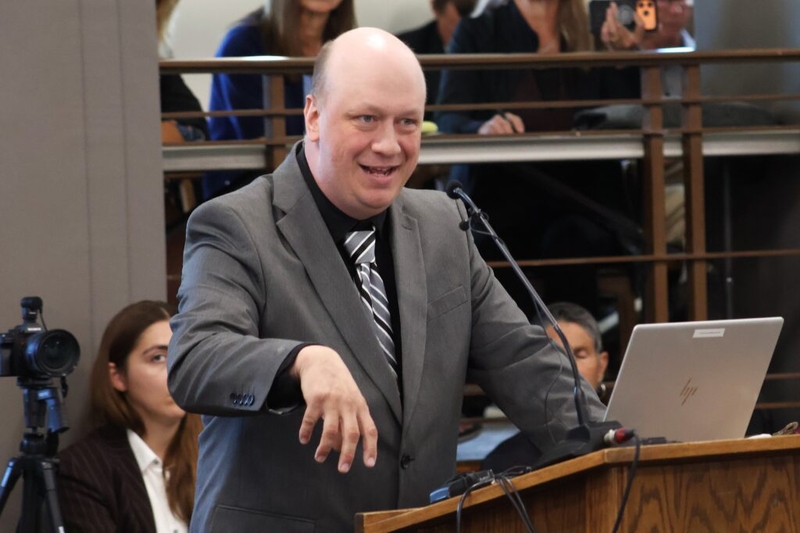
Sam Wagner, president of the Casselton City Council, speaks during an Artificial Intelligence and Data Center Committee meeting on Aug. 31, 2026. (Photo by Michael Achterling/North Dakota Monitor)
North Dakota lawmakers studying data centers heard concerns Monday about transparency and nondisclosure agreements while others touted the potential economic benefits.
Many of the people who spoke during public comment raised issues about data centers, with some advocating for a moratorium on data center development, despite legislators’ decision not to take up the issue during this week’s special session.
“The people have been overwhelmingly in favor of a moratorium,” said Sam Wagner, president of the Casselton City Council.
Wagner, also an organizer with the Dakota Resource Council, suggested creating state-level regulations to serve as a floor of requirements, allowing local communities to tailor for specific policies if they wish.
Signe Snortland, a Democratic candidate for the Legislature in District 33, said there has been a notable lack of transparency and public engagement by data center developers in communities like Oliver County.
“It’s time to slow the roll,” Snortland said. “Let’s do this the right way.”
Yet others, including Kevin Pranis, representing Laborers’ International Union of North America, said data centers can be built in a way that can benefit everyone.
“The data centers are actually a critical tool that we can offer to bring new people into construction, into these trades, to do work that we’re going to need for decades and generations to come,” Pranis said.

Robert Mayo, a research specialist at North Dakota State University’s Challey Institute of Global Innovation and Growth, warned against banning them completely.
“Banning data centers guarantees there will be no problems. It also guarantees there will be no benefits,” Mayo said.
Nondisclosure agreements
Aaron Birst, executive director of the North Dakota Association of Counties, cautioned lawmakers on banning nondisclosure agreements for data centers and other industrial projects, which is a proposal for this week’s special session.
He said that while some officials were taken off guard and may have signed NDAs with data center developers early on, county commissions have come around to the idea that they are generally a bad idea. But there are some cases where certain information should be protected.
“Land values will jump up as soon as everybody starts speculating, so there is some basis to have some privacy,” Birst said. “But the citizens need to know if somebody’s coming to town to build.”
North Dakota Legislature prepares for 2nd special session this year, with public testimony Tuesday
Sen. Janne Myrdal, R-Edinburg, said she’s heard citizens say they are not being listened to or informed of projects on the local level.
“It’s a little troubling to hear,” Myrdal.
Birst pointed to the fact that a citizen can check the front page of a newspaper and see meetings attended by hundreds of people as evidence the projects are being handled with transparency, but acknowledged open meetings laws can be violated.
“The status quo, while sometimes uncomfortable, is generally working,” Birst said.
Decommissioning
Multiple people expressed concern there are no provisions for decommissioning a data center down the road.
Public Service Commission Chair Randy Christmann said his agency could develop a program that would plan for taking down a data center after it is no longer in use. The agency manages a coal mine reclamation program and has rules for wind farms to set money aside to pay for dismantling them.
“If you want to have a reclamation program for AI centers, we can create that, but you need to give us some guidance on how extensive you want it to be,” Christmann told the committee.
Nick Phillips is the executive vice president of external affairs for Applied Digital, which operates the data center at Ellendale. He said data centers don’t need a reclamation program because the buildings have potential for other uses, such as a manufacturing facility.

“I don’t think it makes sense for a taxing body to want its single largest taxpayer in its county, city, whatever, to erase that value when somebody else could use it,” Phillips said.
But he did provide an estimate for what it would cost to tear down an Applied Digital data center building of more than 900,000 square feet — $90 million.
‘Fearmongering’
Mayo said North Dakota has experienced examples of good and bad development practices for data centers in recent years. The difference has been community engagement.
He said Atlas Power in Williston ran into problems because it built a data center with shorter setbacks that exposed residents to constant noise, and the company chose to build in an area without an excess of electricity available.
Mayo pointed to Applied Digital’s development of a data center near Ellendale as an example of good community engagement and listening to residents’ concerns.
“That kind of transparency breeds good will,” Mayo said.
The Ellendale project has not been without controversy. Local landowners have complained about traffic congestion, damage to roads from construction vehicles, inflated rental rates and other concerns.
Rep. Todd Porter, R-Mandan, said he views opposition to data centers differently.
“It seems like the fearmongering has really gotten out of control,” Porter said.
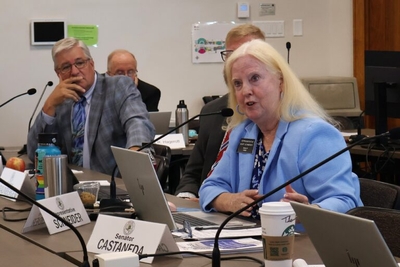
Rep. Mary Schneider, D-Fargo, pushed back on that.
“Rep. Porter called it fearmongering. Other people call it concerns for life, health and safety,” Schneider said.
Wagner and other members of the public cautioned lawmakers against overlooking critics of data center development in the state.
“Dismiss your critics at your own risk,” Wagner said.
Mayo said some fear is understandable and the solution is more transparency to shed light on the unknown.
“Everyone on some level understands that this is going to change the world,” Mayo said. “That kind of change is scary.”
North Dakota Monitor reporter Jacob Orledge can be reached at [email protected].
Bismarck, ND