Corrections officials are building a 180-bed program for homeless Utahns with criminal records
May 20, 2026 | 7:02 am ET
Description
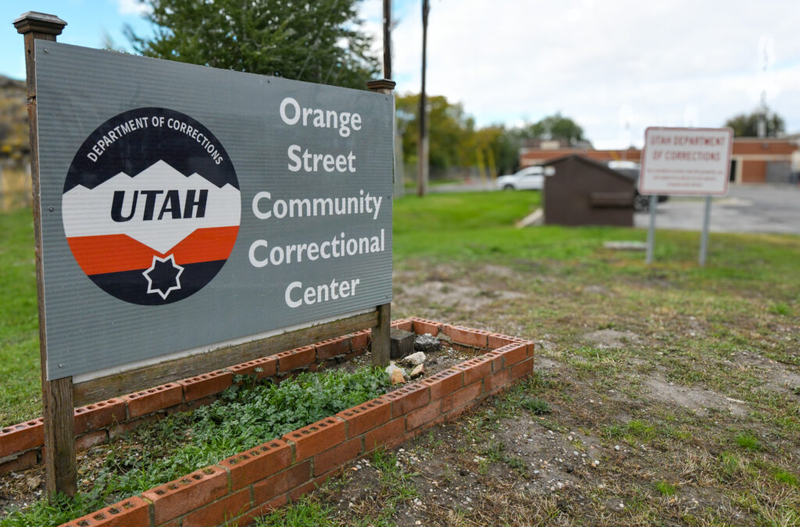
A sign for the Utah Department of Corrections' Orange Street Community Correctional Center is pictured in Salt Lake City. (Photo Courtesy of the Utah Department of Corrections)
Key points
- The Utah Department of Corrections is developing Project ARCH, a 180-bed program in “semi-secure” facilities intended to provide accountability-focused treatment to “high utilizers” of the state’s criminal justice and homeless systems.
- Project ARCH is supported by a new law that allows judges to order people experiencing homelessness who also have at least five class B misdemeanors to be placed under the supervision of the Division of Adult Probation and Parole.
- The plan comes as Utah has gained national attention for state leaders’ eagerness to fulfill President Donald Trump’s vision on homelessness, which includes expanding forced treatment for addiction or mental illness.
State corrections officials are moving ahead with the creation of a program meant to house and treat people experiencing homelessness who also have a criminal record of at least five misdemeanor offenses.
The program, called Project ARCH, is the first concrete step state officials are taking to deal with “high utilizers” — or a group of people with repeat criminal convictions who also cycle in and out of homeless shelters.
The state Office of Homeless Services in recent months has explored the impact of “high utilizers” as one part of Gov. Spencer Cox’s plan to improve the state’s homeless system, which received an infusion of more than $45 million in funding from the 2026 Utah Legislature.
The plan also comes as Utah has gained national attention for state leaders’ eagerness to fulfill President Donald Trump’s vision on homelessness, which includes expanding forced treatment for addiction or mental illness — but also as Utah leaders pushed pause on an envisioned 1,300-bed homeless campus in northwest Salt Lake City while they build programs to potentially shape the controversial and expensive campus before deciding whether to fund and build it.
Utah homeless leaders look to focus funding on ‘high utilizers’ while not ‘backing away’ from campus
Project ARCH (which stands for “accountability and assessment, reentry and response, and coordination and compassion for high utilizers”) is taking shape within existing and remodeled halfway houses or community correctional centers managed by the Utah Department of Corrections.
While advocates for the homeless have long been critical of any program that criminalizes homelessness, state corrections officials say Project ARCH is meant to divert people from jails, break them out of their existing cycle, and help them reintegrate into society rather than to further criminalize them.
“That’s not what we’re doing,” Nick Bricker, chief of community safety and stability for the Utah Department of Corrections, said of criticisms of criminalizing homelessness. “We’re just trying to provide the supported accountability.”
What is Project ARCH?
The plan was born out of HB110, a law sponsored earlier this year by Rep. Tyler Clancy, R-Provo, during his last session as a lawmaker before he took on his new role as state homeless coordinator for the Utah Office of Homeless Services.
The new law allows judges to order people experiencing homelessness who also have at least five class B misdemeanors to be placed under the supervision of the Utah Department of Corrections’ Division of Adult Probation and Parole, so long as the division agrees to take them on.
Lawmakers gave the state Corrections Department about $1.4 million to execute Project ARCH, which is envisioned to eventually have about 180 beds up and running later this year, with the first beds expected to start becoming available starting in July. After some building renovations are completed, state officials hope the program will be fully up and running in September.
Utah homeless board looks at data — and cost — of ‘super high utilizers’ on shelters, jails
That’s according to Bricker and Rebecca Brown, one of the department’s deputy commissioners.
Bricker and Brown briefed the Salt Lake County Criminal Justice Advisory Council about Project ARCH during the council’s meeting last week, and it was warmly received. Bricker and Brown also elaborated on the plan’s details during an interview with Utah News Dispatch on Tuesday.
Bricker started with emphasizing the things Project ARCH is not.
“It’s not a homeless shelter,” he said. “It’s not a detox center. We are not swooping in and taking over for county probation or any kind of pretrial services.”
Previously, the Division of Adult Probation and Parole and its transitional community correctional centers were reserved for people who have committed higher crimes — class A misdemeanors or felonies — but HB110 expanded the option to include people convicted with at least five class B misdemeanors, who are typically sent to county jails, not state prisons.
“They’re in there going through programs to help assimilate them back into the community in lieu of their incarceration,” Bricker said.
Bricker said state corrections officials aren’t taking over supervision of all class B misdemeanor offenders who are diverted from jail, but rather “we’re just stepping in with another option, another avenue of resources, to be able to help these folks who have a high level of arrests and convictions and have criminogenic factors.”
Bricker said the vision for Project ARCH started taking shape last fall amid talks of the proposed 1,300-bed homeless campus. Corrections leaders began exploring how to use existing facilities or programs to help.
“We already supervise misdemeanor and felony probationers who are in and out of homelessness,” he said. “Why can’t we use some of these same programs and services and treatments for this program?”
Clancy’s bill then started taking shape. And under Salt Lake City Police Chief Brian Redd — whose last job was director of the Utah Department of Corrections — the city launched Project CONNECT, which offers social workers for the city’s 50 most-arrested people to help connect them with housing or treatment.
While the city’s Project CONNECT is voluntary, the state’s Project ARCH is not, but rather court ordered if a judge decides to exercise the option.
Even though it will take time to fill Project ARCH’s 180 beds — since timing depends on when someone with at least five class B misdemeanors is arrested or gets picked up on a warrant and a judge issues an order — state officials expect far more than 180 people will eventually be eligible.
Using data from Salt Lake City and Salt Lake County, state officials have a list of about 1,600 people who would likely qualify, Bricker said, and “of those folks, we are diving into how many of those have five or more convictions and who are homeless.”
But before the program can get up and running, Bricker said corrections officials are working with prosecutors, defense attorneys and judges to “get everyone on the same page to tell them how we, as a department, are going to move somebody into this program, what treatment are we going to provide to them, what reports are we going to be sending back to the court on their progress.”
“There are a few key players that we are still meeting with in order to iron out these details and to give them the confidence in our programming … so that they will order somebody to this type of probation,” he said.
How will Project ARCH work?
After someone is court ordered to the program, Bricker said corrections officials will start with a “universal front-door assessment,” which he said is an “AI-driven software that” state officials are in the midst of implementing “that has every type of behavioral, cognitive, functional assessment loaded into it.”
“Say somebody comes in and they need (a) substance abuse track based on the assessment, but also, you know, a domestic violence track,” he said. “It’s going to spit out the recommendations for what type of treatment, and that will be part of this person’s case action plan, so they have a very well defined pathway through this and what success looks like. And then it’s the case manager, the therapist, that helps them move through these treatment programs.”
They’ll start with an “assessment, orientation or observation phase,” Bricker said. “Maybe they need some stabilization on medication, which we will help facilitate.”
Their needs will determine which facility they go to, he said.
Three corrections facilities will be used to make room for Project ARCH, including:
- Fortitude Treatment Center, a two-story building in Salt Lake City with 120 beds on the upper level that will be used for assessments, while the lower level will be used for a resident substance use treatment program.
- Bonneville Community Correctional Center in Salt Lake City, which had capacity for up to 74 male parolees, but they have been moved out so corrections officials can renovate the building.
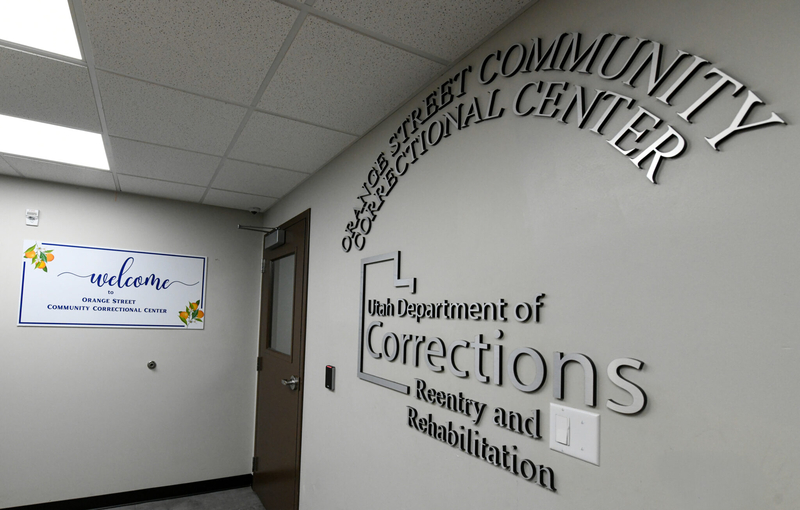
- Orange Street Community Correctional Center, a 60-bed facility in Salt Lake City that currently houses women who are being paroled and are transitioning back into the community. When the renovations are done at the Bonneville facility, the women will be moved there to make room for Project ARCH residents. Orange Street’s 60 beds, corrections officials say, will then be used for supervised mental and behavioral health treatment.
Bricker said the facilities are “semi-secure. They’re not lockdown facilities, they’re not jails, they don’t have the status of incarcerated or inmates.” But he also said there are “reasonable security measures in place,” including key card access and fences.
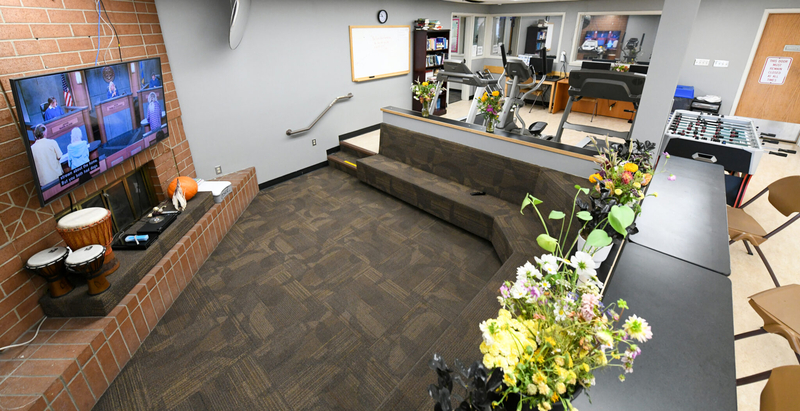
Project ARCH residents will be closely supervised, he said, and their day-to-day experience will depend on their behavior, he said.
“Are they following the rules inside the facility, are they where they’re supposed to be, are they completing their classes?” he said. “There could be different levels of free time restrictions or off-campus restrictions.” He added that transportation can also be arranged for people who need to leave in order to attend a job interview, for example.
If someone refuses to cooperate with programs or doesn’t behave, Bricker said “there are a number of administrative actions that we can impose,” but a last resort would be sending them back to jail.
“But we hope that through some of the motivational interviewing skills that our officers and case managers will have and working with their therapists and even peer support … we’re doing a lot more of those things before we’re just jumping right to throwing them back into jail.”
Brown emphasized that without Project ARCH, the offenders would likely be in jail anyway, but corrections officials are hoping to help people earlier and “more deliberately.”
“Because for many of these individuals, there are very simple things that we can help accomplish,” she said, including taking care of outstanding warrants, which she said makes up a big chunk of charges in the “high utilizer” population.
Utah Gov. Cox says homeless campus — envisioned to fulfill Trump’s order — is a ‘top priority’
“They can’t even get themselves to court to clear their warrants, and that is an overwhelming task when you are under supervision, when you are using substances, when you’re not stable in your medication,” she said. “So we can provide an environment to help them through that process, we believe that we can help them be more successful.”
Brown said that with Project ARCH, corrections officials are moving from “punitive to more of that structured accountability to help walk them through a behavior modification program and get the resources that they need to be successful, with the end result being stable housing.”
Rather than focusing on a “Housing First” model — which Utah leaders and the Trump administration has been critical of, calling for more “accountability” in the system — Bricker said the goal is “stabilization” first.
“Just providing them a place to stay, like a Housing First model, doesn’t take care of the fact that they need treatment structure, stabilization, before we just give them a place to stay,” Bricker said. “So the (Utah Department of Corrections) is uniquely positioned to provide both of those. We provide this community corrections center environment, which is housing … but also there’s some accountability on their end to get stable, go through some of these treatment programs.”
Salt Lake City, UT