Citing a hunger ‘crisis,’ US mayors call for end to federal SNAP cuts
Jul 22, 2026 | 9:45 am ET
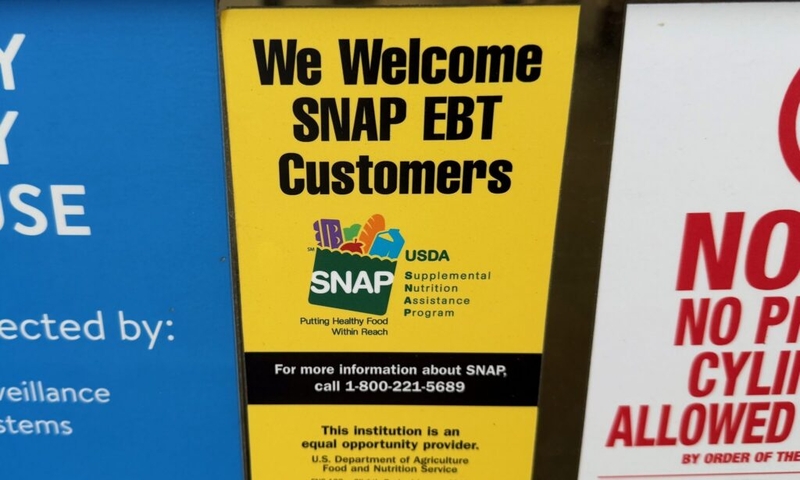
Description
More than 200 American mayors are calling on the federal government to reverse changes that will cost states billions and push millions of people off the national food stamp program. (Photo by Steph Quinn/Missouri Independent)
More than 200 American mayors are calling on the federal government to reverse changes that will cost states billions and push millions of people off the food stamp program.
This week, the United States Conference of Mayors asked the U.S. Senate’s agriculture committee to reconsider the deep cuts to the Supplemental Nutrition Assistance Program, or SNAP, enacted in last year’s One Big Beautiful Bill Act. In addition to imposing new eligibility and work requirements for recipients, the law will require states for the first time to fund some SNAP benefits themselves beginning in fall 2027.
The 210 mayors who signed a letter to Senate leaders said they are on the “front lines of a deepening food security crisis” and said the federal government should be expanding access to food, not creating new obstacles.
That letter was signed by Democratic and Republican mayors leading major cities such as Baltimore, Las Vegas, Oklahoma City and St. Louis, as well as smaller communities including Lima, Ohio; Manhattan, Kansas; and Muskegon, Michigan. The U.S. Conference of Mayors is a nonpartisan organization representing the more than 1,400 leaders of cities with populations of 30,000 or more.
“When we’re talking about how to make sure that our residents are fed, that is something that worries Republican mayors, it worries Democratic mayors, it worries independent mayors. It worries everybody,” Matt Tuerk, the Democratic mayor of Allentown, Pennsylvania, said in an interview with Stateline.
Tuerk, who leads the national organization’s Children, Health, and Human Services Standing Committee, said his constituents are already struggling with the high costs of housing, utilities and groceries.
“Now they’re worrying about their ability to even pay for those needed groceries without those SNAP benefits,” he said.
Already, more than 4 million Americans have lost SNAP benefits, putting more pressure on food banks and food pantries across the country.
Federal officials have argued that changes were necessary to root out fraud and waste from the food stamp program.
Tuerk said philanthropic groups don’t have the resources to serve as the national safety net, and city and states are already facing tight budgets that cannot fill the void left from federal cuts.
Food stamp changes will cost states billions, raising fears about SNAP’s future
“And there’s no adequate replacement for food,” he said. “And I can say that as a kid who had a free lunch card … Without food stamps, I wouldn’t be where I am right now.”
The mayors are also asking Congress to delay implementation of new requirements that some experts expect could cost states more than $9 billion.
The new law will penalize states depending on their payment error rates — a technical calculation by the feds of SNAP overpayments and underpayments, not fraud. States with a payment error rate above 6% will have to fund 5% to 15% of their benefit payments. Previously, the feds provided the aid.
Last month, Agriculture Secretary Brooke Rollins said in a statement new error rate data was “further proof that state accountability is severely lacking” in the SNAP program.
But the mayors group said states need more time to improve their error rates and budget for additional costs.
“Rising costs of living, stagnant wages, and reduced federal support are converging to create conditions that municipal governments are increasingly challenged to address on their own,” the mayors’ letter said.
Stateline reporter Kevin Hardy can be reached at [email protected].