At the center of Michigan’s strong voter turnout: How college campuses engage students
Jun 16, 2026 | 4:00 am ET
Description
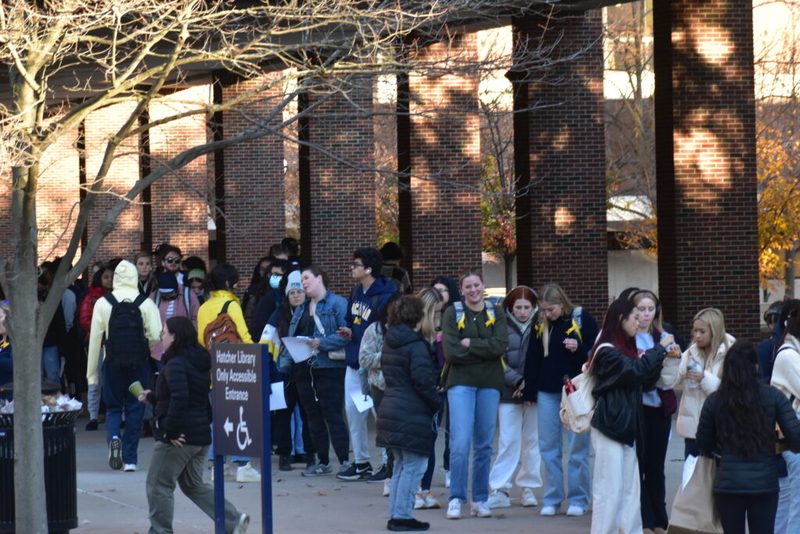
Line to register to vote and cast a ballot at the University of Michigan, Nov. 8, 2022 | Laina G. Stebbins
Lines begin to form before the doors even open. Students drift in from class, work, and daily routines, joining a quiet procession that inches toward a row of single booths. One by one, they slip behind a partition, make a choice, and emerge having participated in one of democracy’s most enduring traditions: voting.
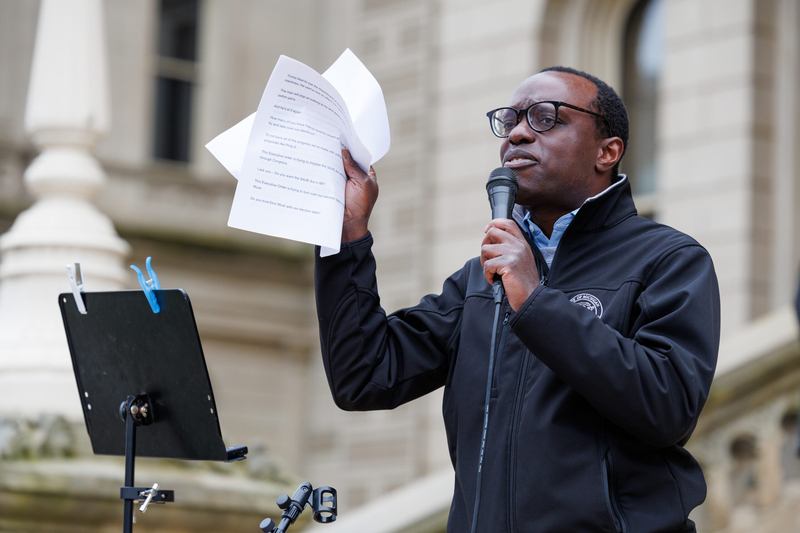
“People in Generation Z and the millennial generation, they want to be engaged. They want to see change in their communities and in their state, and that awareness and the awareness that change can come through the ballot box is something that I sense when I travel through our state and all 83 counties,” Deputy Secretary of State Aghogho Edevbie said. “Young people are engaged, and they want to make a difference.”
Yet nationally, the numbers tell a different story. Despite their political passion, Gen Z’s voter turnout still lags behind older generations. In the 2024 presidential election, only about 20 million of the 150 million ballots cast came from Gen Z, accounting for less than half of all eligible voters ages 18–29.
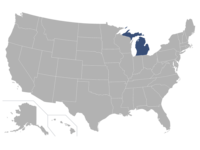
Michigan youth voters have defied these statistics, visiting the polls in waves and shifting statewide trends. The state is a leader in youth voter turnout, ranking third in the nation with a 58% youth voter turnout rate in a 2024 Tufts University report.
In the 2024 election, nearly 5.7 million Michigan residents voted, setting a statewide record.
“We couldn’t have done that without young people,” Edevbie said. “We’re going to continue to push to break records and engage young people.”
The state of Michigan was not always at the forefront of civic engagement, but has made strides in voter turnout in recent years.
In 2024, the MIT Election Data and Science Lab ranked Michigan second in the nation for election administration by the Elections Performance Index. This is a stark difference from 2018, when Michigan ranked 31st nationally.
Edevbie credited the Collegiate Student Advisory Task Force, established by Secretary of State Jocelyn Benson in 2019, with helping that trend. The task force recruits students from across the state as liaisons to “work to remove on-campus voting barriers, to educate their peers about elections, and build a campus coalition to support student voter engagement,” according to a press release.
Another major contributor to the state’s record-breaking youth turnout rates is the pre-registration law, which went into effect in 2024. Through this program, residents who meet voting eligibility requirements between the ages of 16 and 17½ can pre-register to vote online or in person.
“The pre-registration initiative is a pretty important one,” Edevbie said. “That has really been critical and we’ve seen, with that passage, the continuation of strong youth turnout in the state of Michigan.”
The pre-registration initiative initially sprouted from a recommendation by the Collegiate Student Advisory Task Force in 2023 and was accepted by the Legislature, Edevbie said.
Being a first-time voter is very intimidating. For democracy to work, we need everybody to participate. It shouldn’t be scary, and that’s what we’re trying to do – make it a lot less scary.
The State of Michigan has also addressed other barriers to voting access. In Michigan, eligible voters can participate in no-reason absentee voting, allowing them to vote by mail regardless of their situation.
“Back in 2016, only 26% of our electorate voted absentee. That jumped all the way up to 60% in 2020,” Edevbie said.
Michigan also introduced early in-person voting in 2024, allowing eligible voters to cast their votes at an early voting site up to nine days before Election Day.
Campus civic engagement programs
University and college campuses in Michigan serve as a hub for youth civic engagement, offering civic education and nonpartisan resources for students.
At Wayne State University, the Office of the Dean operates Warriors vote to centralize nonpartisan voting information for students.
The office works with state leadership to host a mobile Secretary of State office for voter registration initiatives on campus, bringing resources to students to limit barriers to access.
Though registration to vote is imperative, it is only the first step in increasing voter turnout.
“I believe that students do register to vote,” said David Strauss, the Dean of Students at Wayne State. “The key for voter engagement is getting them to vote. It’s almost like we spent all this time getting people registered when we really need to be spending time encouraging people to vote, and that’s what Warriors vote focuses on.”
Warriors vote partners with residence halls to conduct a marketing and engagement campaign every fall, offering students resources and nonpartisan guides to change their addresses, update voter registration, and find polling stations.
The university also hosts a polling location on Election Day, allowing students to cast their votes without leaving campus.
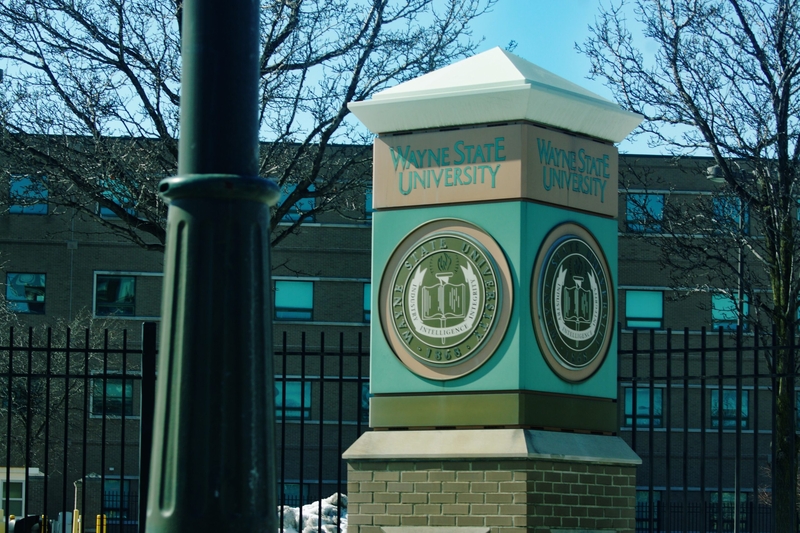
“Our Wayne State students, the vast majority of them, have jobs. Many of them are commuting to school. I see so many of our students that have family care responsibilities or religious and cultural related commitments that take their time. So we want to educate them about the importance of voting and answer any questions they have about how to vote – not who to vote for – so that they don’t have to find it for themselves,” Strauss said.
The student senate at Wayne State also aims to provide resources for students by eliminating barriers to access.
“The student senate really promotes civic engagement and has a very active voice and participation in Warriors vote,” Strauss said. “They lobbied our university president, who then took it to our university board, so that the university is now closed when there are gubernatorial and presidential elections so that the Wayne State community can vote.”
He also credits student creativity and energy in getting out the vote, as well as university and student leadership in advocating for limiting barriers to access, with high student engagement.
At the University of Michigan, UMich Votes promotes nonpartisan paths to voting for the student population.
Students face several barriers that made voting less accessible, including travel to city hall for registration and ballot information. To minimize these barriers, UMich Votes worked with the Ann Arbor City Clerk’s office to establish two satellite city clerk’s offices.
“In 2022, we had lines of literally six hours at these on campus locations because these locations are if you hadn’t registered to vote, you can register then and vote and that was just taking a really long time,” said Jenna Bednar, a professor of political science and public policy at U-M.
Bednar is also director of the campus-wide initiative on democracy and civic empowerment and founding faculty director of UMich Votes.
“That is disenfranchisement. We were so pleased this year to have a massive early registration campaign at the satellite city clerk’s offices right on campus.”
The wave of early registrants significantly decreased the amount of voting time, cutting down long poll lines exponentially.
“I am pleased to say that the longest line on election day was about 15 or 20 minutes,” Bednar said.
The city clerk’s offices offer resources and early voter sign-up that bolsters political engagement on campus by heightening its accessibility.
“It really makes voting very straightforward and makes it accessible to students all across campus,” Edevbie said.
Many students hail from out of state, so UMich Votes provides resources for students to understand their choices when registering to vote.
“We don’t in any sense push students to make a choice, but we want them to know that they do have a choice,” Bednar said.
The organization also provides resources to limit the fear students may face when voting.
“Being a first-time voter is very intimidating. For democracy to work, we need everybody to participate. It shouldn’t be scary, and that’s what we’re trying to do – make it a lot less scary,” Bednar said.
“It’s young people’s first time voting, and if you don’t know what you’re doing, basically the default thing is to not participate. And we want everybody to participate, so let’s just make it a lot easier. The electoral rules and a supportive Secretary of State implementing them has made it a lot easier [to vote] in the state,” Bednar said.
The Secretary of State’s office has outlined youth voter turnout as a priority.
Throughout the state, universities and colleges are engaging in voter education initiatives to involve youth in political engagement. In 2024, 36 institutions participated in the state’s Michigan Campus Voting Challenge, demonstrating a statewide commitment to getting out the vote for students.
Other ways to engage
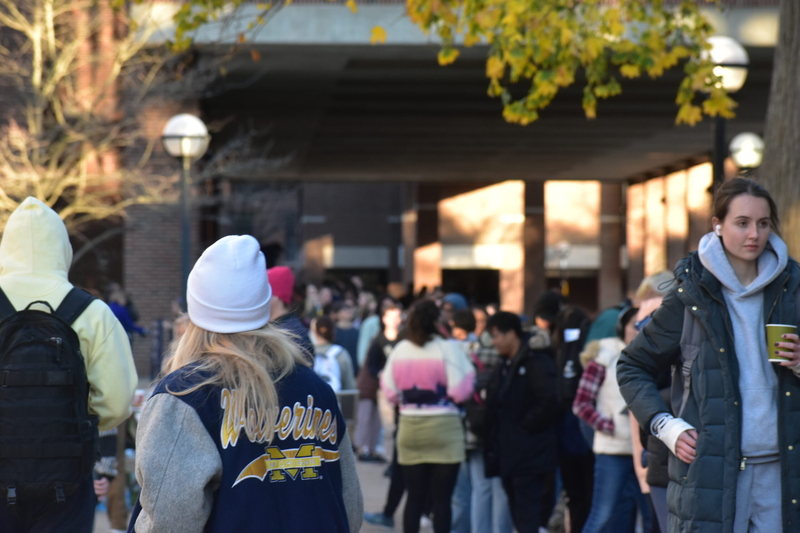
Though Election Day is a staple of democracy, civic engagement encompasses far more than a completed ballot. At Michigan universities, students engage not only at the polls, but in their classrooms, residence halls, student organizations, and in everyday interactions across campus.
“Elections pop up a few times a year, but the big ones – midterms and the presidential – are every other year. But democracy is not something that just happens every other year, right? There’s what I think of as the everyday element of democracy,” Bednar said.
The University of Michigan founded its Democracy and Civic Empowerment Initiative, a pillar of its capital campaign, to ‘foster active participation in democratic societies through courses, scholarships, and grants, expanding beyond voting to daily civic responsibility,’ according to its website.
The program provides civic education resources and opportunities for students to engage, including through dialogue sessions and guest speakers.
Through the Democracy and Civic Empowerment Initiative, students are also encouraged to reconsider their perspectives on partisanship. Political polarization can sometimes deter students from engaging politically, but partisanship is not as black and white as some may think, Bednar said.
“I think a lot of times people are kind of shying away from voting because of the partisanship of it, and so I think it’s really important to understand that there’s so much more to democracy than just voting red or blue or green,” Bednar said.
Lansing, MI