Catching Our Eye News Roundup, April 22, 2026
Apr 22, 2026 | 3:31 pm ET
Description
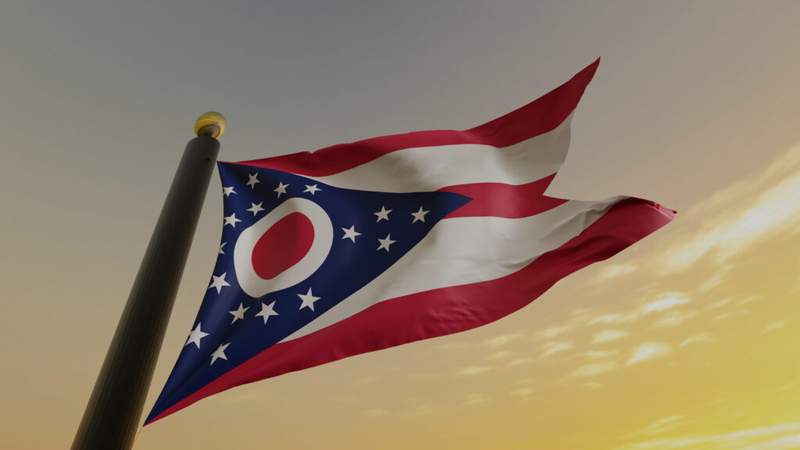
The Ohio burgee. (Getty images file photo.)
Every morning in the Ohio Capital Journal’s free newsletter, The Eye-Opener, we round up the news and commentary from across Ohio and around the country and world that is catching our attention. We call this feature Catching Our Eye, republished here.
Please subscribe to our free daily newsletter to get all the Ohio news you need to know right to your inbox every weekday morning.
If you already subscribe, please share with your family and friends so they know about the Ohio Capital Journal too: https://ohiocapitaljournal.com/subscribe/
Catching Our Eye
- Going nuclear on home rule? Cleveland.com’s Anna Staver reports, “Who decides? Ohio lawmakers eye limits on local say over nuclear plants.”As tech companies increasingly turn to nuclear energy to power their artificial intelligence systems, some Ohio lawmakers are considering stripping local governments of the ability to block new plants.“Given the importance of baseload energy, I think there needs to be one set of standard rules across the state,” said Rep. Roy Klopfenstein, a Paulding County Republican and chairman of the House Energy Committee.
- Ted Carter. Sheridan Hendrix, Emma Wozniak, and Max Filby report for The Columbus Dispatch, “Ohio State releases investigation into former president Ted Carter.”Ohio State University has released a report summarizing its findings in its investigation of former university president Ted Carter.The 50-page report details the investigation into Carter’s downturn. Sources said there was no misuse of university resources or funding.
- ICE in Ohio schools. The Dayton Daily News’ Jen Balduf reports, “Gratis police chief, officer on leave after ICE ‘wellness checks’ at Cincinnati schools.”The Preble County village of Gratis placed its police chief and another officer on administrative leave after they participated in a federal law enforcement operation at Cincinnati schools.
- Springfield. In an opinion column in the Columbus Dispatch, Viles Dorsainvil writes, “We found home in Springfield after terror. Save us from Trump’s cowardly bullying.”Springfield came together then, and we’ll do it again now, because no amount of cowardly bullying from Trump can undo a central truth: If one of us is in trouble, we are all in trouble.
- Shadow docket. The New York Times reports, “Secret memos obtained by The New York Times illuminate the origins of the court’s now-routine “shadow docket” rulings on presidential power.”In public, Chief Justice John G. Roberts Jr. has cultivated a reputation for care and caution. The papers reveal a different side of him. At a critical moment for the country and the court, the papers show, he acted as a bulldozer in pushing to stop Mr. Obama’s plan to address the global climate crisis.When colleagues warned the chief justice that he was proposing an unprecedented move, he was dismissive. “I recognize that the posture of this stay request is not typical,” he wrote. But he argued that the Obama plan, which aimed to regulate coal-fired plants, was “the most expensive regulation ever imposed on the power sector,” and too big, costly and consequential for the court not to act immediately.In the Trump era, he and the other conservative justices have repeatedly empowered the president through their shadow docket rulings. By contrast, the papers reveal a court wielding those same powers to block Mr. Obama. Justice Samuel A. Alito Jr. warned that if the court failed to stop the president, its own “institutional legitimacy” would be threatened.The court’s liberals pushed back, but compared with their recent slashing dissents, they were not especially forceful, mostly confining their arguments to procedures and timing.The papers expose what critics have called the weakness at the heart of the shadow docket: an absence of the kind of rigorous debate that the justices devote to their normal cases.
Columbus, OH