A Canadian developer’s New Mexico data center pitch may be dying. It wouldn’t be the first time
Jun 09, 2026 | 1:51 pm ET
Description
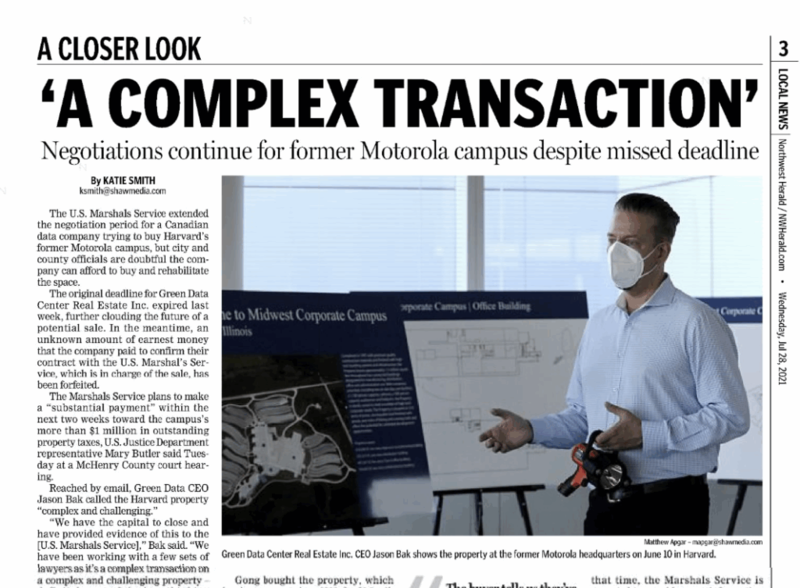
A story about Green Data Center Real Estate Inc. CEO Jason Bak's negotiations to buy Harvard's former Motorola campus appeared in the Northwest Herald, a newspaper publishing in Crystal Lake, Illinois on July 28, 2021. (Screenshot)
When Canadian founder and tech CEO Jason Bak first introduced himself to a New Mexico community in March, he pitched a data center development that would set itself apart from the rest. Instead of pulling from the electrical grid, this project would embrace renewable energy in the form of a massive solar array covering a sweeping portion of desert land across Socorro County.
He was the perfect fit to spearhead such a development, he told those gathered at the Socorro Electric Cooperative Board of Trustees meeting, largely because his company had been “developing data centers” for six years.
Bak’s plans came as developers pitch data centers in rural areas across New Mexico and the nation. Early last year, OpenAI announced its “Stargate” initiative, which aims to build $500 billion worth of AI infrastructure across the U.S. in the next few years. One of the initiative’s developments, the massive Project Jupiter data center campus that received $165 billion in government bonds, is under construction in Doña Ana County.
But a Source NM investigation has found that Bak and his company Green Data — which also identifies itself as Green Data Centers and Green Data Center Real Estate Inc. — have yet to successfully build a data center. Bak does not dispute this point.
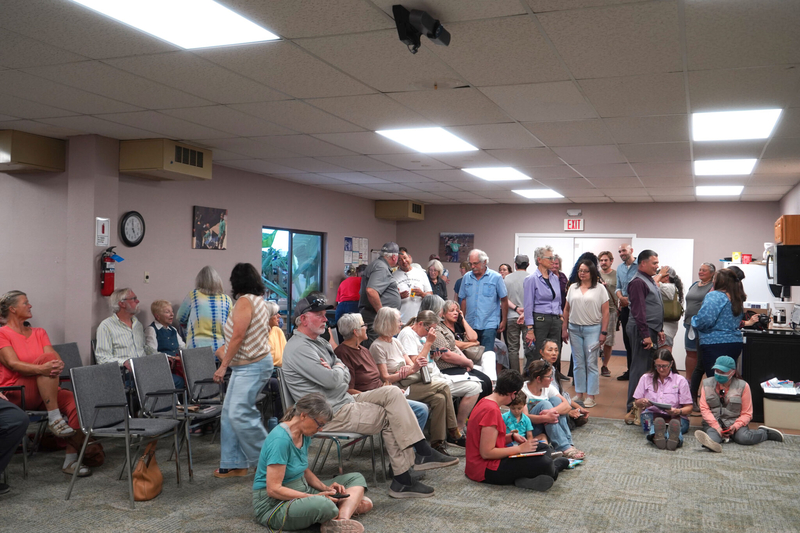
In Socorro, just more than an hour south of Albuquerque, Bak has met stiff resistance since he first announced his intentions, with residents often packing the room at Socorro City Council meetings and town halls to demand that local leaders kill the proposal.
Last week, New Mexico Tech — the local university that was operating as a potential partner in Bak’s proposed development — announced it was halting the project, partially because the university does not own enough contiguous land to host the 10,000-acre proposal.
Meanwhile, on Tuesday evening, the Socorro County Board of Commissioners is scheduled to vote on a yearlong moratorium for data centers and related infrastructure.
This is just the latest time uncertainty has loomed over one of Bak’s proposed data centers.
Rural Illinois, a celebrity endorsement and the ‘pivot’ to data centers
In 2016, Murphysboro, Illinois, Mayor Will Stephens read a Yahoo Finance press release about a Canadian company called Solar Alliance, which purported to be working with the Bill, Hillary and Chelsea Clinton Foundation to build a solar generation project and a “workforce redevelopment program” for unemployed former coal workers in the area.
Stephens recalled to Source NM that it seemed like a no-brainer for his town of 7,000, which, like many in the region, was searching for an economic engine as coal jobs gradually vanished.
“You know, I’m energetic and trying to get things done,” he said, so he reached out and asked if company officials might think about making such an investment in his town.
News reports from the time show that Solar Alliance, led at the time by Bak, envisioned overhauling a former packaging factory that had shuttered in the early 2000s and taken 100 jobs with it. Bak — who holds a bachelor’s degree in applied physics, which Source confirmed he obtained from Simon Fraser University in Canada — had previously led the alternative energy company Finavera Renewables. That firm wanted to install a solar array to power an on-site cryptocurrency mining operation.
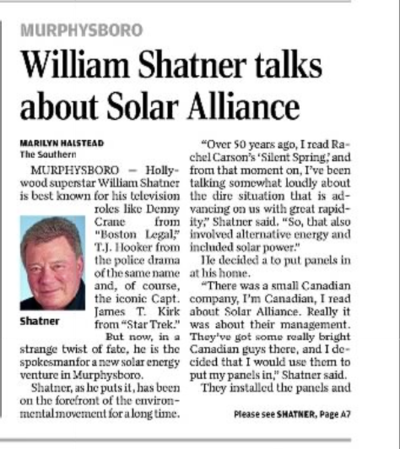
Fellow Canadian William Shatner, aka Captain Kirk to “Star Trek” fans, in 2018 endorsed the project. One local newspaper, the Southern Illinoisan, quoted Shatner that year as saying he was impressed by the “bright Canadian guys” working to expand alternative energy sources in rural areas.
“Think of the irony of a computer building in a coal mining area offering employment,” Shatner said.
But the crypto mining venture, operating under another of Bak’s companies called NuYen, was never built.
Two more years passed and while Bak’s proposal still had not come to fruition, he found other uses for the property. The Murphysboro facility served briefly as the headquarters for One Touch Medical Inc., which Bak said he formed to deliver face masks, COVID-19 tests and other safety equipment to Canada during the pandemic.
By then, Bak was pitching another small town hours away on a data center development.
In 2021, the Northwest Herald reported that a Canadian firm known as Green Data Center Real Estate was making a bid to purchase part of a sprawling Illinois campus formerly owned by Motorola and convert a portion of the property into a “solar-powered data hub service.”
That alarmed the Murphysboro mayor.
“They had not developed this project in Murphysboro and then one day I pick up the paper and Jason (Bak) is in Harvard, Illinois, saying that they’re going to buy this hundreds and hundreds of acre Motorola campus and put a solar-powered data center in it,” Stephens said. “I was like, what? You can’t even keep the grass mowed here.”
The Northwest Herald reported in 2022 that Bak’s deal on the Motorola campus had fallen through. The Murphysboro project ultimately died in 2023.
“The track record that I can see is all style and no substance,” Stephens said.
While the Illinois developments were on life support, Bak began looking for opportunities elsewhere and reached out to Spaceport America in southern New Mexico. After discussing possibilities for a data center there, Bak said Spaceport officials introduced him to New Mexico Tech leaders in 2024. A spokesperson for Spaceport told Source NM that introduction happened at Bak’s request.
The plan
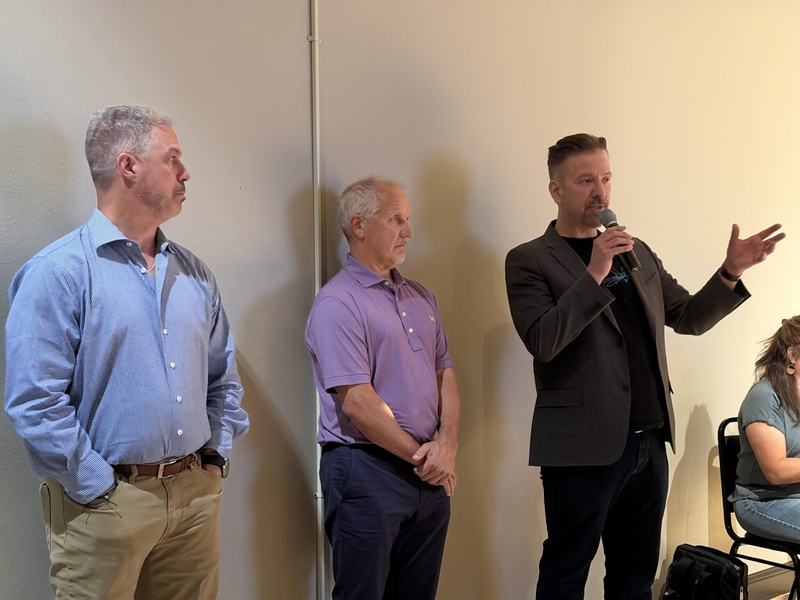
In Socorro — where striking mountain ranges rise out of the desert landscape near the Rio Grande and the Bosque del Apache National Wildlife Refuge — Bak said he “saw the potential for something larger” on 10,000 acres of open land.
He envisioned a hyperscale AI data center that can unite two seemingly disparate interests: the nation’s demand for data and the state’s diminishing natural resources.
In addition to solar power, Bak has pitched locals on sourcing the “vast majority” of the data center’s water needs from the air itself. He plans to use atmospheric water generators to pull moisture from the air and turn it into usable water.
“If it works in New Mexico, it’s going to work many other places,” he said.
Bak told Source NM that he wants to create a sustainable supply chain near the data center. A factory to create the solar panels needed to power the data center could employ as many as 580 people, he said.
“People are like, ‘Oh, data centers don’t create jobs.’ OK, well let’s bring a factory here then,” he said. “I think there’s going to be a very significant demand for these, so we’re already looking and thinking about factory No. 2.”
While his proposal hasn’t won over many locals — even a sitting U.S. representative recently called on the Socorro County Board of Commissioners to adopt a moratorium on building data centers — Bak has often taken a conciliatory approach when interacting with his critics.
At his most recent public appearance at a late May town hall in Socorro, Bak, a Vancouver resident who often dons the T-shirt, blazer and jeans outfit favored by tech CEOs, told the crowd that he believed the data center industry in general does not represent itself well or listen to community members’ concerns.
When one resident held up a sign that read, “big data big lie,” Bak responded: “You’re not wrong.”
“I think big data has been bad (at) interfacing with communities in many different ways,” Bak said. “I think we got off on the back foot because of the reputation of the industry.”
Bak contends that past ventures are not failure
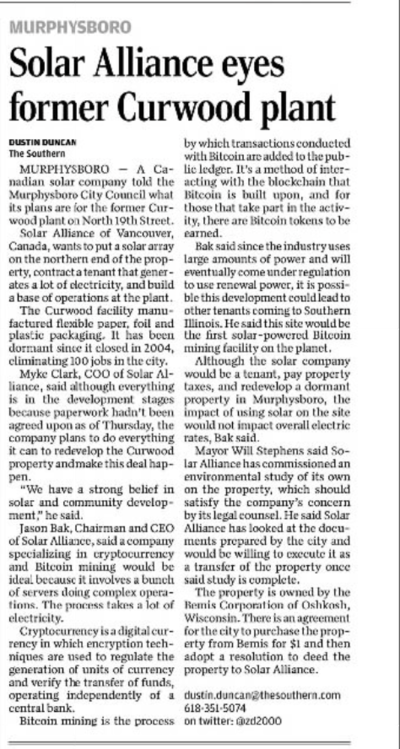
While Bak has never built a data center, he doesn’t think that should faze locals. To him, his unbuilt developments are not failures. When the crypto-mining operation in Murphysboro fell through, he said, his company made a “pivot” to data centers.
His chief of staff, Oded Orgil, told Source NM he believes “evolution” is a more apt description of Bak’s shifting development plans.
“All of the companies in the crypto space…all went into data because they’re positioning with power,” Bak said. “Renewable power has always been a part of my background. And we started looking at the right project, the right fit.”
Bak cited a variety of reasons for his business prospects not advancing. In Murphysboro, for instance, he said that the local utility couldn’t provide the necessary power, the facility was unusable without “effectively starting over,” and issues with the building’s foundation “materially changed the project’s underlying economics.
He “did not walk away from Murphysboro carelessly,” he wrote to Source NM in an email.
“Think of a development portfolio as prospecting or tending to a number of planted seeds. Some develop into something more, this one didn’t,” he wrote. “The mayor doesn’t understand that.”
Bak has said that, if approved, the Socorro project could take years to get off the ground. When asked if New Mexicans should be alarmed at how short-lived his recent ventures have been, he said, “Absolutely not,” and noted successful wind farms he’s developed in Ireland and British Columbia.
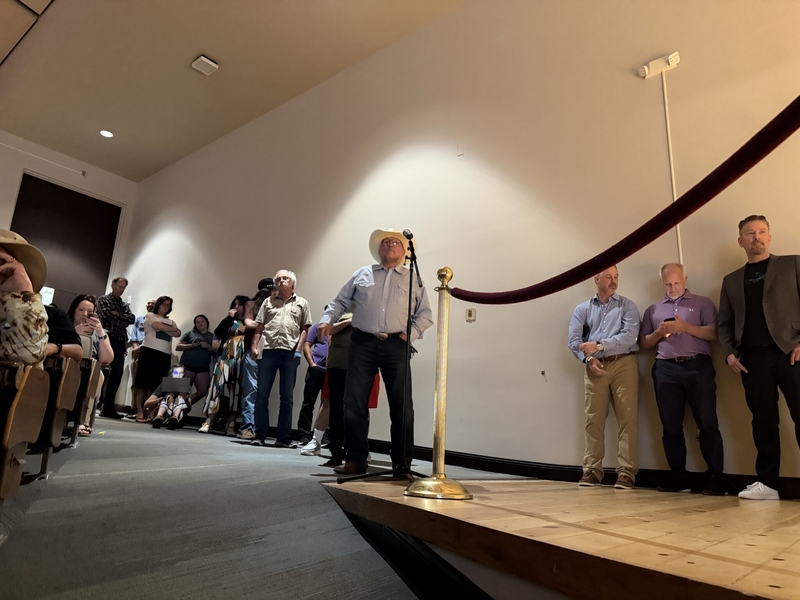
The impending moratorium vote
But Bak’s lack of experience building data centers remains concerning for at least one New Mexico local official.
Democrat Joe Gonzales, the chair of the Socorro County Board of Commissioners, told Source NM that Bak’s company was “too green — not proven or anything.”
Socorro County lacks the zoning regulations and safeguards found in New Mexico’s more populous counties, such as Bernalillo, Santa Fe or Doña Ana. That’s intentional.
“We’re predominantly farming and ranching,” Gonzales said, adding that the prevailing mentality of many of his neighbors is: “You can’t come and tell me what to do with my property.”
As he and his colleagues have watched data center developers pitch expensive developments across the nation and across the state, it became clear to him that it’s becoming harder “to stay rural and small, just because you got to have those protections in place.”
His commission is scheduled to vote Tuesday evening on a moratorium for data centers and related infrastructure. If approved, the vote will also establish a committee to study and recommend regulations around these types of developments, regardless of who’s building them.
“With any type of data center, our concerns are water, electricity and the environment,” Gonzales said. “Those are things we want to have in place, whether it’s Green Data or another company.”
Santa Fe, NM