In Bridgeport, a call to protect Haitians with Temporary Protected Status
Jul 10, 2026 | 1:06 pm ET

Description
Photo courtesy of CT Mirror
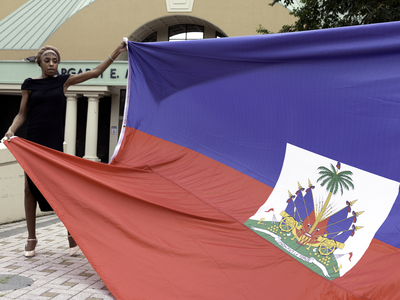
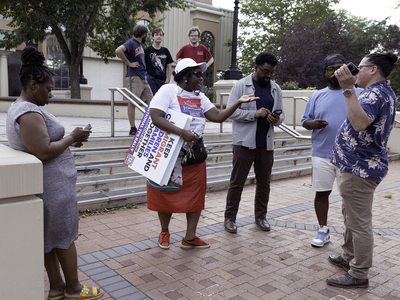
Outside the Margaret Morton Government Center in Bridgeport on Thursday, Haitian immigrants, advocates, faith leaders and supporters gathered with a shared message: the fight to protect Temporary Protected Status is about more than immigration policy.
It’s about families, jobs and a community that has helped build Bridgeport, they said.
A ruling by the U.S. Supreme Court in late June affirmed President Donald Trump’s decision to end Temporary Protected Status for 1.3 million people in the U.S. from 17 countries including Haiti.
The rally, organized by Francise Jean-Louis of the Haitian American Collaborative, was part of a nationwide day of action urging Congress to protect Temporary Protected Status, or TPS, holders and support legislation that would provide permanent protections for immigrant families.
For many in attendance, the issue wasn’t political. It was personal.
For Isnada Unalus, a Haitian immigrant who has lived in Bridgeport for the past decade and works in healthcare, the possible loss of TPS represents fear for friends and coworkers who have spent years building lives in Connecticut.
“When you come here, you work hard,” Unalus said. “I have a lot of friends that work in healthcare, and I know how hard Haitian people and other nations are working to make ends meet. It’s hard to swallow when you hear all these people that have been working so hard, trying to make a life for their family … They’re so afraid they can’t work. They don’t know what’s going to happen.”
She said many Haitian immigrants have done exactly what they hoped to accomplish after arriving in the United States.
“Some of them already built a real life,” she said. “They have a house. They have small businesses. What’s going to happen?”
Temporary Protected Status allows eligible nationals from countries experiencing armed conflict, environmental disasters or other extraordinary conditions to live and work legally in the United States for a designated period. Haiti was designated for TPS following the devastating 2010 earthquake and subsequent humanitarian crises. Recent federal actions have placed those protections in jeopardy for many Haitian nationals, prompting demonstrations across the country, including in Bridgeport.
Maggie Mitchell Salem, the executive director of Integrated Refugee and Immigrant Services, estimates that there are about 5,000 Haitians in Connecticut with TPS.
For Fanel Merville, a longtime Bridgeport resident, business owner and founder of the Center for Immigrant Development, the consequences extend far beyond immigration paperwork.
“Most of my clients are Haitian, and I have family and friends directly impacted by what’s going on,” Merville said. “I know the impact this will have on them here and on their families in Haiti.”
He said he’s already hearing from clients whose employers have told them they can no longer work because their employment authorization has expired.
“You’re talking about people not being able to pay their rent, to put food on the table, to feed their children,” Merville said. “It’s terrible.”
Merville also worries about the broader impact on Bridgeport, particularly the healthcare workforce.
“Many of these TPS holders are in the healthcare industry,” he said. “If these people cannot work, they won’t be able to provide for themselves or attend to their patients. It’s a disaster for them and for the entire community.”

That concern was common in the crowd.
Julie Aristide traveled from the Wappingers Falls area of New York to attend the Bridgeport rally because, she said, both of her parents immigrated from Haiti.
“As a descendant of Haitian people, I feel that it’s very important that we support the Haitian community,” Aristide said.
She said many TPS holders came to the United States after Haiti’s 2010 earthquake seeking safety while the country recovered, only to watch new crises unfold in the years that followed.
“These people literally have nowhere to go,” she said.
She believes the debate over TPS is about more than immigration policy.
“We have to stand together, support one another,” Aristide said. “It’s not just about Haitians.”
The rally also drew supporters with no direct connection to Haiti.
Liam Conway, 22, has lived in Bridgeport his entire life and said seeing a Facebook post about the rally was enough to bring him downtown.
“I grew up around a lot of Haitian immigrants, around a lot of immigrants in general,” Conway said. “Even if I didn’t, I think it’s important in this time to be there and support.”
He said supporting immigrant neighbors is part of supporting Bridgeport itself.
“We’ve got to protect one another,” he said.
Throughout the evening, participants held signs, listened to speakers and called on Congress to preserve protections that allow Haitian TPS holders to continue living and working in the United States.
For Unalus, the uncertainty facing families weighs heavily, but so does hope.
She said the Haitian community has endured hardship before and will stand together through this one.
“We’re going to stand up and help and fight,” she said.
Hartford, CT