Bottoms ups the ante in feud over debates in race for Georgia governor
Aug 31, 2026 | 6:37 pm ET
Description
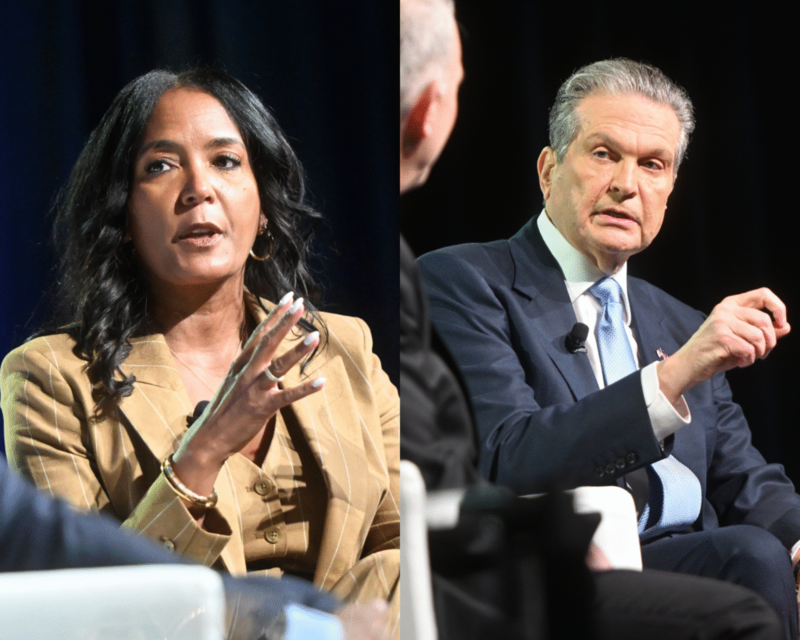
Democratic Keisha Lance Bottoms and Republican Rick Jackson, both candidates for governor, speak at a Georgia Chamber event in Athens, on Aug. 5, 2026. Ross Williams/Georgia Recorder
Months after the campaigns of Republican Rick Jackson and Democrat Keisha Lance Bottoms first issued challenges to the other over when, where and how to debate ahead of the November elections, there’s still little agreement on how voters will hear from each of the two candidates for governor.
So far, both campaigns have agreed to only one town hall-style debate hosted by Atlanta News First and Gray Media on Oct. 6.
The Bottoms campaign first challenged Jackson to three debates in June, to which the Jackson campaign responded by proposing one debate. Nearly two months later, Bottoms agreed Monday to it and is now pushing for five more.
“Georgians deserve to hear directly from candidates for public office with multiple debates around the state,” Bottoms said in a statement. “I’m ready to debate Rick Jackson in Atlanta, Macon and Savannah.”
Aside from the ANF debate both candidates agreed to, Bottoms is also challenging Jackson to the Atlanta Press Club Loudermilk-Young debate on Oct. 12, another on Sept. 17 hosted by Middle Georgia Matters, an 11Alive debate on Sept. 22, a WJCL-TV debate on Oct. 13 and one hosted by CNN at an undetermined date.
The Jackson campaign criticized the move, with campaign spokesman Garrison Douglas saying that “only the flailing campaign of a failed politician would spend more than six weeks ducking a debate, then suddenly demand six of them after Georgians begin to learn the truth about her disastrous record as mayor of Atlanta.”
The Democratic Party of Georgia instead focused on Jackson not yet accepting the Atlanta Press Club debate. Jackson participated in the press club debate during the Republican primary but cited a scheduling conflict with the debate scheduled for the primary runoff with Lt. Gov. Burt Jones.
“Over two months later and Jackson still won’t commit to a debate that gubernatorial candidates in both parties have participated in for more than twenty years,” said DPG spokesperson Jake Strickland.
The Jackson campaign has not yet indicated a reason for not accepting the Atlanta Press Club debate, where a panel of journalists ask the candidates questions.
Debates are unlikely to change voters’ minds, but participating in them provides candidates a massive platform to build name recognition and excitement amongst voters, said University of Georgia political communications professor David Clementson.
Clementson said it’s in both candidates’ interest to participate in as many debates as possible in what he called the “the single most watched political events by far.”
“The upside far outweighs the downsides for both of them, as far as any kind of risk versus reward,” Clementson said. “The rewards outweigh the risk for both of them to be in as many debates as possible to get attention to help boost their profile amongst their bases. They need to remind their supporters, their partisan-aligned supporters, who they are and that they’re running for governor and why they need to get out and vote in this election.”
Candidates can miss on the opportunity to mobilize their supporters by skipping or limiting debates, but Jackson, who won the Republican nomination for governor despite skipping the Atlanta Press Club debate during the runoff, could be feeling confident that he can succeed again in November without it, Clementson said.
“That might be his thinking there, but he needs to be reminding the general election Republican voter base,” he said, adding that “the effect of general election debates is crystallizing the support, crystallizing your base, solidifying your support base, because each side is going to need their respective base to turn out and vote for them in this election.”

Atlanta, GA