Ballot Measure 2, repeal of Alaska’s election system, trails with many votes uncounted
Nov 04, 2026 | 1:12 am ET
Description
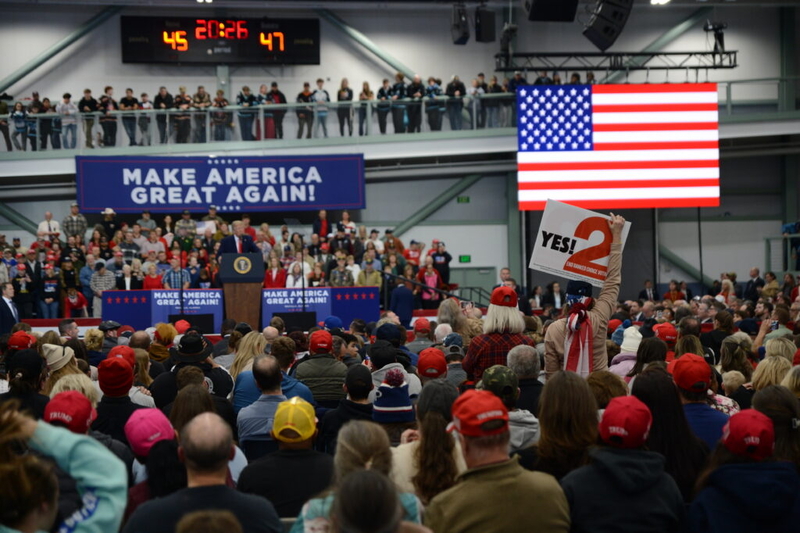
An attendee of President Donald Trump's rally on Tuesday, Oct. 13, 2026, in Wasilla, holds up a sign urging a yes vote on Ballot Measure 2. (James Brooks photo/Alaska Beacon)
This article was last updated at 3 a.m. Wednesday, Nov. 4.
A ballot measure seeking to repeal Alaska’s open-primary and ranked-choice election system is trailing in early vote counting, according to preliminary results posted Tuesday evening by the Alaska Division of Elections.
With 393 of 400 precincts reporting results Tuesday night, “no” on repeal led “yes” by 51.9% to 48.2%.
In 2024, a similar repeal measure led on Election Day but as more absentee and early votes were counted, the no-repeal side took the lead and won, preserving the system for this year’s election.
If Ballot Measure 2 passes this year, it would repeal the state’s current system of elections, in which all candidates for an office run together and the top four vote-getters advance from the primary to the general election, which uses ranked-choice voting.
In place of that system, Alaska would return to party-run primaries, where political parties set the rules for who may participate. One candidate from each party would advance to the general election, and ranked choice voting would not be used.
In addition, the state would no longer have a law requiring third-party political donors to disclose the source of their money; contributors would be able to give money anonymously.
Because of a conflict with Ballot Measure 1, passed during the August primary election, enacting Ballot Measure 2 likely also would eliminate a limit on direct financial donations to governor candidates, allowing donors to give unlimited amounts of money in governor races. A final ruling on that elimination would take place after the election.
Both sides of the issue were principally funded by out-of-state donors. Advocates of Ballot Measure 2 raised about $2.5 million, less than one-quarter of the amount raised by supporters of the existing system.
The Alaska Republican Party campaigned heavily in favor of Ballot Measure 2, and President Donald Trump offered his support during an October rally in Wasilla.
Elon Musk, the world’s richest man and the biggest donor to Republicans nationally, made a large donation to the pro-repeal campaign, but ranked choice voting supporters contributed heavily to the vote-no cause.
On Tuesday morning, after casting her ballot, Ella Wheeles, a freshman at the University of Alaska Anchorage, pointed to the inundation of political advertising she called “obnoxious” as motivating her vote against Ballot Measure 2, which is a vote to retain campaign disclosure laws.
“I know a lot of it comes from out of state funding … and I think it’s so important that we know who’s funding what and where money comes from, because some of these candidates get money from people who have never been to the state of Alaska, and know nothing about the dynamic and the demographics here,” she said. “I think that’s super important, which is why I voted no on (Ballot Measure) 2.”
Juneau