Audit into public health contract process sparks outrage from Michigan House Oversight members
Sep 22, 2026 | 2:41 pm ET
Description
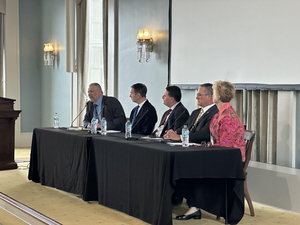
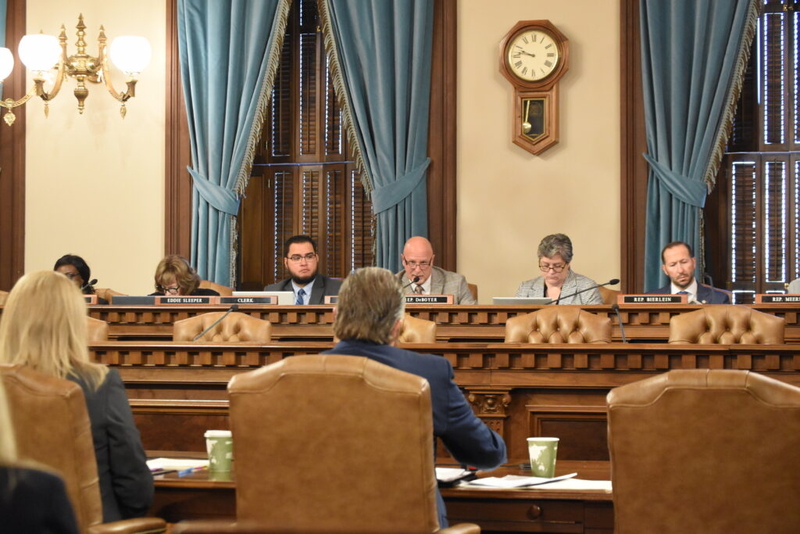
Representatives on the House Oversight Committee question staff from the Office of the Auditor General on their report on the Michigan Public Health Institute on Sept. 22, 2026. (Photo by Katherine Dailey/Michigan Advance.)
Michigan Rep. Jay DeBoyer (R-Clay) called the results of an audit from the Michigan Office of the Auditor General into the work of the Michigan Public Health Institute “unbelievable” in a hearing on Tuesday morning.
The Michigan Public Health Institute is a nonprofit established in 1990 by the Michigan Department of Health and Human Services to coordinate and promote health research with the state’s public universities. The audit report, which was released in early September, showed insufficiencies in the department’s efforts to monitor the institute’s contracts and grants and provide the Legislature with information about projects and deliverables. The audit also found only partial compliance with state law and policy in the department’s awarding of contracts and grants to the institute.
“This just absolutely breaks my heart because we had so many opportunities here. We have some of the best educational institutions in the world, and we’ve robbed them of financing,” said Rep. Jamie Greene (R-Richmond), while Rep. Josh Schriver (R-Oxford) called the outcomes of the report “ridiculous” and Rep. Denise Mentzer (D-Mt. Clements) referred to the response from the department in the report as “a disappointment.”
The department disagreed or partially disagreed with all of the audit’s findings. Lynn Sutfin, a spokesperson for the Department of Health and Human Services, said in a statement to the Michigan Advance that the “information from the audit will be used to help inform future processes and department approaches.”
The findings of the report covered a period in which Elizabeth Hertel served as director of the department, a position from which she has since stepped down. She was replaced by Acting Director Amy Epkey.
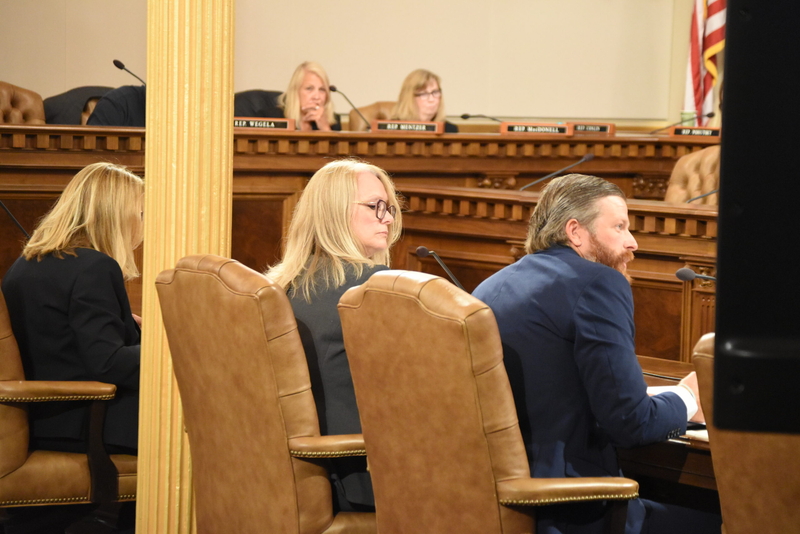
In response to questions from committee members, Benn noted that conversations with Epkey since she was sent the audit have been both productive and cordial, and that Epkey is “open to our recommendations.” However, the official final responses from the department, which were submitted after Epkey took over the department, do indicate disagreement with the auditor general’s report.
Sutfin noted that collaborations between the department and the Michigan Public Health Institute have included responses to public health issues “including combatting disease outbreaks such as COVID-19 and cyclosporiasis; ensuring medical professionals and others receive needed information during a rapid rise in youth suicide; and addressing emerging threats like community violence.”
“The Michigan Department of Health and Human Services (MDHHS) works with the Michigan Public Health Institute (MPHI) to develop and implement projects that advance community health, strengthen the public health system and support programs across the department. The nearly 40-year partnership was designed with a focus on improving public health for Michigan residents,” she wrote.
Yvonne Benn, the audit division administrator, explained that the audit focused on fiscal years 2024 and 2025, during which, “the state’s appropriations act authorized the department to use one-year agreements with MPHI, and during that two-year time, it established and awarded nine high-level agreements and 857 project-level agreements totaling $435 million.”
Ivy Jaroche, an audit manager for the office, explained that for many agreements with contractors that individually exceeded $50,000, the statements of work submitted only supported half of the nearly $17 million in subcontracted services within the agreement or final project budget.
“The absence of information to fully support the project budgets limits the department’s ability to monitor the propriety of MPHI reimbursement requests related to subcontractor costs,” Jaroche said.
Chad Monger, the principal audit supervisor, also noted that around 80% of contracts had no deliverable information and submissions frequently “lack sufficient information to effectively monitor the progress of agreements and fully support payments made.”
Nearly 70% of Financial Status Reports lacked any underlying support for the cost, and work plans were frequently submitted late and reviewed after payments had already been made to the Michigan Public Health Institute.
“We noted MDHS did not report any project information for two projects totaling 10.6 million dollars, did not provide detailed descriptions or appropriation line item fundings for almost 30 percent of the 18 projects it did include in the report, and did not identify subgrantees for the two projects with subgrantees,” Monger added. “Our review of these agreements noted that they included over 100 subgrantees who were allocated $11.8 million for fiscal year 24 and 25.”
Lansing, MI