Attorneys for UA System students, professors file appeal in anti-DEI lawsuit
Dec 19, 2025 | 7:59 am ET
Description
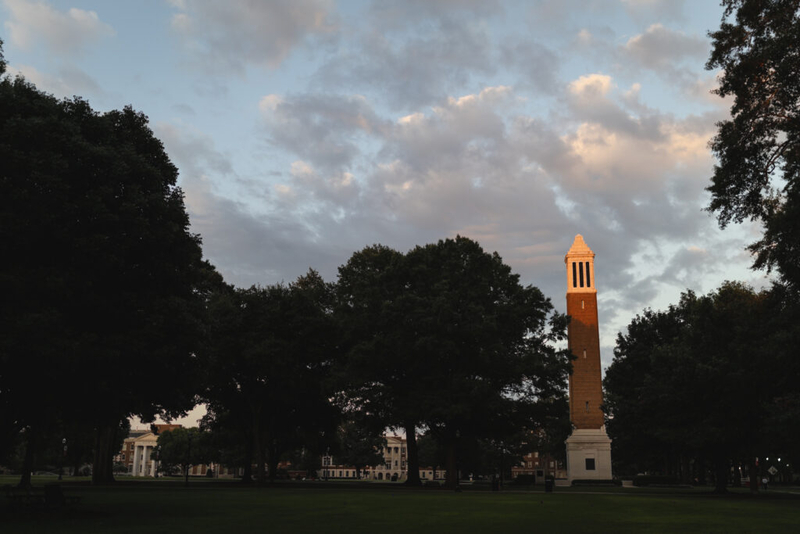
A sunset over the Denny Chimes on the campus of the University of Alabama in Tuscaloosa, Alabama on Thursday June 20, 2024. A group of students and professors in the University of Alabaa system have appealed a federal court ruling that allowed Alabama's anti-diversity, equity and inclusion law, SB 129, to go into effect. (Will McLelland/Alabama Reflector)
A group of students and professors have appealed a federal court ruling allowing an Alabama’s anti-diversity, equity and inclusion (DEI) law to go into effect.
The appeal, filed Dec. 15 in the 11th Circuit Court of Appeals, came after U.S. District Judge R. David Proctor denied a preliminary injunction in August to prevent the state from implementing SB 129, which bans public funding for DEI programs as well as the public affirmation of “divisive concepts.”
Antonio Ingram, a Legal Defense Fund lawyer representing the plaintiffs, said in an interview Monday the lower court “made a lot of mistakes in interpreting the law and the facts.”
“This precedent really is in many ways an attack on universities as incubators of democracy,” he said. “If you can’t have professors and students engaging in free speech and free discourse, especially about topics that we’re talking about here, which is race, sex, gender, sexual orientation, you really can’t create a functioning, multiracial, inclusive democracy.”
Proctor wrote in a 146-page opinion that while the professors proved they had standing for the lawsuit, the students did not and language in SB 129 contains “explicit guidelines which led to the denial.”
“The court concludes that plaintiffs have not established the requirements for the issuance of a preliminary injunction against the Board’s enforcement of SB 129,” the opinion said.
The 69-page filing said the court acknowledged the bill’s “viewpoint-based restrictions” on speech for the professor plaintiffs, but incorrectly concluded that the restrictions are lawful under existing precedent and the government speech doctrine.
Attorneys for the plaintiffs also said that the courts failed in holding that the student plaintiffs had no standing.
The lawsuit was first filed in January by students at The University of Alabama Birmingham; three professors working at The University of Alabama in Tuscaloosa and the Alabama Chapter of the NAACP. The plaintiffs alleged that SB 129 stifled academic instruction and violated the First and Fourteenth Amendments.
“This appeal is a necessary next step because SB 129 continues to undermine academic freedom and the integrity of higher education in Alabama,” Dana Patton, an Alabama professor and plaintiff, said in a statement Monday. “This law has created a climate of fear on campus that narrows what students can learn and what educators can teach. Through this appeal, we urge the court to affirm our responsibility and right, as dedicated educators, to provide students with a truthful, comprehensive education.”
The appeal alleges that Patton was investigated because of an anonymous complaint made about her “embedding divisive concepts” into a course she taught at UA about poverty.
The filing also alleges that following the investigation she was “confronted” by Rep. Danny Garrett, R-Trussville, who serves as the chair for the Ways and Means Education Committee at a UA football game where he told her “Alabama state legislators were ‘not going to let this go.’”
Garrett declined to comment on Patton’s allegations in a phone interview Thursday afternoon.
Sydney Testman, a student at UAB and plaintiff in the case said in the same statement the bill being implemented has a chilling effect on the campus’ culture.
“As a senior, I have watched our campus change overnight, as students are afraid to speak, opportunities for thoughtful engagement have disappeared, and students’ shared sense of belonging has eroded,” the statement said.
Testman, who formerly served as the finance coordinator for UAB’s Social Justice Advocacy Council (SJAC), alleges in the appeal that because of the university’s interpretation of SB 129 she was unable to maintain a $600 stipend she received for work she did with her student organization and her position as finance coordinator for SJAC.
Ingram said Proctor’s ruling could have consequences on higher education.
“If opinions like this lower court’s opinion continue to exist, it really would sort of fundamentally change the way in which universities have functioned for the past hundreds of years, and really take away universities as spaces for intellectual engagement,” he said.

Montgomery