Arkansas providers seek to fill affordability gaps in maternal health care landscape
Oct 10, 2025 | 5:45 am ET
Description
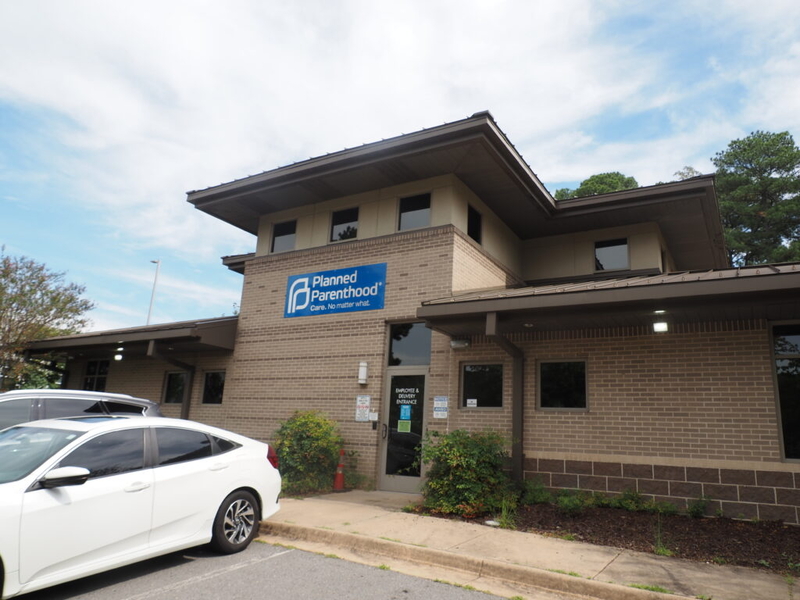
Planned Parenthood's Little Rock location on Tuesday, September 30, 2025. (Photo by Tess Vrbin/Arkansas Advocate)
As federal law cuts off Medicaid funding to organizations that provide abortions, what’s already happened in the Natural State likely will be repeated nationwide.
For seven years, low-income Arkansans who use Medicaid have been unable to have their health care covered at either of the state’s Planned Parenthood locations in Little Rock and Rogers. That includes such services as annual physicals, cancer screenings and testing for sexually transmitted diseases, though Planned Parenthood’s detractors tend to focus on abortion. Arkansas’ near-total abortion ban became effective in 2022, but the U.S. government had already banned Medicaid funding for abortion in most cases.
Without state Medicaid dollars, Planned Parenthood has had to “fundraise just to keep [the] doors open,” said Emily Wales, CEO of Planned Parenthood Great Plains, which oversees locations in Arkansas, Oklahoma, Kansas and Missouri.
Arkansas Medicaid patients in 2018 expressed frustration to their Planned Parenthood providers that they could no longer get care from people they knew and trusted, Wales said. She added that Medicaid reimbursements are so low in Arkansas that many providers do not participate in the program.
“Planned Parenthood, both in Arkansas and nationally, wants to support patients who have Medicaid,” Wales said. “We want every person, whatever their income status, to know that they can get the same high quality services, but because of politics, now those patients are having to find new providers if they can, and many times [they] are facing delays on their care because they can’t find another provider that they can get into very quickly.”
Low-income Arkansans can seek care at the state health department’s local health units or at nonprofit community health centers, but unlike Planned Parenthood, those facilities do not specialize in reproductive health care.
People who cross state lines in order to receive health care cannot expect their Medicaid coverage to include services in another state, and interstate travel might not be feasible anyway for people who struggle to obtain reliable transportation and child care, Wales said.
That problem will only be exacerbated if Medicaid patients can’t get care at Planned Parenthood anywhere, she said.
Nationally, Planned Parenthood has identified at least 200 clinics out of about 600 nationally that could close if they cannot treat Medicaid patients and receive reimbursements from the state-federal health program for lower-income people and some people with disabilities.
None of Planned Parenthood’s Great Plains locations are currently set to close, said Hanna Sumpter, regional director of marketing and communications.
Planned Parenthood filed a federal lawsuit in July aiming to block the federal budget reconciliation bill’s provision targeting the organization. A district court judge issued a preliminary injunction, but an appeals court panel overturned the ruling Sept. 11.
The Little Rock Planned Parenthood clinic is under heavy security; a reporter seeking comment for this story was denied access and had to leave contact information via an intercom.
Other provider options
The Arkansas Department of Health has local health units in all 75 counties. The units offer no-cost testing for sexually transmitted infection and cervical cancer screenings for uninsured patients and “likely no more than $25” for insured patients, said Ashley Whitlow, the health department’s deputy director of health communications.
Additionally, Arkansas has a network of more than 200 federally qualified health centers that operate under the umbrella of Community Health Centers of Arkansas, a nonprofit that provides health care regardless of patients’ ability to pay. The federal Health Resources and Services Administration designates and funds these centers.
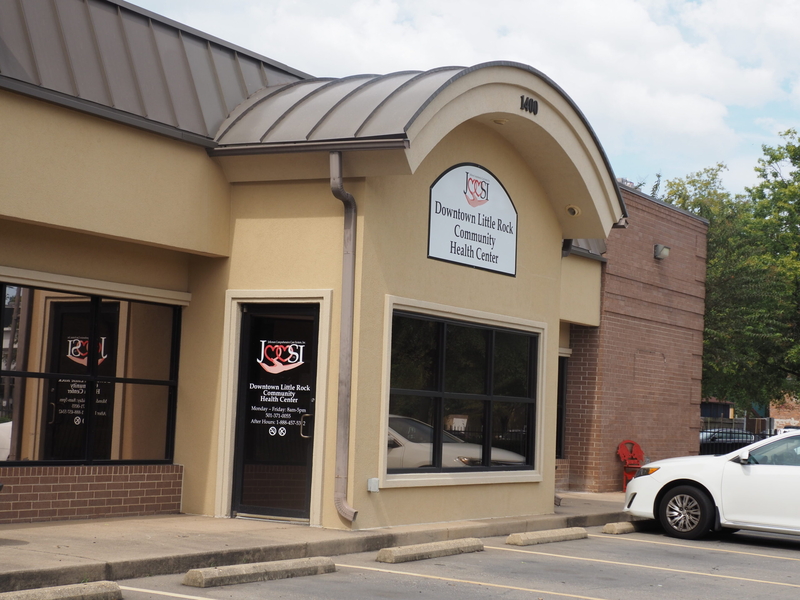
How well the community health centers are filling the gap in women’s health care left by the absence of publicly funded reproductive health care is uncertain, as Community Health Centers of Arkansas CEO Lanita White did not make herself available for an interview.
At a roundtable maternal health discussion last year, White said not enough Arkansans are aware of community health centers.
The current federal government shutdown has created “significant financial challenges” for these centers, according to KFF Health News.
The centers don’t focus on women’s health, but that’s changing as a new Arkansas Center for Women and Infants’ Health has begun working with providers to increase pregnant and postpartum Arkansans’ access to care.
Arkansas has one of the highest maternal mortality rates in the nation and the third-highest infant mortality rate, according to the Arkansas Center for Health Improvement, a nonpartisan, independent health policy center.
Lawmakers and health care providers have expressed concern that the state has trouble recruiting and retaining obstetrician-gynecologists. More broadly, Arkansas had only 9.2 primary care physicians per 10,000 residents as of 2022, according to ACHI.
Avoiding silos
Krista Langston, CEO of the Arkansas Center for Women and Infants’ Health, previously helped launch Arkansas’ community health worker training program at the University of Arkansas for Medical Sciences’ Institute for Community Health Innovation.
“A lot of the FQHCs have decided that they’re going to take on prenatal care because they see that need in their community of being able to enhance access,” Langston said. “At the center, we’re willing to partner with them in order to help them feel prepared to do so.”
Additionally, Arkansas’ Healthy Moms, Healthy Babies Act of 2025 allows Medicaid reimbursements for community health workers who provide pregnancy-related health services. It’s one of many Medicaid policy changes in the new law that its supporters, including Gov. Sarah Huckabee Sanders, said will improve low-income Arkansans’ access to maternal health care.
Langston’s previous job helped lay the groundwork for implementing this new Medicaid policy, she said. It was among the recommendations of a maternal health task force Sanders convened last year.
“It was the first time that we were able to see so many organizations — hospitals, clinics, community-based organizations, faith-based organizations — were working on maternal health initiatives, but it was being done in a silo,” Langston said.
One of the goals of the Arkansas Center for Women and Infants’ Health is to help family medicine providers, midwives and advanced practice registered nurses fill gaps in maternal health care left by the state’s shortage of OB-GYNs, Langston said.
The center is also working on a perinatal care curriculum for community health workers “so we can ensure that women are getting the best support needed while pregnant,” she said. She expects the curriculum to be complete by spring 2026.
We want every person, whatever their income status, to know that they can get the same high quality services, but because of politics, now those patients are having to find new providers if they can.
Referrals and partnerships
In western Arkansas, the 12 facilities under the River Valley Primary Care Services community health centers organization have one women’s health provider who provides pregnancy care up to 32 weeks’ gestation, nursing director Laura Little said. After 32 weeks, patients are referred to local hospitals in and around Fort Smith or as far east as the Johnson Regional Medical Center in Clarksville, she said.
“We have a mutual understanding with these bigger hospitals that once [pregnant patients] get to a certain degree, we refer them out, and then we pick them back up postpartum,” Little said.
Two of Arkansas’ community health center networks — Mainline Health in South Arkansas and Community Clinic in Northwest Arkansas — work with hospitals to ensure the centers’ pregnant patients are a priority for delivery, Langston said.
However, patients referred from community health centers to regular clinics can have difficulty obtaining non-emergent or non-pregnancy-related women’s health care, such as routine STI testing or pap smears, Little said.
“We are seeing that there is a longer wait time just for those routine visits, [but] if you’re pregnant, you can get right in with specialty gynecologists,” she said.
Arkansas Planned Parenthood staff did their best to refer Medicaid recipients to other providers in 2018, Wales said.
If an uninsured patient came to Planned Parenthood before the 2018 policy change, the organization could use its privately raised funds to support the patients in the most need, Wales said. Since the change, those funds have to go toward serving Medicaid clients whose care can’t be reimbursed, she said.
Patients’ ability to see providers of their choice is one of the casualties of cutting off Medicaid clients’ access to Planned Parenthood, Wales said.
“Because the Medicaid defunding attempts are political, the piece that’s lost is the human impact,” she said. “Politicians aren’t often thinking about the individuals who make appointments, know and trust individual providers after seeing them repeatedly, and then show up and find out there’s a disruption in care.”
Little Rock