The Arizona Mirror’s top 10 most-read stories of 2025
Jan 01, 2026 | 3:38 pm ET

Description
Protestors gather to object to various Trump administration policies, particularly its immigration crackdown, on July 17, 2025 at the Arizona Capitol. Some of the Arizona Mirror's most-read stories in 2025 detailed the local impacts of the Trump administration's policies, which sparked numerous protests in Arizona and across the country. (Photo by Jerod MacDonald-Evoy/Arizona Mirror)
The past year has been a wild one for news in Arizona, the nation and the world. As we ring in the new year, the Arizona Mirror is looking back on its most popular stories from the last 12 months.
Our most-read stories of this year informed readers about the myriad impacts of the Trump administration’s policies on Arizonans — especially Indigenous people and immigrant communities — political drama in the legislature and state government and the efforts of Arizona’s Democratic congressional representatives to push back against the Trump administration and U.S. House Speaker Mike Johnson.
Below are the top-10 most-read stories on azmirror.com in 2025.
10. No court, no hearing: Trump revives fast-track deportations, expands reach nationwide
President Donald Trump’s mass deportation efforts have been major news all year. In January, the Trump administration greenlighted fast-tracked deportation proceedings for immigrants living anywhere in the United States who couldn’t prove more than two years of continuous presence in the country. Known as expedited removal, people detained under the policy were not entitled to a court hearing, but were subject to immediate expulsion from the country.
“This is a huge expansion that really sets up the groundwork for raids, rapid removal and racial profiling,” said Laura Belous, an attorney with the Florence Immigrant and Refugee Rights Project.
In Arizona, people without legal status who have lived in the country for fewer than 10 years are in the minority. The Migration Policy Institute estimated that around 273,000 immigrants who lack any kind of legal authorization call the Grand Canyon State home, and 72% of them have lived in the country for at least a decade.
9. Turning Point leader, former GOP Rep pleads guilty to attempted election fraud
Republican former state lawmaker Austin Smith pleaded guilty in November to charges stemming from his personal forgery of more than 100 voter signatures on petitions to make it onto the 2024 ballot for reelection.
When he was first accused of forging the signatures in April 2024, Smith was a leader of Turning Point USA’s advocacy arm, Turning Point Action, and was a member of the far-right Arizona Freedom Caucus. Smith, who had previously spread unfounded claims of fraud perpetrated by Democrats during the 2020 election, called the allegations ludicrous.
But he quickly dropped his reelection bid and his job at Turning Point. In June 2025, after he’d resumed his job at Turning Point Action, a grand jury indicted Smith on 14 counts of fraud and forgery.
In November, Smith entered into a plea agreement and pleaded guilty to one count of attempted fraudulent schemes and practices and to one count of illegal signing of an election petition.
He’s scheduled to be sentenced Jan. 6.
8. Johnson sets record refusing to swear in Adelita Grijalva for 36 days after she won election
U.S. Rep. Adelita Grijalva unwillingly set a record when she hit day 36 of her wait to be sworn in to represent the state’s 7th Congressional District.
Mike Johnson, the Republican speaker of the U.S. House of Representatives refused to swear in Grijalva, using a range of excuses, the most frequent of which was the federal government shutdown, which lasted from Oct. 1 – Nov. 12.
The Tucson Democrat was finally sworn in 50 days after she easily won a Sept. 23 special election in the deep blue southern Arizona district formerly represented by her father Raúl Grijalva. The elder Grijalva died of cancer in March.
7. Two top Arizona health officials resign amid ‘unprecedented politicization’ of process
Two of Arizona’s top public health officials resigned rather than face an acrimonious confirmation process at the legislature, where Republicans used agency director hearings to play hardball politics with Democratic Gov. Katie Hobbs and stymie her government.
In April, Hobbs announced that Jennie Cunico, the director of the Arizona Department of Health Services, and Carmen Heredia, who headed Arizona’s Health Care Cost Containment System, the state’s Medicaid program, had stepped down from their positions. Heredia had been scheduled to go before the state Senate’s Committee on Director Nominations days before she resigned.
In her announcement, Hobbs blamed the Republican majority for co-opting the confirmation process to attack her nominations on political grounds.
Under Arizona law, the governor’s agency picks are required to be vetted and approved or rejected by the state Senate. The process has historically been uneventful, with candidates facing interviews from lawmakers on committees relevant to the agencies they’ve been chosen for, but Hobbs’ election prompted Republicans to set up an entirely new committee to vet her choices. And that has resulted in aggressive, hourslong interrogations that more closely resemble federal confirmation hearings.
6. Gallego and Kelly demand answers over planned closure of Phoenix BIA office
Arizona U.S. Sens. Mark Kelly and Ruben Gallego in March expressed their concern to the General Services Administration about President Donald Trump’s plan to close the Bureau of Indian Affairs in Phoenix, and urged reconsideration.
The BIA office in Phoenix is located on Central Avenue south of Thomas Road. It serves 53 tribes in the western region, including 20 from Arizona. The office’s planned lease termination date was Aug. 31, but it was still open as of Dec. 31.
As of Dec. 11, just 30% of the General Services Administration’s planned lease terminations for the year had been finalized.
5. Political chaos erupts as Arizona Senate passes budget and ends session unilaterally
The Arizona state budgeting process in 2025 was particularly grueling and contentious.
Republicans in the Arizona House of Representatives held up progress on the budget, the only task constitutionally required of the legislature, for weeks after they left negotiations with the Senate and Gov. Katie Hobbs.
Passing a state budget in Arizona requires approval from the Republican-led House and Senate, as well as from Hobbs, a Democrat.
In an effort to force House Republicans to compromise after a tentative agreement fell apart, Republicans in the Arizona Senate voted to end the chamber’s work for the legislative session at around 2 a.m. on June 20, after passing its budget bills in a marathon of amendments and votes.
The move angered House Republican leaders, but Republican Senate President Warren Petersen said it was necessary because House Republicans refused to work collaboratively on a budget.
Most of the opposition in both chambers came from members of the far-right Arizona Freedom Caucus, who did their best to drag out the budgeting process with fruitless amendments and procedural holdups, angry that the rest of the legislature didn’t acquiesce to their budget demands.
The Senate’s move was successful in forcing the House back to the negotiating table, and Hobbs finally signed a bipartisan $17.6 billion budget on June 27, three days before the June 30 deadline to avoid a state government shutdown.
4. Tribal flags removed from Phoenix VA hospital under new federal policy
When the flags of Arizona’s 22 tribal nations were removed from the Carl. T. Hayden VA Medical Center in central Phoenix on March 18, the Salt River-Pima Maricopa Indian Community pushed back.
“I was surprised and appalled when the staff of the Phoenix Veterans Affairs hospital dropped off all 22 Arizona Tribal Nation flags at our office, explaining that they could no longer display them,” Ricardo Leonard, vice president of the Salt River-Pima Maricopa Indian Community, said in a statement.
The move came on the heels of the U.S. Department of Defense deleting websites about the Navajo Code Talkers who were instrumental to America’s victory in the Pacific Theater in World War II.
“Not only is this nonsensical, but it dishonors all Native American veterans and their families who have given so much to protect this country,” Leonard, a U.S. Army veteran, said.
On March 20, the Department of Defense restored the webpages about the Navajo Code Talkers.
Days after the tribal flags were removed from the hospital, Gov. Katie Hobbs took the flags and displayed them in her office.
3. GOP lawmaker calls for Dem congresswoman to be executed for urging Trump protests
Arizona state Rep. John Gillette made headlines in 2025 with his extreme and racist comments. In September he called for the execution of a Democratic congresswoman because she urged people upset with President Donald Trump to protest in the streets.
Gillette wrote on the social media site X that U.S. Rep. Pramila Jayapal, a Democrat from Washington, was calling for the government to be overthrown and should be hanged.
“Until people like this, that advocate for the overthrow of the American government are tried convicted and hanged.. it will continue,” Gillette said in response to a video of Jayapal.
Gillette’s comments about Jayapal came after some of his democratic colleagues voiced concerns over his rhetoric after he castigated them for calling for civility and unity in the wake of the killing of conservative activist Charlie Kirk. In a message to all his fellow lawmakers that included a racial slur, he placed blame for political violence solely on Democrats and the political left, accusing them of stoking hate and violence against Republicans.
He also came under fire for Islamophobic comments that led to an ethics complaint that was ultimately dismissed by the Republican chair of the House Ethics Committee.
2. Trump admin cancels $21 million in funding for schools and food banks to buy from Arizona farmers
The U.S. Department of Agriculture in March announced it was cancelling roughly $1 billion in already-promised spending on local food purchases for schools and food banks nationwide.
For fiscal year 2025, Arizona had been awarded roughly $13.1 million to purchase food for schools, and an additional $8.1 million to cover products for food banks. Those awards were canceled.
USDA data shows that 392 Arizona farmers and food producers participated in the Local Food for Schools program, which provided funding for states to purchase food from local farmers and distribute it to schools and child care programs. After the cancellations, those farmers had to find other markets for their products. The bulk of the money, more than $4.8 million, went to farmers growing produce.
1. Reports of Navajo people being detained in immigration sweeps sparks concern from tribal leaders
As U.S. Immigration and Customs Enforcement intensified its efforts, in January 2025, to apprehend and deport immigrants who lack legal status in the United States, concern increased among Indigenous communities residing in urban areas about reports of Native people being detained.
After President Donald Trump issued an executive order calling for an increase in ICE raids, Navajo tribal leaders received alarming reports that their tribal members in the Valley were being detained, heightening uncertainties over the implications these actions have for their communities and the safety of their people.
But Navajo Nation President Buu Nygren told the Arizona Mirror that his office had heard the concerns coming into his office and circulating on social media about Indigenous people in urban areas being detained by ICE. However, he said that his office had not been able to verify or successfully reach a Navajo person who had been detained.
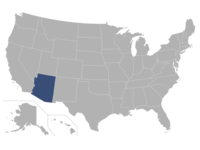
Phoenix, AZ