Appellate court rules LSU has to make employee investigation records public
Aug 20, 2026 | 8:28 pm ET
Description
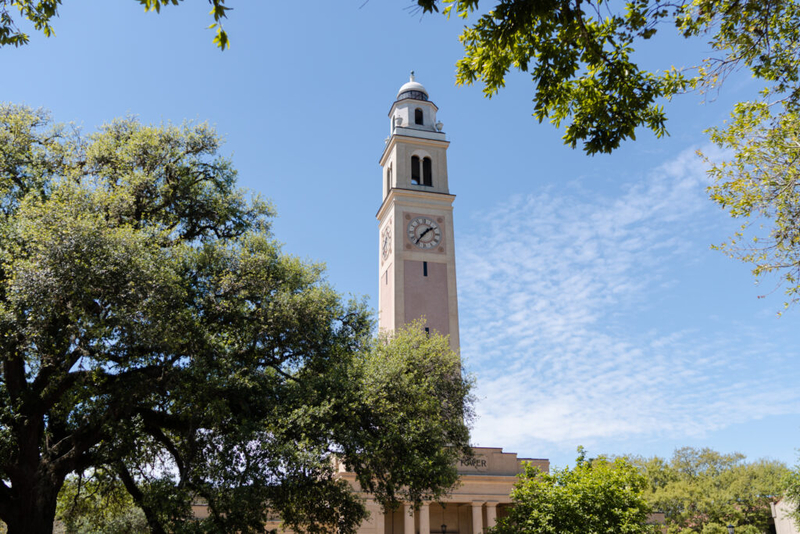
LSU’s Memorial Tower pictured on March 20, 2023. (Matthew Perschall/Louisiana Illuminator)
Editor’s note: Lawyers with the Tulane First Amendment Clinic have represented the Louisiana Illuminator. The plaintiff in this story, Josh Archote, edited the work of this author when they both were on The Reveille staff. Comments from Archote were added midday Friday.
A state appellate court has ruled LSU must release its investigative records about a former administrator accused of catfishing students to the former editor of its student paper.
The case was filed in 2023 by Josh Archote, then editor-in-chief of The Reveille, LSU’s student newspaper. He was seeking records about Donald Abels, a former Greek Life administrator who the university investigated for allegedly creating multiple fake Snapchat accounts and using them to entrap fraternity pledges in violations of university policy and state law for underage drinking.
The ruling from the First Circuit Court of Appeals affirms that the university’s internal investigations are subject to the state’s public records law.
“This is a big win for transparency and accountability in our state,” said Annie Cleveland, the attorney with the Tulane First Amendment Clinic who litigated the case. “Disclosure of completed investigations encourages diligence and institutional accountability.”
Archote, who no longer works in Louisiana, said he intended to share the records with current Reveille reporters who he hopes will pick up where he left off.
In a statement, LSU spokeswoman Meg Sunstrom said LSU is evaluating the court’s decision and considering whether it will appeal.
In the case, LSU maintained it could not release the Abels documents for privacy reasons, citing their own policies. In their ruling, the appellate judges said no reasonable expectation of privacy existed for Abels.
“The mere introduction of LSU’ s [policy], wherein LSU deems employee personnel files as ‘confidential,’ does not prove that an LSU employee has a reasonable expectation of privacy as to every document in his personnel file,” the opinion reads. “If such were the case, a public body could shield any public document regarding an employee from public disclosure by merely filing it away in his personnel file.”
“If this could really make it easier for [reporters] to to get these records and not have LSU use this this reasoning to get out of sending records that should be available to the public, I’m very happy about that,” Archote said.
The three-jurist panel — Chief Judge Page McClendon with colleagues Hunter Green and Tess Stromberg — ruled unanimously for Archote.
“We are grateful the First Circuit confirmed what was already established by state law: public institutions, like LSU, cannot create their own extra-legal exemptions to the public records law by secreting public documents in employees’ personnel files,” Cleveland said.
The ruling Thursday from the Louisiana First Circuit Court of Appeals reversed a 2024 trial court decision.
Archote’s lawsuit is nearly identical to a case state Rep. Dixon McMakin, R-Baton Rouge, filed against LSU — and lost — in 2021, before he was in the legislature. The case was not appealed beyond the trial court.
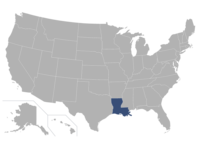
Baton Rouge, LA