Analysis: 75 Iowa nursing homes qualify for abbreviated state inspections
Oct 26, 2026 | 6:13 pm ET

Description
In September 2026, Waterloo’s Friendship Village Retirement Community was awarded “gold trophy” status by CMS and deemed eligible for abbreviated, risk-based inspections. That same month, state inspectors fined the home $5,000 for violations that resulted in a resident’s hospitalization for a broken hip. Friendship Village was also cited for failing to make a good-faith effort at identifying and correcting regulatory violations. As of Monday, the home still displayed "gold trophy" status on the CMS website. (Photo via Google Earth)
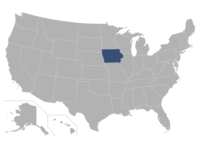
Seventy-five of Iowa’s 393 nursing facilities are now subject to a reduced form of government inspection, a new analysis of federal data shows.
The National Consumer Voice for Quality Long-Term Care, a nonprofit advocacy group, has analyzed, on a state-by-state basis, the federal government’s new, shorter inspection process for nursing homes that’s based on the facilities’ perceived risk to residents.
Beginning on Sept. 8, 2026, the Centers for Medicare & Medicaid Services began using the new Risk-Based Survey process for selected nursing homes across the country, replacing the traditional, more thorough process at those facilities that CMS considers “lower risk.”
The homes deemed eligible for the abbreviated inspections are now flagged with a “gold trophy” icon on CMS’ Care Compare website, where consumers are encouraged to look for information on nursing homes and hospitals.
In deciding which homes qualify for the reduced level of oversight and scrutiny by inspectors, CMS says that each quarter it will be measuring every care facility’s performance using 11 separate criteria. A care facility must meet all 11 standards to qualify for the shorter inspections, which are carried out by state-employed inspectors on behalf of CMS.
Despite the criteria emphasizing favorable outcomes for infection control and staffing levels, a review of the Iowa homes awarded “gold trophy” status and currently deemed eligible for the abbreviated inspections shows some of those facilities have been cited for violating both standards.
In June 2026, for example, inspectors visited the Good Samaritan Home in St. Ansgar, and cited the facility for insufficient staffing and for infection-control issues. The home, inspectors found, had failed on four separate days in one two-week period to meet the federal mandate of having at least one registered nurse on duty for eight consecutive hours each day.
In November 2025, inspectors conducted an annual inspection at Wapello Specialty Care and cited the home for infection control issues. Today, CMS’ website shows the home is deemed eligible for risk-based inspections.
In September 2026, Waterloo’s Friendship Village Retirement Community was awarded “gold trophy” status by CMS and deemed eligible for the abbreviated, risk-based inspections. That month, state inspectors fined the home $5,000 for violations that resulted in a resident’s hospitalization for a broken hip. Friendship Village was also cited for failing to make a good-faith effort at identifying and correcting regulatory violations.
As a result, CMS temporarily suspended Medicaid-Medicare payments for new admissions to the home — although, as of Monday, the home still displayed “gold trophy” status on the CMS website.
No reviews of abuse history
According to CMS, only 12% of all nursing homes in the nation qualify for the risk-based inspection process. The agency says the new process will result in shorter inspections that are more focused on specific issues and are conducted with fewer state inspectors, freeing up resources to focus on problem care providers.
Some of the criteria homes must meet to be eligible for risk-based inspections are secondary in nature in that they’re based on other forms of recognition already measured by CMS, such as having at least a three-star rating for staffing levels on CMS’s Care Compare site.
Other criteria are based on a curve, such as a health-inspection score from CMS that falls within the better half of all facilities within that state.
Criteria that would disqualify a home from the abbreviated inspections include citations for causing residents actual harm or placing residents in immediate jeopardy during the previous 15 months, a failure to pass the most recent audit of the home’s self-reported staffing data, and a change in ownership since the last full inspection.
Also, homes that are already deemed to be repeat offenders and designated Special Focus Facilities are ineligible for risk-based inspections.
The differences between the traditional inspection process and the new risk-based inspection process include:
— Fewer interviews: Fewer residents are contacted and interviewed by inspectors. Traditionally, about eight residents’ care is reviewed, depending on a home’s overall population. The new process calls for about three residents to be interviewed, regardless of the home’s population. Inspectors will not be required to visit every resident room, but only to observe residents in a manner CMS calls “efficient.”
— Fewer investigations: Inspectors will only check in on residents who fall into specific “red flag” categories — such as those with serious pressure sores, or a recent fall resulting in an injury. According to the coalition, this means “an inspection can end with no investigation of anyone’s care.” Records for residents who died, were hospitalized, or were discharged are not automatically reviewed.
— Fewer procedural checks: In a traditional inspection, inspectors review medication handling, staffing levels, meal assistance, and kitchen sanitation at each 15-month visit. Under the risk-based process, infection control is the only regulatory requirement checked automatically. Everything else is investigated only if a specific problem happens to surface.
— Abuse history unchecked: Under a risk-based inspection, a facility’s history of abuse complaints is not reviewed prior to the inspectors’ arrival on site. According to the coalition, state inspectors preparing for such a visit are “specifically told not to look at whether the facility has a history of abuse allegations.”
The coalition has opposed the new risk-based process, arguing that the quality of care in nursing homes can change quickly. Using CMS’ publicly reported data from January 2024 through February 2025, the coalition found that nearly half of all homes that would have qualified for the abbreviated inspection process at that time were no longer eligible one year later.
A similar examination of the 1,699 homes currently considered eligible shows that only 54% would have been considered eligible a year ago, the coalition says.
Des Moines, IA