South Dakota task force recommends bills to move toward ambulance service regions
Oct 26, 2026 | 6:05 pm ET
Description
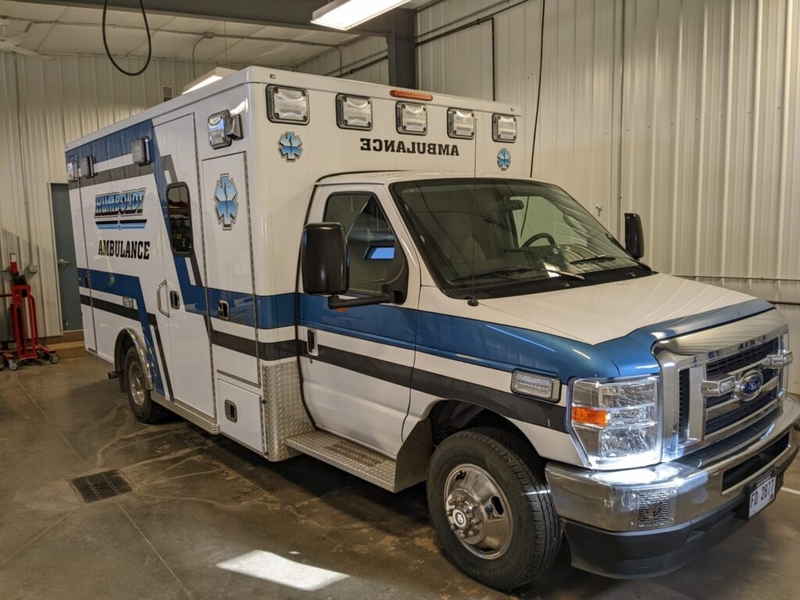
A Humboldt, South Dakota, ambulance in November 2022. (Photo by John Hult/South Dakota Searchlight)
Creating eight to 14 ambulance service regions might help preserve sustainable access to emergency medical care in South Dakota, according to lawmakers on a legislative study group.
The group’s members cautioned, however, that it will take years to hash out where those regions might be, how large they’d be, and how much the state would pitch in to keep them viable.
“It’s so important that we make everybody understand that we’re heading towards a funding model where there will be state aid,” said Sen. Tim Reed, R-Brookings, chairman of the Emergency Medical Services Funding Task Force.
Task force: Regional ambulance hubs for South Dakota will take years to establish
The task force was created after the 2026 Legislature punted on a bill that would have designated ambulance care as an essential service. Instead of voting to do that — which would’ve created an expectation that the government ensure access to the services — lawmakers opted to convene the task force.
It’s the second in as many years to have spent the months between legislative sessions studying the future of ambulance service. South Dakota has an aging, often volunteer workforce laboring on behalf of agencies that struggle financially due to Medicare and Medicaid reimbursement rates that are too low to cover the cost of operations.
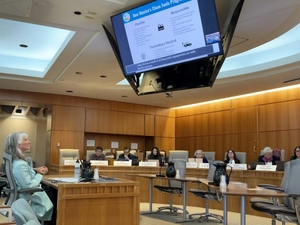
On Monday in Pierre, the task force voted to endorse two bills that would open up access to more reimbursements and lay the groundwork for a new approach to ambulance service organization throughout the state.
The endgame remains the same, according to Rosebud Democratic Rep. Eric Emery, the vice chair of the task force: ensuring the long-term future of emergency medical services within the state’s borders.
“That’s what we’re really aiming for,” Emery said. “That when 911 is called and somebody needs an ambulance, that ambulance is going to be able to respond.”
Ambulance regions
The group voted to endorse the two pieces of model legislation in its final meeting. The group’s findings, as well as the model bills, will be included in a report offered to the Legislature’s Executive Board.
One of the bills would create an emergency medical services advisory council to study ways to regionalize service with state oversight and, eventually, state funding.
The council would include four emergency medical services personnel, a city manager or mayor, a county commissioner or auditor, a medical director, a representative of a critical access hospital and a representative of a 911 dispatch center.
‘I have no reason to quit’: South Dakota EMTs still lending a hand in their 80s
The group’s discussions would center on how to divide the state into “at least eight but no more than fourteen emergency medical services regions.”
As they work to carve out regions, the group would consider the location of current services, how many emergency medical personnel are licensed in each region, population density, call volume, response times and the locations of hospitals and other care facilities.
The group’s findings and recommendations would be delivered to the Department of Health, along with recommendations on how ambulance services could apply for state aid. That department would then, in consultation with the council, set standards for response time, geographic areas, staffing and equipment, and work to figure out how much money the state and, to a lesser extent, counties and municipalities, ought to offer to support the new ambulance regions.
“On or before” June 1, 2028, the bill says, the department and council would deliver their recommendations to the Legislature and the Governor’s Office.
Eric Erickson, a lobbyist who represents South Dakota counties, testified that they would have concerns about any additional financial burden.
“We see additional costs every year, and this looks like a big one,” Erickson said.
Rep. Keri Weems, R-Sioux Falls, told Erickson it’s too soon to be concerned about local costs, because it would be years before a regionalization plan is ready to implement.
“This is a state issue, and this is where we need to have state funding available,” Weems said. “But we want the counties and cities to be players in that.”
Treatment-in-place
The other bill would require Medicare, Medicaid and private insurance companies to cover a wider range of treatment-in-place, meaning services rendered on-site by responding ambulance personnel.
When an emergency medical technician hooks up an intravenous flow of glucose for a diabetic patient in their home and thereby undoes the need for a trip to a clinic, ambulance services often go unpaid because there was no transport to bill.
Medicare and Medicaid can be billed for such services, but the services are reimbursed at a “basic life support” rate, even if the services rendered count as “advanced life support” and as such would be reimbursed at a higher rate.
At a previous task force meeting, lawmakers learned that many rural ambulance service leaders were unaware they could be reimbursed for treatment-in-place at either rate.
The committee’s bill would require Medicare and Medicaid to reimburse at the advanced life support level if such services are rendered on-site, and require private insurance companies to do the same.
The bill would also require those entities to reimburse ambulance services for trips to places that aren’t hospitals. Currently, trips to places like acute care or a mental health clinic aren’t reimbursed.
Sen. Sue Peterson, R-Sioux Falls, expressed some concern about the appropriateness of trips to places like mental health centers, saying there are other options.
“Would there be an alternate source of transportation, other than an ambulance?” Peterson said.
Reed pointed to language in the bill that would require any trips in an ambulance to be deemed medically necessary by an ambulance service’s medical director or program director.
“It has to be medically necessary to really transport them, where there’s no alternate way of getting them to the detox,” Reed said.

Pierre, SD