Allegheny County DA asks court for more time on legislative fix to felony murder sentencing
Jul 23, 2026 | 7:39 pm ET
Description
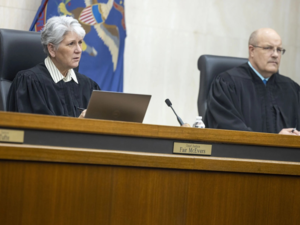
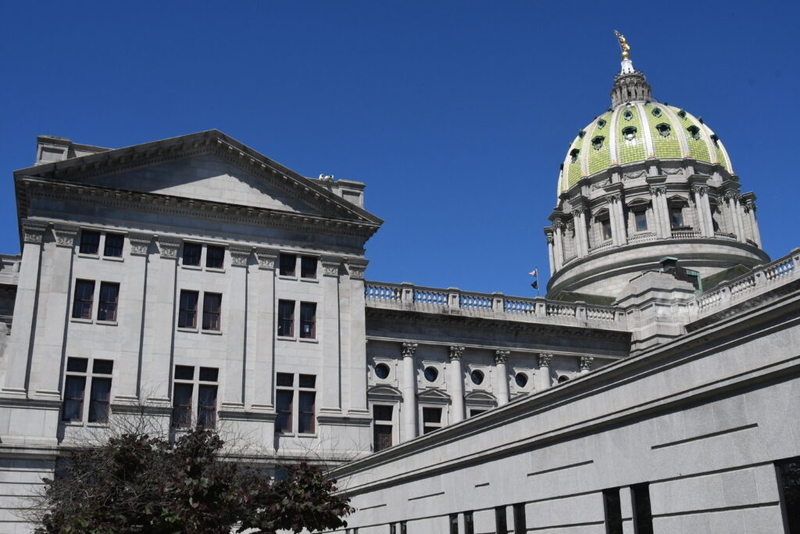
The Pennsylvania Supreme Court ruled in March that the mandatory life sentence for second-degree murder was unconstitutional, giving lawmakers 120 days to act. (Photo by Peter Hall/Capital-Star)
As state lawmakers appeared poised to miss a deadline set by the Pennsylvania Supreme Court, Allegheny County District Attorney Stephen Zappala filed a petition seeking a 120-day extension, giving them more time to create sentencing guidelines for second-degree murder.
“Since the Court’s decision, the General Assembly and the Governor have been working to fashion a new sentencing scheme that will comply with this Honorable Court’s decision,” the petition read. “Unfortunately, the General Assembly is still working to find a suitable compromise to resolve the issue … It is about to recess for the summer without agreeing.”
The petition was filed shortly after the House passed a bill along largely partisan lines that would allow those serving life sentences for second-degree murder to seek parole after 30 years in most cases. As it stands, the state Supreme Court deadline to act is Friday.
Also known as felony murder, second-degree murder is a charge brought when someone is killed during the commission of another felony, even if the defendant did not intend to cause that person’s death. In March the state Supreme Court ruled the accompanying mandatory life sentence was unconstitutional.
But the Democratic-backed bill, which was seen by caucus leaders as a compromise and got one Republican vote, was slammed by Senate GOP leaders.
“Instead of allowing a vote on either of the bipartisan bills passed by the Senate, they chose to engage in political theater and failed to produce any feasible product to protect our communities and victims’ families,” a joint statement from leaders of the Senate majority caucus said.
House Minority Leader Jesse Topper (R-Bedford) similarly told reporters that “we have serious concerns with what was passed today in the House. However, the comfort is this is not a bill that is becoming law. It is not going to be accepted over in the Senate.”
What comes next
If no legislation is passed and the petition is not approved, the Supreme Court deadline passing could lead to the largest resentencing effort in the history of the commonwealth. Roughly 1,100 people are serving unconstitutional life sentences for second-degree murder in Pennsylvania.
It’s a process that advocates, public defenders and district attorneys say could take years and cost taxpayers millions.
But that would first require a petition on behalf of those serving unconstitutional sentences to reach the Supreme Court, leaving the 1,100 or so people serving such sentences in limbo even longer.
Lawmakers in both parties instead hoped to pass legislation that would allow sentences to be reviewed by the parole board, which would take less time and cost less money. But they were unable to agree on when those serving should become eligible, or how those charged with second-degree murder in the future should be sentenced.
A previous proposal that emerged in the House Democratic caucus would have allowed for parole after 25 years, but was never brought before the full chamber.
Senate Republicans derided the measure as overly lenient. Their chamber passed a bill with bipartisan support that would have allowed for parole after 35 years,
Charges in future cases
Lawmakers also remained divided over how severe second-degree murder sentences should be going forward. The culpability of those charged can vary widely from case to case, including an armed robber who shot but never intended to kill a victim, and a getaway driver who was unaware a shot was fired.
The bill that passed the Senate would create a 35-year minimum sentence in almost all cases. Though if convicts met a strict set of criteria, they could receive a mitigated sentence of between 10 and 40 years.
An earlier proposal from House Democrats would have created a 50-year maximum sentence for adults, and a maximum sentence of between 30 and 40 years for juveniles, depending on their age.
But Thursday’s attempted compromise bill punted on the question of what future sentences should look like altogether. Instead it tasks the sentencing commission with establishing new rules.
Rep. Andre Carroll (D-Philadelphia) used the example of a Philadelphia man who received a life sentence for planning a crime over the phone, but didn’t ultimately participate as an example of why legislation should allow judges to choose lighter sentences.
“Of the six people charged in this crime … all of them are home now while this gentleman, who didn’t even participate in a crime, is still incarcerated,” he said on the House floor.“That is what this is about: the degree in which a person was involved in a crime that resulted in the death of a person.”
But opposing Republicans, like Franklin County Rep. Rob Kauffman, minority chair of the Judiciary Committee, pointed out many people serving time for second degree murder took steps that much more directly led to another person’s death. He cited a 1997 case in Berks County that involved the assault of an infant.
“Many of those currently serving a sentence for felony murder committed extraordinary heinous acts of violence,” he said. “We must consider the impact that the parole process has on victims and their families … It would reopen wounds that many families have spent decades trying to heal.”
But Sara Jacobson, the executive director of the Public Defender Association of Pennsylvania, points out that by passing legislation that gives judges broader leeway, the facts of individuals’ cases could be taken into account at sentencing.
“It’s complicated and it’s hard. People died. And of course people have real concerns about how this would impact folks on all sides” she said. “But I would love for a legislative solution that allows for individual consideration, and does so in a way that people charged with these offenses get to really explain who they are, what they didn’t do and what they meant, while also giving room for the victims’ families to be heard and considered.”
Regardless of whether the state Supreme Court grants an extension of their deadline, some legislative leaders have expressed a willingness to continue working towards a compromise.
“We’ve had those conversations,” Topper told reporters after Thursday’s House vote. “They did not amount to anything that we could support today. Hopefully that changes in the future.”

Harrisburg, PA