Alaska is on pace to match 2024’s record-high early voting numbers
Oct 28, 2026 | 12:00 pm ET
Description
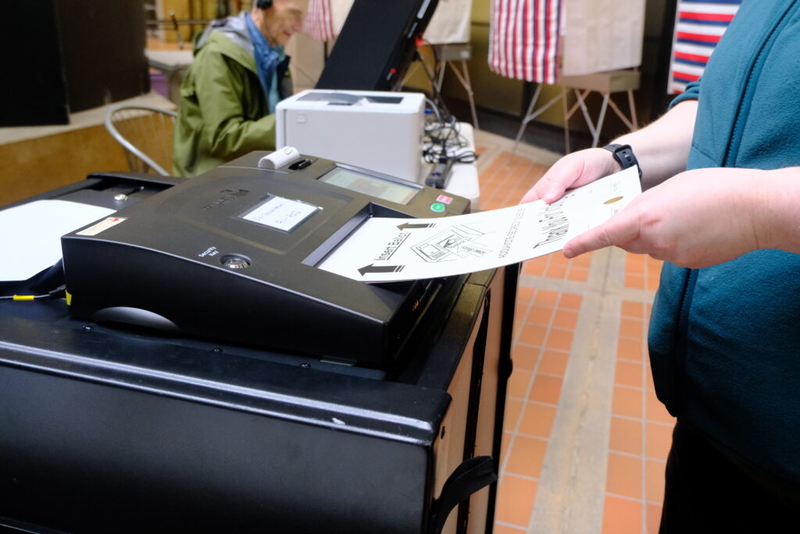
A voter casts their ballot on the first day of early in person voting in Juneau on Oct. 19, 2026. (Photo by Corinne Smith/Alaska Beacon)
One week before Election Day, turnout in Alaska’s general election is nearing 10%.
As of 4:43 p.m. Tuesday afternoon, according to figures published by the Alaska Division of Elections, 58,168 people had cast early or absentee ballots for the Nov. 3 election.
The number of early votes cast through Tuesday afternoon already exceeds the number of early votes cast before the last midterm election, in 2022.
Other states across the country are seeing a similar surge in early voting.
According to a daily report published by the Alaska Division of Elections, 34,738 people had voted at the state’s 10 in-person early voting stations between Oct. 19 and the end of the day Monday, Oct. 26.
That tally includes significantly more registered Republicans, which are currently 26.7% of early voters, than registered Democrats, at 18.4%.
Figures for votes cast on Tuesday are expected to be published Wednesday.
Of Alaska’s 604,771 registered voters, 11.6% are Democrats and 23.5% are Republicans, indicating that while Republican turnout is higher, Democratic turnout is disproportionately high.
Early votes cast through Thursday will be included in the totals published on Election Day, but votes cast from Friday onward will not be included because elections officials will need to check those against the Election Day voter register to prevent double voting.
There is no set schedule for counting absentee ballots, which must be reviewed by elections officials before being counted.
Absentee ballot review boards — groups of paid, multipartisan temporary workers — were scheduled to begin reviewing absentee ballots on Tuesday and will continue working until the last absentee ballots arrive at various regional headquarters on Nov. 18.
State law allows late-arriving absentee ballots to be counted as long as they are postmarked on or before Election Day. Ballots mailed from within the United States can be counted as long as they arrive by Nov. 13, while ballots mailed internationally must arrive by Nov. 18.
All results until Nov. 18 will only show voters’ first-choice preferences.
Alaska uses ranked choice voting in general elections. If a candidate in a race gets more than 50% of the first-choice votes, they win.
If no candidate does, the candidate with the fewest first-choice votes is eliminated and votes for them go to their voters’ second preference. The process continues until only two candidates are left, and the person with the most votes is the winner.
Alaska performs that ranked choice tabulation on Nov. 18, after the last international absentee ballots are received.
The Division of Elections aims to certify the election results by Nov. 25.
Juneau