Alaska Legislature approves state’s first tax on e-cigarette products
May 28, 2026 | 9:40 am ET

Description
E-cigarette products, also called vapes, are advertised in the windows of a tobacco shop in Midtown Anchorage, seen May 26, 2026. Lawmakers have passed a bill that would impose Alaska's first state tax on e-cigarette products. (Photo by Yereth Rosen/Alaska Beacon)
Four years after Gov. Dunleavy vetoed a similar measure, lawmakers passed a bill imposing state’s first tax on electronic cigarettes and related products.
The legislature’s approval of Senate Bill 24 was a victory for Senate President Gary Stevens, R-Kodiak. It was the third such bill sponsored by Stevens, who is retiring this year.
“This bill is about protecting our children from becoming addicted to nicotine,” Stevens said in testimony to the House Finance Committee on May 7.
The bill is intended to counter the multibillion-dollar tobacco industry’s efforts “to addict young people to these substances” in the face of declining use of traditional cigarettes, he said.
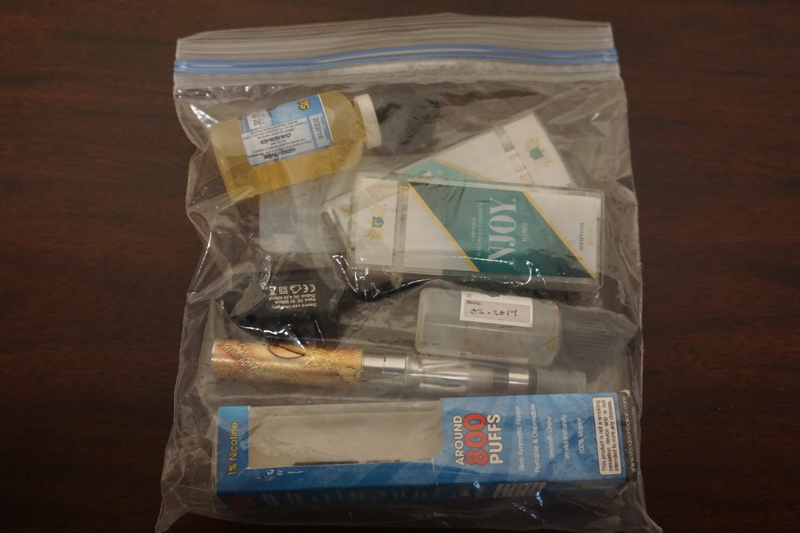
E-cigarette products use battery-operated devices to produce vapors that are inhaled, a contrast with traditional tobacco that is burned. They were not widely marketed in 2006, the last time Alaska’s state tobacco tax was adjusted. While many Alaska municipalities have updated their tax systems to include e-cigarette products, the state had not.
If it becomes law, the bill would impose a 25% tax on retail products, as well as prohibit purchases by anyone under 21, the same legal age for traditional tobacco purchases.
Supporters of the bill said the tax and the age restriction would discourage youth use of the product, just as higher taxes and other restrictions contributed to a reduction in youth smoking.
“We know that tobacco and nicotine are highly addictive drugs. The younger you start, the more severe your addiction is likely to be, and if we can delay your introduction to the product, the less likely you are to become addicted. Young people are also price-sensitive,” Rep. Sara Hannan, D-Juneau, who carried Stevens’ bill in the House, said in floor debate on May 19, the second-to-last day of the session.
Opponents objected to the idea of a new tax, and they also argued that vaping should be treated as more benign than smoking.
“My concern is that this isn’t a tobacco bill. This is a tax bill. This is tax, tax, tax,” said Rep. Jamie Allard, R-Eagle River. She added that she believes 18- and 19-year-olds should have the right to smoke or vape.
“My point about this whole thing is freedom. They’re not doing anything wrong, and now you’re imposing a law to take people’s freedom away that doesn’t impair them. So, what’s next? We need to stop. These are adults,” she said.
The bill passed the House 24-16, and the Senate concurred the next day by a vote of 15-5.
Evolution of the bill
During public testimony on the bill, some opponents said that vaping is a safer alternative to smoking, an argument that the industry has made.
Health experts take issue with the claim. While e-cigarettes expose users to fewer toxic chemicals than cigarettes do, they also pose health risks. Along with leading to nicotine additions, they are associated with a dangerous lung condition called EVALI, which stands for e-cigarette or vaping use-associated lung injury.
Stevens’ first bill on the subject passed in 2022 by wide margins, but Dunleavy vetoed it, citing his desire to avoid new taxes. Another version died in 2024 after members of the House, then with a Republican majority, stripped the e-cigarette tax provisions from it and added a reduction in marijuana taxes.
A key difference between the 2022 bill and the new bill is the way the tax is applied. The previously passed bill would have imposed a 45% tax at the wholesale level. The newly passed bill applies a 25% tax on the retail level.
The change reflects the varying types of e-cigarette products. While some are sold as complete units, others are not supplied to retailers as finished products. Instead, they are assembled by retailers from liquids and other components, and it would be very difficult to track down all those suppliers to impose a wholesale-level tax, bill supporters said.
The most controversial was an amendment that allows indoor smoking at designated cigar bars. It was added by Rep. Kevin McCabe, R-Big Lake, during House floor debate on May 19, the second-to-last day of the session.
He said it would help local economies by allowing for specialty cigar bars that can be operated separately from any other food or beverage establishments. He pointed to successful cigar bars operating elsewhere in the nation.
“Frankly, Mr. Speaker, some adults just want a nice quiet place to go enjoy a nice premium cigar,” McCabe said in floor debate.
While anti-tobacco organizations advocated for Senate Bill 24 and previous versions of it, they said the cigar amendment undermines protections for smokefree environments.
“The scientific evidence is clear: there is no safe level of exposure to secondhand smoke, and cigar smoke is no exception. Cigars produce large volumes of toxic smoke that damage the heart and increase the risk of heart disease, stroke, cancer and lung disease—for workers and patrons alike. The only safeguard against secondhand smoke is not to allow it,” said a statement issued by the American Heart Association, the American Cancer Society Cancer Action Network and the American Lung Association.
A different amendment, approved during the committee process, added synthetic nicotine products to the tax program. Those products are generally sold in pouches and deliver nicotine that is derived through a lab process rather than from tobacco.
Another change dropped the maximum fine for a minor possessing tobacco or nicotine products from $300, as proposed in the original form of the bill, to $100.
Federal policy
The federal government, like Alaska, currently imposes no excise tax on e-cigarette products, even though most states do. Democrats in Congress have tried to impose a federal e-cigarette tax since 2019 through a bill called the Tobacco Tax Equity Act, but the bill has yet to pass.
Among those who opposed it is Sen. Dan Sullivan, R-Alaska. In a 2022 message, Sullivan said he opposed increased tobacco taxes, “even if done to curb tobacco use,” arguing that they are unfair to low-income consumers. And he said e-cigarette use should not be discouraged through taxation. “If taxes are raised on these products, I worry that it could exacerbate smoking issues by disincentivizing the use of these safer products,” he said in his message.
Legislative opponents of Senate Bill 24 cited Sullivan’s position on federal legislation in their arguments against a state tax.
The Alaska legislation comes as the Trump administration is loosening restrictions on e-cigarette products.
President Donald Trump has positioned himself as an ally of the industry. During the 2024 campaign, he pledged to “save vaping.”
The U.S. Food and Drug Administration on May 5 authorized the use of four types of flavored vapes, including mango and blueberry, over public health advocates’ objections. Days before the FDA announced its decision, a subsidiary of tobacco company Reynolds American donated $5 million to MAGA Inc., a pro-Trump political action committee.
The Vapor Technology Association, an industry group, welcomed the FDA decision allowing fruit-flavored products back on the shelves and lauded Trump for it. But the group said it was only a “first step.”
The e-cigarette industry has lost some customers in recent years. Youth use of the products is down from a peak reached in 2019, both nationally and in Alaska, according to the U.S. Centers for Disease Control and Prevention and the Alaska Department of Health.
Researchers attributed the decline in part to past bans on flavored products. And the CDC cited education campaigns to discourage youth vaping. The Alaska Division of Public Health is among the agencies involved in such campaigns; it has a youth-focused program called “Not Buying It.”

Juneau