Alabama state superintendent Eric Mackey wants ‘guardrails’ around voucher legislation
Jan 12, 2024 | 8:01 am ET
Description
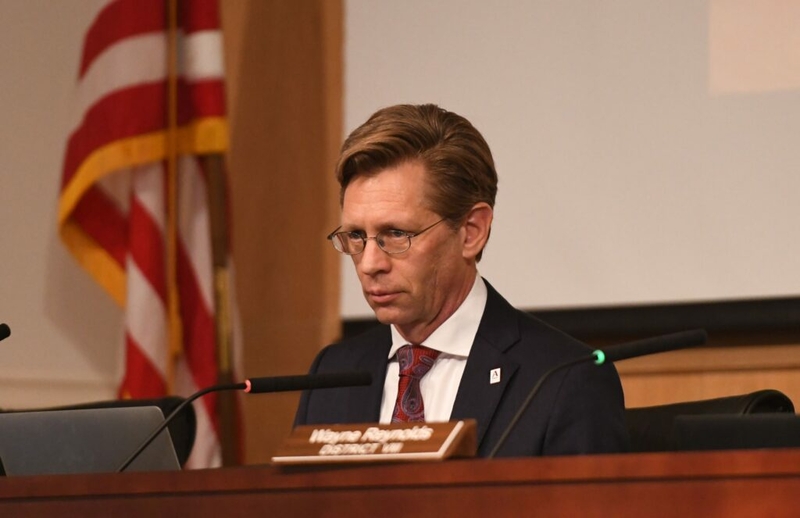
Alabama State Schools Superintendent Eric Mackey listens during the Alabama State Board of Education's regular meeting on February 9, 2023 in Montgomery, Alabama. (Brian Lyman/Alabama Reflector)
Alabama’s state schools superintendent said Thursday that any legislation this year allowing students to attend schools beyond their zoned ones should have caps, accountability and ensure that money goes to schools, not parents.
In discussion around the changes to the Alabama Accountability Act at the Thursday’s meeting of the Alabama State Board of Education, Eric Mackey said that he had heard last year that the changes made to the Act could be the “school choice” option in Alabama.
“I do know, from conversations I’ve had last year with some legislators, there were legislators, who don’t speak for the body, who felt like doing all these changes answered all the questions about school choice that anybody had,” he said.
Mackey did not identify which lawmakers he spoke with.
Gov. Kay Ivey and Republican legislators have said that new school options, particularly education savings accounts, could come up in this year’s legislative session, which begins Feb. 6. Education savings accounts allow parents to take the equivalent of a state’s per-pupil spending on a child and use it for private school tuition, online learning, or other services.
Mackey said that he would like any money to be sent directly to schools as a voucher program, rather than the checks or debit cards going to parents. He said he wanted parameters on how those educational dollars could be used.
He gave the example that, when his children were younger, he would take them on a skiing trip where they would learn a lot. But he said he doesn’t think Alabama should pay for that.
“We all take our children on trips and a lot of that is education, but it’s not a necessarily state expense,” he said.
Mackey also said that he wanted accountability in the form of state tests. Some private schools, he said, told him they would want to give the state test if the state funded it. That funding, Mackey said, would need to come from the Legislature. Funding for tests comes from state and federal sources, and federal money can’t be shared with private schools, he said.
In the work session, Mackey also said that he did not think students should be able to stack scholarships, if multiple voucher programs pass this year.
“I think you have to build in some guardrails,” he said.
The Accountability Act
The Alabama Accountability Act allows some students to attend schools they are not zoned for, and to receive scholarships to attend private schools if they meet certain requirements. The law, passed amid controversy in 2013, originally applied to students in a “failing” school, or a school in the bottom 6% of standardized test scores.
The Legislature revised the act last year to change the name of the schools from “failing” to “priority” and to change the criteria from the bottom 6% to a school with a “D” or “F” on the state report card. The move to the report card significantly increased the number of schools covered by the Accountability Act. December-released report cards had 206 “D” and “F” schools. There were 79 schools on the list released November 2022. It also increased the funding available in the program from $30 million to $40 million and potentially $60 million.
The law does not require schools to admit priority students.
Students can be eligible for other reasons, including “unique needs” or being below a certain income threshold.
The legislation was shaped by former Senate Pro Tem Del Marsh, R-Anniston, and modeled off a piece of legislation from American Legislative Exchange Council (ALEC), an organization promoting conservative policies in state legislatures. It passed in 2013 after a bill that originally gave public schools the ability to opt out of certain regulations was switched in conference committee with what became the Alabama Accountability Act. The move sparked anger among Senate Democrats and passed amid a hostile atmosphere in the chamber.
“I’d remind you just a little history that the AAA was the bill that passed in the middle of the night that nobody had read, other than possibly two, one House and one Senate member, and everybody else I’ve ever talked to said they never saw it until they voted on it,” Mackey said Thursday.
Mackey said before the work session Thursday that he had a conversation with a lawmaker drafting a bill, but he declined to name the specific legislator.
“We haven’t seen any legislation yet,” he said.
Mackey said he also wanted a financial cap on any amount that would go towards public funds. He told reporters that he had given an upper limit for the cap that he would support but declined to share that number.
“I have passed along what I think the number should be,” he said.
Montgomery