Alabama screen time commission hears recommendations on best classroom practices
Sep 16, 2026 | 6:01 am ET
Description
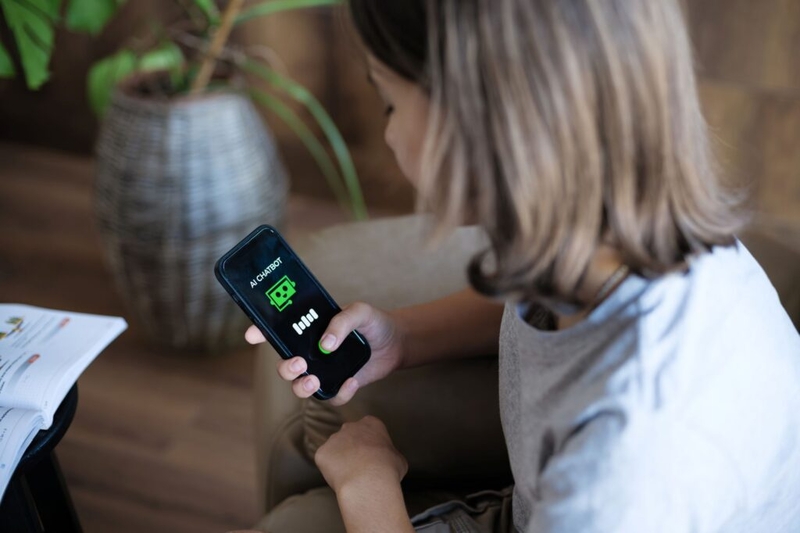
An adolescent girl uses an AI application on her phone. The Commission on Screen-Based Instruction heard presentations from technology industry professionals and subcommittees on how to address screen usage in classrooms. (Getty Images)
An Alabama state commission Tuesday heard recommendations on how to best address screen usage in classrooms.
The Commission on Screen-Based Instruction, created by Gov. Kay Ivey in July, heard presentations from White Board Advisors, a consulting firm based in Washington D.C., and the Screen Use Impact on Teachers subcommittee.
A small survey of 61 K-12 teachers done by the subcommittee showed that 67% of teachers are using screens in the classroom for assignments or practice and 54% of teachers are using devices for testing purposes.
“Alabama has a narrative right now of we have either maintained or advanced achievement while other states have not experienced those outcomes,” said Chris Jenks, committee member and Tuscaloosa City Schools technology director. “One of the ways we know that is through our battery of assessment. Many of them, most of them, are delivered on a screen.”
The commission was created after Ivey signed HB 78, sponsored by Rep. Jeana Ross, R-Guntersville, during the 2026 regular legislative session. The bill sets screen usage limits for children up to five years old in licensed child care facilities. Ross also filed HB 584 to place screen time limits on all public K-12 students, but the bill failed to make it through the Senate before the Legislature adjourned in April.
Ben Wallerstein, chief executive officer and co-founder of Whiteboard Advisors, said during his presentation that terms associated with artificial intelligence are hazy, which could pose problems.
“If we survey parents and we ask them about what do they mean by AI (artificial intelligence), like we don’t want AI in our schools, they’re probably thinking like kids asking open-ended questions to Claude or ChatGPT,” Wallerstein said. “They’re not thinking about the application of machine learning to sift through thousands of voice recordings to differentiate between a kid who is new to speaking and learning English and is a struggling reader.”
Sen. Linda Coleman-Madison, D-Birmingham, said during the meeting that educating parents is key to the committee’s work.
“I always say, you come here like a clean piece of paper, a sponge. It’s what we allow to be soaked up and printed on that page, and so it starts at home, and parents have got to be a part of it. So somewhere in this, we’ve got to find a component, a hook, or somewhere to educate the parents on what we’re trying to do,” she said.
Alabama Department of Early Childhood Education Secretary Ami Brooks said her department has “had a lot of discussions too about making sure that the language that we use honors the parents and does not shame the parents because everyone is doing the best that they can.”
“A lot of times they’re handing them a phone and showing them a letter game, and they think that they’re helping,” Brooks said.
Brooks also told the committee placing emphasis on everyday interactions with young children is important.
“If you have a little one, having them in the car and pointing out the, you know, the produce and those types of things-that’s what’s building the brain, not sitting passive with the screen. Just raising that awareness also about the everyday interactions that are missed when you’re handing them a screen instead of having those conversations,” she said.
The committee will deliver its final report to Ivey on Dec. 1.

Montgomery