Alabama Public Service Commission lowers rate of return for energy company
Sep 01, 2026 | 4:30 pm ET
Description
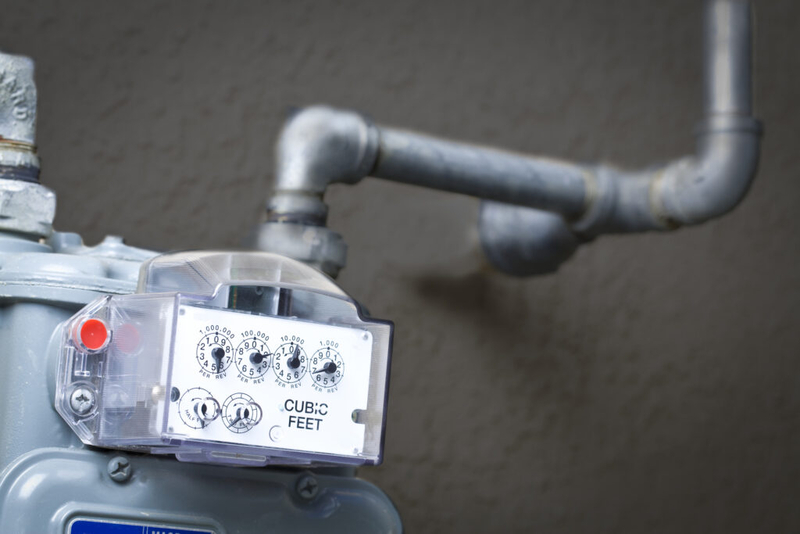
A natural gas meter with pipe on wall. The Alabama Public Service Commission Tuesday voted to reduce the return of equity for two Spire Energy subsidiaries after a rate hearing. (Bill Oxford/Getty Images)
The state commission regulating investor-owned utilities Tuesday reduced the rate of return that a St.Louis-based energy company can earn.
The Alabama Public Service Commission voted to authorize Spire Alabama to receive a return on equity of 9.4% for the next two years, based largely on the recommendation of the Alabama Attorney General’s Office. That is a difference of 1.1% from the 10.5% return on equity that company officials sought, and lower than what it currently collects.
But commissioners also authorized the company, which serves roughly 500,000 customers in Alabama, to increase its monthly charge on customers by a total of $5 per month in phases. The company may increase the fixed monthly charge by $2.50 starting Oct. 1, 2026, and by another $2.50 on the same date next year.
The ruling leaves customers’ utility bills steady for now by lowering the usage rate in exchange for higher monthly recurring cost.
“These recommendations lower the return on equity for both Spire companies from their current levels,” said Cynthia Almond, president of the Public Service Commission. “There is also an adjustment to the monthly customer charge.”
The PSC also reduced the ROE for Spire Gulf, the sister company that provides heating and cooling services to the Gulf Coast, to 9.6% from the 10.75% return on equity that the company requested. That is also lower than the nearly 10% it currently receives.
Representatives from the company said Tuesday they were disappointed with the PSC’s ruling.
“We know it is going to directly impact our ability to invest in growth and economic development in the state of Alabama,” said Reynolds Anderson, vice president of external affairs for Spire Energy, to reporters following the meeting. “We remain committed to providing safe, viable natural gas service for our customers.”
The hearing was part of a rate case that the PSC announced in June after the natural gas energy company could not reach an agreement with the Alabama Attorney General’s Office on an appropriate Rate Stabilization Equalization figure.
It is the first rate case that the regulatory agency convened since the 1980s, and came as the Alabama Legislature expanded the size of the commission and altered its structure amid mounting complaints over electricity prices in Alabama.
According to the Energy Information Commission, Alabama residents in June paid about 16.4 cents per kilowatt-hour, higher than the 14.89 cents per kilowatt-hour in the region.
Almond said that the monthly charge imposed on Spire is revenue neutral and does not increase the total amount of money that the utility collects.
“It shifts a portion of the recovery of fixed customer costs away from the volume metric, or usage-based, portion of the bill into the monthly customer charge,” Almond said.
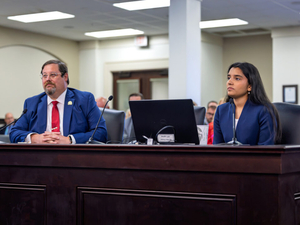
Commissioners based their vote on evidence presented at a hearing presided over by Luke Bentley IV, executive director of the PSC, who served as the administrative law judge during the hearing in August.
Bently, reading from a prepared statement that was included as part of the agenda, said that “the Attorney General’s ROE recommendation is the most reasonable and more accurately reflects Spire Alabama’s cost of equity.”
Anderson said they based their request on rates that other companies received.
“As we look at economic development, first to grow and recruit business, that will probably be one area that we are going to be challenged with going forward,” Anderson said.
Sheree Martin, deputy director and general counsel of Energy Alabama, a nonprofit that advocates for renewable energy in the state, said in a statement that they were pleased with the decision from the PSC.
“Energy Alabama thanks the Commission for opening this first-of-its-kind rate investigation and for its decision to bring Spire’s return on equity down to a more reasonable level,” the statement said.
Energy Alabama sought a deeper rate reduction, suggesting that the Spire Alabama and Spire Gulf companies receive an ROE of about 8.3%.
The rate hearing is part of a process known as Rate Stabilization Equalization to decide the return rate that the company should earn. In the past, companies have typically submitted their request to earn a specific return that the PSC approves.
The PSC convened a rate case months after lawmakers passed HB 475, sponsored by Rep. Mack Butler, R-Rainbow City, who eventually voted against his own legislation because of the changes the Alabama Senate made to the bill.
The bill ultimately signed by Gov. Kay Ivey expanded the PSC from three members to seven and gave Ivey four immediate appointments. Appointees would be gradually replaced by staggered popular elections.
But the law also makes it harder for the PSC to convene a rate case. It establishes a Secretary of Energy, a cabinet-level post, with the authority to set the agenda for PSC meetings and to convene a rate case. It would take a supermajority of commissioners, five of the seven, to convene a rate case on their own or change the agenda.
Montgomery