Alabama inmate who stopped nitrogen execution scheduled to die by lethal injection
Sep 17, 2026 | 6:01 am ET
Description
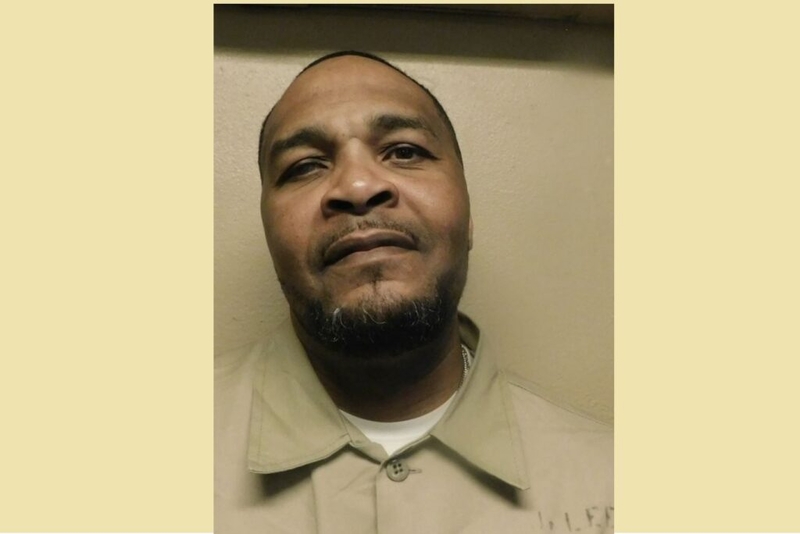
Jeffrey Lee, 49, who was convicted of the murders of Jimmy Ellis and Elaine Thompson during a pawn shop robbery in 1998, is scheduled to be executed on Thursday. Death penalty opponents are seeking clemency for Lee, who was sentenced to death after a Dallas County judge overrode a jury's recommendation of life without parole. (Alabama Department of Corrections)
The state of Alabama Thursday plans to execute a death row inmate amid clemency efforts by death penalty opponents, who cite a jury’s initial recommendation that he be sentenced to life without parole, a recommendation later overruled by a judge.
Jeffery Lee, 49, was convicted of the murders of Jimmy Ellis and Elaine Thompson during the robbery of a pawn shop in Orrville in 1998. A jury voted 7-5 to recommend Lee be sentenced to life without parole; Lee’s attorneys at the time cited his youth and the fact that he had two children. They also argued that Lee had an intellectual disability.
Dallas County Circuit Judge Jack Meigs ultimately overruled the jury and imposed a death sentence, writing that Lee “mercilessly” took Ellis and Thompson’s lives.
Lee is scheduled to be executed by lethal injection. He was originally scheduled to be executed by nitrogen gas, but a federal court in June imposed an injunction on the state’s protocol for the execution method following a lawsuit from Lee and a trial. Federal judges cited the potential for unconstitutional levels of pain and Lee’s argument that he could be executed by firing squad, an argument the state has rejected. The U.S. Supreme Court allowed the ruling to stand on June 12.
“To be able to walk out of that death cell on June 12, it felt like I was in Lala Land,” Lee said in a recording made by his legal team at the end of August. “It felt like I didn’t actually walk out of there, it is kind of hard to explain that feeling of being alive, just simply being alive.”
The Alabama Attorney General’s Office filed a motion to execute Lee by lethal injection hours after the U.S. Supreme Court issued its ruling.
“That day I found out, ‘Oh, they are going to seek another date for you,’ I came up with a phrase, ‘I was going to enjoy the victory, but I wasn’t going to enjoy the spoils,’” Lee said in the recording.
Death penalty opponents hosted a film screening and delivered a petition signed by more than 8,000 people to the Gov. Kay Ivey’s office on Tuesday to plead that she suspend the execution she set for Jeffery Lee.
“Governor Ivey is a woman of faith,” said Abe Bonowitz, executive director of Death Penalty Action, one of the organizations that delivered the petition to the Governor’s Office. “I think I heard it somewhere that ‘Blessed are the merciful, for they shall receive mercy.’”
Ivey, who has presided over 26 executions as governor, has only commuted two death sentences to life in prison: Rocky Myers in 2025 and Charles “Sonny” Burton earlier this year. Ivey cited doubts about the evidence presented in Myers’ trial and concerns about disparate sentencing in Burton’s case.
Lee’s supporters said he does not disregard his role in the incident, only that the judge should not be allowed to override the will of a jury that recommended his life be spared.
Organizers cited the jury’s original recommendation of life in prison. For decades, Alabama allowed judges to override jury recommendations of life and impose death sentences. It was the last state to give judges that power until the Alabama Legislature passed a law in 2017 that prohibited the practice.
However, lawmakers did not make it retroactive, so people who had been sentenced to death because of judicial override prior to the bill getting enacted into law remain on death row.
“I find it strange that the same governor who would sign that legislation, and outlaw judicial override, would allow someone who was sentenced in that way, to be executed,” said Rep. Chris England, D-Tuscaloosa, the sponsor of the 2017 law, in an interview Wednesday. “Under any circumstances, if this trial occurred today and the jury came back with life without parole, he would not be on death row and scheduled to die tomorrow.”
Gina Maiola, a spokeswoman for Ivey, said in a statement Wednesday that the law “made very clear that it would not apply retroactively.”
“It preserved all existing death sentences, ensuring promises are kept to victims’ loved ones,” the statement said. “So this argument is moot on its own, as we saw when Governor Ivey and the Alabama Department of Corrections carried out the execution of murderer-for-hire Kenneth Eugene Smith in 2024.”
Lee’s attorneys have fought the state’s attempt to conduct the execution through lethal injection, arguing that Alabama forfeited its right to use the method after he and the state agreed in 2018 to dismiss a 2016 lawsuit brought by Lee against lethal injection. Lee at the time agreed to be executed by nitrogen gas. U.S. District Judge Emily Marks ruled against Lee and said that the facts of the case changed the agreement made in 2018.
“I feel like they owe me their word because they came into agreement in 2018, that they wouldn’t do what they are trying to do now,” Lee said in the recording. “In a way, it is kind of hard to rely on their word being kept.”
Lee filed an appeal with the U.S. Supreme Court on Sept. 11, seeking to stop the execution after the federal district court denied his request to expand the injunction to include lethal injection. Alabama state courts rejected his request for a stay.
The execution would be the second conducted by Alabama this year. Jeremy Williams, who was convicted of the rape and murder of a five-year-old child in Russell County in 2021, was executed on Aug. 13.
Montgomery