AG rejects GOP complaint against Phoenix policy, says it can refuse to help ICE
Apr 29, 2026 | 7:41 pm ET

Description
(Photo by Emma Peterson/Howard Center for Investigative Journalism)
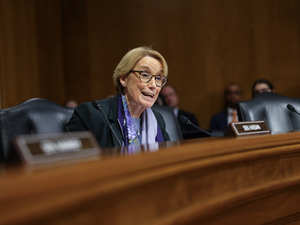
Arizona Attorney General Kris Mayes says Phoenix can legally prohibit federal agents from using city property to carry out immigration raids because nothing in either state or federal law obligates local officials to help enforce immigration law.
“As a matter of federal law, localities like cities and counties can refuse cooperation with federal immigration enforcement efforts, unless a specific statute lawfully compels their assistance,” Mayes wrote in her conclusion that rejected a complaint lodged by a Republican state legislator.
And, the Democrat concluded, no federal or state law exists that could force the City of Phoenix to let federal officials freely use city property.
Last month, the Phoenix city council voted 8-1 to pass the Community Transparency Initiative. The policy expressly prohibits federal authorities from using city property as a staging area, processing location or operations base to carry out “civil law enforcement actions” without the city manager’s permission. Being in the country without legal authorization is a civil violation.
There are several exceptions baked into the Phoenix policy. The city acknowledged that it can’t stop federal authorities from pursuing fleeing suspects onto city property, prevent them from gathering on public streets, ignore judicial warrants that allow them to set up camp on city property or bar them from entering the Phoenix Municipal Court or Phoenix Sky Harbor Airport.
Just days after the policy was adopted, Republican state Rep. Quang Nguyen filed a complaint with Mayes’ office, asking her to weigh in on whether the prohibitions violate state law. A finding that the policy ran afoul of state law could have resulted in a lawsuit or the city being denied its share of state revenues.
The Republican from Prescott argued that barring federal agents from accessing strategically necessary locations is tantamount to interfering with the enforcement of federal immigration law. Arizona law forbids counties, cities and towns from limiting or restricting the enforcement of federal immigration laws to “less than the full extent permitted by federal law.”
But Mayes concluded that a policy which regulates access to certain city properties doesn’t rise to the level of “limiting or restricting” the ability of federal agents to enforce immigration law. Arizona law, the attorney general wrote, prohibits local governments from taking actions against federal agents, but it doesn’t mandate cooperation between the two.
And, she added, the courts have consistently ruled that refusing to help the federal government isn’t the same as impeding its goals.
“Federal law does not purport to compel the states’ participation in immigration enforcement, and therefore generally permits localities to refuse cooperation with immigration enforcement activities,” Mayes wrote. “The only way that (Arizona law) could be read to require cooperation beyond what federal law requires would be via express statutory language so directing Arizona’s political subdivisions. But (Arizona law) contains no such language.”
Mayes pointed out that multiple federal laws and policies uphold the ability of state and local governments to refuse to collaborate with immigration enforcement operations. For instance, the U.S. Department of Homeland Security can enter into contracts with states and local law enforcement agencies to identify people who may be eligible for deportation, but those partnerships are strictly voluntary.
And the Immigration and Nationality Act includes inaction as a potential option in response to administrative warrants or immigration detainers issued by federal agents. Then there’s the Fourth Amendment, which governs the use of warrants and also protects the ability to ignore administrative warrants that don’t hold the legal backing judicial warrants do. And the Tenth Amendment has long been understood by the courts as housing an anti-commandeering doctrine that protects states and local governments from being forced to help carry out federal laws.
Nguyen also argued that the new city policy undermines the Supremacy Clause in the U.S. and Arizona constitutions, which uphold federal over state power, and warned that it risks discriminatory treatment against federal immigration agents. But Mayes pointed out that Phoenix’s policy doesn’t single out federal immigration agents and instead broadly prohibits “civil law enforcement actions” on city property. She added that just because the policy applies only to federal actions doesn’t automatically make it discriminatory. To meet the threshold for discrimination, it would have to give an unfair advantage to a class of state employees who similarly enforce civil laws, which isn’t the case.
Mayes noted that the Supremacy Clause doesn’t apply, either, because courts have made a clear distinction between state laws that improperly “control” a federal employee’s duties and those that only “incidentally” affect how they carry those duties out. In the end, she wrote, the City of Phoenix is doing nothing more than regulating its own property.
“When a locality acts ‘as a proprietor’ to adopt otherwise generally applicable regulations governing what activities are permissible in its own facilities, there is no impermissible ‘regulation’ of the federal government, even if the regulation might ‘incidentally’ affect how federal officials do their jobs,” Mayes wrote.
In his complaint, Nguyen highlighted the fact that there’s no process outlined in the policy for federal agents to request permission to use city property that could ensure consistent and non-discriminatory decisions. But Mayes waved away that concern, writing that the policy itself is neutral and the possibility that the city manager might make discriminatory decisions is too speculative for her to consider. To date, no state or federal agency has requested permission to use city property for civil law enforcement, making it impossible to determine whether Nguyen’s concern is valid, Mayes pointed out.
Earlier this month, Phoenix City Council submitted a response to the accusation that its policy violates state law which largely relied on the reasoning that its status as a charter city empowers it to regulate access to city property. In her legal opinion, Mayes chose not to address that argument, concluding that there is sufficient proof that the policy doesn’t conflict with state law to avoid analyzing the city’s defense.
The Pima County Board of Supervisors passed its own policy prohibiting federal agents from stepping foot on county property without a judicial warrant in February that is also the subject of a complaint from Republican lawmakers. Mayes has yet to rule on the legality of that policy, but her approval of Phoenix’s policy may signal a similar outcome for Pima County.
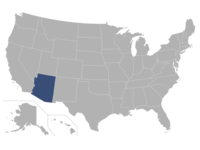
Phoenix, AZ