After overhaul, feds seek to reauthorize minority, women-owned business program
May 27, 2026 | 5:27 am ET

Description
Workers in safety gear install a black ductile iron pipe into a precast concrete manhole. (Photo courtesy of Virginia DBE Transportation)
Federal lawmakers want to reauthorize the Disadvantaged Business Enterprise program, a tool designed to reduce discrimination and create fair competition for business owners facing barriers due to their gender or race.
The legislative proposal follows significant revisions to the program last year and a campaign by advocates and business owners to reauthorize it before its fall expiration. Entrepreneurs have said it’s a lifeline for women- and minority-owned businesses, enabling more of them to participate in public contracts, create jobs and build a more inclusive economy.
The U.S. Department of Transportation removed the presumption that women- and minority-owned businesses are disadvantaged from the DBE program last October, making it harder for these businesses to qualify for benefits.
Advocates met with lawmakers, including U.S. Rep. Rick Larsen, D-Washington, in March to urge Congress to reauthorize the program. Larsen co-sponsors the bill with U.S. Rep. David Rouzer, R-North Carolina, and bill sponsor U.S. Rep. Sam Graves, R-Missouri.
No Virginia lawmaker sits on the House Committee on Transportation and Infrastructure. However, some House members, including Democratic Reps. Bobby Scott and Jennifer McClellan, both of Virginia, signed a Nov. 17 letter warning the agency about negative impacts its policy shift could have on businesses.
“Congress finds that while significant progress has occurred due to the establishment of the disadvantaged business enterprise program, social and economic disadvantage and related barriers continue to pose significant obstacles for businesses owned by socially and economically disadvantaged individuals seeking to do business in federally assisted surface transportation markets across the United States,” the bill states.
“The continuing barriers described … merit the continuation of the disadvantaged business enterprise program.”
Reauthorizing the program would maintain funding, and legal authority for businesses, and introduce new professional opportunities. If successful, the bill would change some October reforms but not completely reverse them.
If the program is reauthorized the Secretary of Transportation must publish “objective criteria” within 180 days that it will use to assess businesses’ disadvantaged status. Program applicants must show evidence of discrimination, economic hardship, systemic barriers, or denied opportunities.
Virginia and other states will also be required to provide annual lists of these enterprises, notify the Secretary of new certifications, and use uniform criteria.
Virginia had 3,455 certified DBEs as of 2024, with roughly half operating in the state and half operating elsewhere, according to data collected by the commonwealth’s Department of Small Business and Supplier Diversity.
The same report shows there are 13,533 Virginia vendors certified as SWaM (small, women-owned and minority-owned) and DBE vendors in the DSBSD database. There are 16,508 of these vendors total.
The proposal requires the Secretary to establish minimum requirements for states to report on DBE awards. Reports must also include progress on the recertification or decertification of small business concerns during the fiscal years 2026-2031.
A companion Senate bill has not yet been published. Both chambers would need to approve the measure before it can be signed or vetoed by President Donald Trump.
Program sparks legal action
The DBE program, founded in 1983, came under legal scrutiny when Indiana contractors told the Kentucky Supreme Court two years ago that the program’s preferences violate equal protection principles.
But on May 19, the court dismissed the case, after regulatory changes removed the contested provisions.
After the court temporarily blocked race- and gender-based rules last year, the federal transportation agency required owners to recertify and prove actual disadvantages, regardless of race or gender. Advocates framed the case as a win for businesses nationwide.
”The government and plaintiffs tried to exclude the participation of countless taxpayers and job creators. That will never improve America’s position in the world economy,” Wendell Stemley, president of the National Association of Minority Contractors, said in a statement. “We must ensure that all business owners, of all races, from both urban and rural communities, have a fair chance to contribute to building our nation’s wealth and productivity. Anything else is injustice.”
Joann Payne, president of Women First National Legislative Committee, said women and minorities in highway, transit, and airport construction have faced — and still face — prejudiced treatment that proves the necessity of lawsuits like the one in Kentucky.
“That discrimination will persist unless good citizens stand up and defend the rights of all our citizens, not just a privileged few,” Payne said. “That is what defending democracy looks like.”
Virginia legislation
Last week, Gov. Abigail Spanberger vetoed House Bill 61, a proposal that would have increased state contracting opportunities, after she and lawmakers failed to agree on her amendments to the measure.
She said the proposal would have cut out businesses and changed the original purpose of the SWaM program, which receives approximately $9 million annually.
One of the amendments called on lawmakers to reenact the proposal next session to give Spanberger’s administration time to strengthen the SWaM program and avoid potential consequences.
“House Bill 61 would fundamentally change the SWaM program by altering the definition to limit participation to small SWaM businesses,” Spanberger said in her veto. “These changes would limit state contract opportunities for nearly 800 women-owned and minority-owned businesses that currently participate in the program and would reduce Virginia’s current SWaM spending by at least $340 million dollars. Excluding previously-eligible businesses from participation, as the enrolled bill does, would fundamentally change the trajectory and purpose of the SWaM program.”
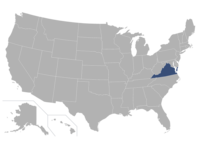
Richmond, VA