After a ‘lawyer’ took her money, she now faces immigration hearings alone
Oct 30, 2026 | 6:00 am ET
Description
Photo courtesy of Spotlight Delaware
Why Should Delaware Care?
The U.S. Supreme Court decided on Tuesday to deny judges the power to temporarily postpone deportation cases. This means that certain Delawareans with ongoing immigration cases will now face a greater risk of receiving a deportation order on the day of their court hearing.
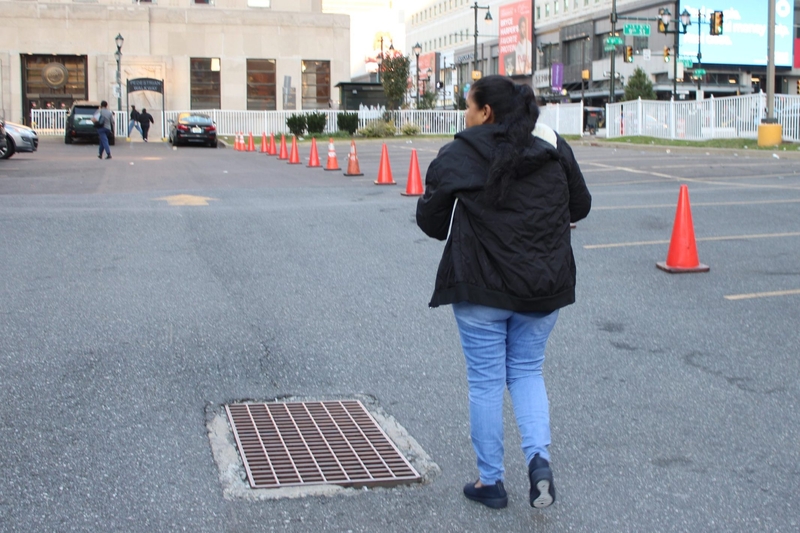
The brisk, October morning air made Yami clutch her black coat and hold the green folder in her hand tightly. The immigration documents inside were far too important to lose.
It was still dark outside as she stepped into the car, uttering a quick prayer under her breath.
“En el nombre de Dios y Madre santísima.” In the name of God and the holy mother.
Yami had just said goodbye to her teenage daughter, Lupita, and was heading to Philadelphia’s Immigration Court.
There was a nonzero chance she could leave the courtroom later that morning with a deportation order — for both her and Lupita.
Volunteer drivers from the local immigration advocacy organization Sussex Help signed up to chauffeur Yami to her court hearing. One volunteer attempted polite conversation, asking Yami how her last appointment had gone.
“I mean good,” Yami said. “Well, good because they didn’t detain me or anything,” she added, chuckling half-heartedly.
This court appearance would be Yami’s second. Back in April, the judge had told her to return without Lupita at this next hearing. The judge had also told her to return with a lawyer, but Yami does not have one.
Her experiences with lawyers throughout her family’s immigration journey have not been positive ones.
Yami first sought out legal help when her husband was detained in April 2025. That first lawyer, though, was a fraud. He scammed Yami and her husband out of $300.
The couple’s second lawyer lost her husband’s immigration case, resulting in his deportation back to Nicaragua and a drained family bank account.
“Rather than paying a large sum to a lawyer — an amount I don’t even have — I would prefer to leave it in the hands of God,” Yami said. “He is the best lawyer.”
The northern Delaware mother — who, along with her entire family, is being referred to using pseudonyms because of their ongoing deportation case — would hear one of two decisions in court that day: deportation orders for both her and Lupita, or permission to stay in the country.
A family under supervision
Yami and a then-13-year-old Lupita came to the United States from Nicaragua in May of 2024.
“I want my little girl, my sweet girl, to study here and to learn,” Yami said. “Above all, I want her to learn English, because here she’ll be given the opportunity to study at a university or pursue a degree.”
In Delaware, Yami reunited with her husband, Concho, and her two older children who had come to the U.S. a few years before in search of work.
Their home country faces not only economic hardship, but also political repression at the hands of President Daniel Ortega, largely considered to be a dictator. The Trump Administration imposed sanctions on Nicaraguan government officials earlier this year for their “ongoing abuses against the Nicaraguan people.”
The family entered the U.S. during the era of former President Joe Biden’s humanitarian parole program, which provided immigrants from certain countries temporary legal status if they could prove a need for political asylum. But they chose not to seek out that legal pathway.
The family had heard of other Nicaraguans who failed to claim asylum in the U.S., and were subsequently being persecuted for that choice back in their home country.
Instead, each family member obtained an Order of Release on Recognizance, which means they were permitted to stay in the country while Immigration and Customs Enforcement (ICE) determined if they were criminals, or could prove to a judge they qualified for a lawful stay.
Upon arrival, each family member also received an Alien Registration Number, which is an identification number assigned by the Department of Homeland Security to non-citizens.
Every two months the family is visited by Intensive Supervision Appearance Program (ISAP) officials, or private case managers hired by ICE to oversee them. The case managers confirm their current address, take photos of them and ask questions ranging from run-ins with law enforcement to whether there is food in the fridge.
They have never had any troubles with the police, nor with their supervision appointments, Yami said.
The family began to settle into their life in Delaware.
They bought a mobile home. Concho found a job in construction. Lupita enrolled in school. Yami worked at a local Hispanic grocery store preparing tamales and tortas — Mexican dishes she learned to make.
A shock deportation
One April morning last year, Concho dropped Yami off at work before heading to a construction site.
But Yami never saw her husband again.
Concho was detained by ICE officials. He was transferred to Pennsylvania’s Moshannon Valley Processing Center and remained there for three months before ultimately being deported back to Nicaragua.
Spotlight Delaware first spoke to Yami and her eldest daughter, Carito, in July 2025. The pair recounted their scramble to find a lawyer after learning Concho had been detained.
Yami, filled with desperation, turned to Facebook.
“You must know, to get someone out — how should I put it?” Yami said, taking a long pause. “To get someone out of where they are, one will do anything.”
She found Cristian Romero, a man claiming to be an immigration attorney with a New York City-based law firm called Álvarez Immigraciόn ABG.
Spotlight Delaware reviewed Yami’s WhatsApp messages with Romero. Yami brought up her concerns that Concho had voluntarily signed a deportation order and grew doubtful over any lawyer’s ability to get around this, but Romero insisted it was no problem.
She initially sent $300 via money order to a location in Queens, New York, as instructed by Romero, to an individual named Karold Andrea Agudelo Ayala.
The day after, Romero began demanding more money, thousands of dollars more. He promised to have Concho back home that same day. But Yami did not have the money, and she had grown even more suspicious of Romero.
Distraught, Yami sent a final voice memo to Romero after he demanded even more money.
“Please let me live my life in peace, and I will let you live yours in peace,” she said.
When contacted by Spotlight Delaware, the alleged law firm denied any wrongdoing and asked for Yami’s personal information.
Yami tried again. She paid $6,000 to a legitimate attorney who represented Concho in court.
Carito watched her father’s court hearing virtually last year. The second lawyer told the judge about Concho’s clean criminal record despite his undocumented immigration status. Her father’s deportation was finalized that day.
This, she said, made her lose faith in the legal system.
“Whether the judge is racist or a decent person, it really just comes down to that in the end,” Carito said. “It doesn’t come down to the lawyer.”
A mother’s day in court
It was just before 7 a.m. on Oct. 26, when Yami began the drive to Philadelphia.
The green folder containing her immigration papers was safely tucked in between the side of her leg and the car’s center console.
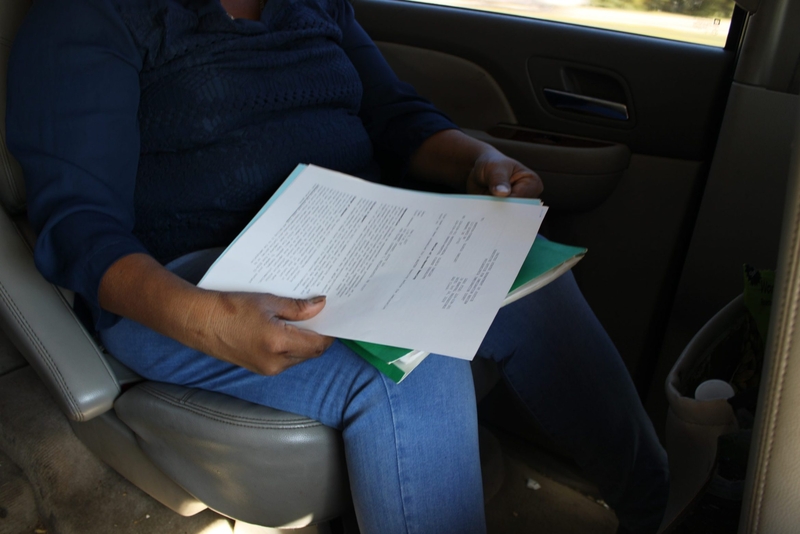
As the sky opened up to reveal a fiery, bright red sun, Yami reflected on her morning walks to school in Nicaragua with Lupita.
The pair would see San Cristobal, the tallest volcano in Nicaragua, off in the distance. Yami recalled a line that her daughter would tell her day after day when they gazed at the geographic feat piercing into the sky.
“When she was very, very little, she used to say that she wanted to have wings and fly,” Yami remembered.
Before Yami left for Philadelphia, she said Lupita attempted to reassure her mother that she would be coming back.
“You’ll see, you’ll come by in the afternoon, after classes,” she recalled Lupita telling her.
Just in case, Yami made sure Carito had Lupita’s passport in hand. She also left what could have been a final message to her youngest daughter.
“I told her, ‘Listen, mija, you behave yourself — do you hear me? And help your sister,’” Yami said.
She arrived early at the courthouse. Yami’s hearing was not scheduled until at least 9 a.m., but she arrived before the doors first opened at 8 a.m. Being late would have resulted in a marked absence and an order for deportation.
After going through security, Yami was ushered into an elevator and waiting room. She spoke to another guard and a frazzled court clerk before ultimately arriving outside the correct courtroom.
Inside, the courtroom was no bigger than a high school classroom. It was just big enough for the judge, the clerk sitting at her side, tables for the defendants and a small public seating area.
Most defendants, like Yami, did not have a lawyer. This has not been uncommon.
Around 30 minutes went by before Yami was called up by Judge Mary Lee.
Yami grabbed her green folder and adjusted her sleeve. She peered out the courtroom windows and smoothed down her ponytail as she sat down beside six other people who were also there to defend their place in the U.S.
After confirming Yami and Lupita’s information, Lee asked her about an attorney.
“I couldn’t find one,” she said softly into the microphone.
The judge asked if she wanted to represent herself, or if she would like more time to find a lawyer.
“If you could give me more time, I would appreciate it,” Yami said, the court translator relating her Spanish back to Lee.
The judge obliged.
Yami would have one additional hearing. One more time to find a lawyer.
Moments later, Yami was handed documents proving she appeared before an immigration judge. She would have to show those papers to her deportation officer at the U.S. Citizenship and Immigration Services (USCIS) Application Support Center in Dover later that day.
The hearing itself lasted around five minutes.
A small sliver of hope
Yami could not contain her smile as she called Carito and Concho. She was confused how the judge let her go, but relieved to be able to return to her children.
Lee gave Yami until February 2027 to find a lawyer.
That will be her final hearing, where she will have to answer for the charges being brought against her and Lupita: being undocumented.
Yami would try to call the list of lawyers provided by the judge who do free or low-cost work, she said. But her hopes of finding representation remain low.
She still does not want to claim political asylum out of a fear that her family would face retribution back in Nicaragua. That decision has placed Yami in an uncertain path as she tries to find a way to stay here lawfully.
Standing outside the courthouse, she slipped the judge’s list inside her green folder. For her daughter’s sake, she had to at least try.
“Yes, I’m going to give it a try,” Yami said. “Because the truth is that I want the little girl to study here.”
Dover