ACLU Iowa: School resource officers arrest more Black, disabled students
Jul 30, 2026 | 5:19 pm ET
Description
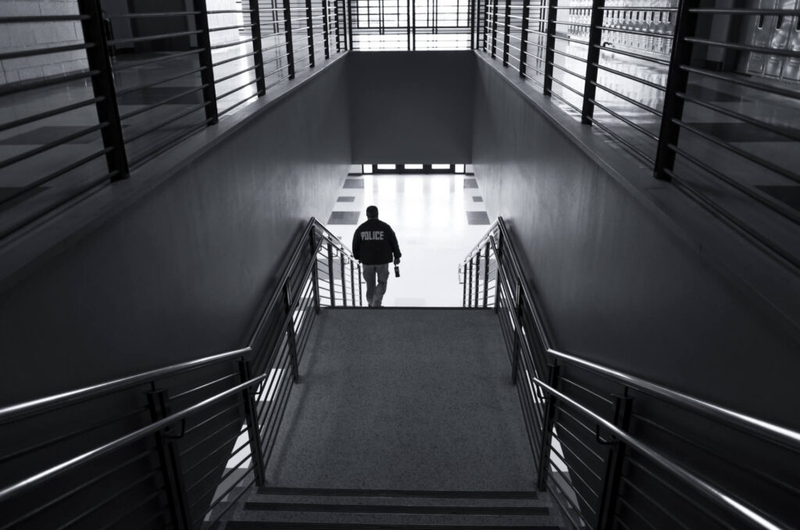
Black students and those with disabilities are much more likely to be arrested or referred to law enforcement by school resource officers than other students, an ACLU of Iowa report shows. (Photo by Don Tavo/iStock / Getty Images Plus)
Black students and those with disabilities are much more likely to be arrested or referred to law enforcement than other students in Iowa schools with school resource officers, an American Civil Liberties Union of Iowa report published Thursday found.
School resource officers, or SROs, are sworn law enforcement officers assigned to work at K-12 schools, where they handle public safety and crime-related issues. These officers are able to make arrests, conduct investigations, and respond to referrals when a school employee reports a student to address a problem happening on school grounds. More schools now have SROs working in their facilities, the ACLU found, with roughly 1 out of every 4 Iowa schools districts having at least one officer.
In recent years, Iowa lawmakers have sought to encourage schools to employ SROs. In 2024, Gov. Kim Reynolds signed a measure requiring school districts with 8,000 or more students to employ a school resource officer or security officer at facilities with students in grades 9 through 12 — while still providing school boards the ability to opt out. This proposal came in response to the January 2024 Perry High School shooting alongside other concerns about increased risk of shootings and violence occurring on school grounds.
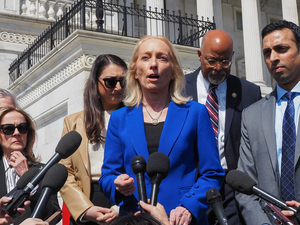
While supporters of measures like the 2024 law say more SROs can help schools respond to emergencies and prevent instances of violence, speakers with ACLU of Iowa told reporters Thursday the presence of school resource officers can cause harm for students by rerouting school discipline issues to the criminal justice system. The ACLU of Iowa report stated “a survey of national studies could not find a single (case) that clearly demonstrated that having an SRO keeps a school any safer than a school without an SRO, including during tragic school mass shootings.”
“In fact, there is evidence that SROs can actually create harm for students by escalating a minor incident into an actual criminal offense that can follow a young person their entire life,” the report states.
Jacob Sarasin, a legal fellow at the ACLU of Iowa, compiled the report, which used data from the 2021-2022 school year, gathered through open records requests submitted to 87 Iowa school districts and 67 corresponding law enforcement agencies, as well as federal data submitted by schools. Sarasin said as ACLU staff analyzed these data sets, “we uncovered a few key takeaways that we found particularly concerning” — chief among them being disparities in arrest and referral rates for Black Iowa students and students with disabilities.
Black students make up 7% of the school population in Iowa, Sarasin said, but account for 13% of referrals and 21% of arrests made by SROs, Sarasin said.
“This is concerning, because national research has repeatedly demonstrated that there is no statistically significant evidence that shows that Black students misbehaved at a higher rate than any other student group,” Sarasin said. “Given that, you would expect proportionality between the arrest rates, referral rates, and the population. So, if Black students have a population of 7% of the students in Iowa, you would expect 7% referrals and 7% arrests. That’s not the case.”
Students with disabilities are also overrepresented in referral and arrest numbers, making up 13% of the state’s student population but accounting for 27% of referrals and 26% of arrests. These numbers mean Iowa students with disabilities are referred to law enforcement or arrested at 2.3 times the rate of a student without disability, Sarasin said, and that Black students are arrested or referred at nearly four times the rate of students who are not Black.
Because SROs are sworn law enforcement officers, having a school resource officer respond to and resolve disciplinary issues with a student may mean these students could be arrested or otherwise be involved in the juvenile justice system. The ACLU of Iowa report argues many of the instances where school resource officers were involved — such as a student caught using a vape product, instances of being “disrespectful” in class, or spreading rumors about another student — did not require intervention by an armed police officer, but could be resolved by regular school discipline actions.
Rita Bettis Austen, ACLU of Iowa legal director, said called police intervention in these situations part of the “school-to-prison pipeline.”
“This can funnel kids into the juvenile delinquency and adult criminal court systems, and when kids interact with those systems and enter those systems, it often can leave a lifelong mark on them, causing for many trauma, depression, anxiety, separation, and isolation from their families and other supports, and stigma, associated with an identity shift to being a ‘bad kid.’ And all of those things make it more likely, not less likely, that those kids are going to grow up into adults who continue to have problems and interact with the criminal justice system.”
The report also found multiple instances in which an SRO was called to respond to incidents involving elementary school children. In one example, an SRO intervened because a 6-year-old student was “trying to destroy a classroom” and “being physically disruptive,” and in Pella, an SRO was involved in investigating a 10-year-old boy “kicking a ball at a 9-year-old girl and shaking a climbing net she was on.”
Sarasin said none of the data and incident reports clearly stated any elementary school student was arrested or faced criminal charges, but noted that this information is often confidential and may not have been included in the information shared with the ACLU.
The report called for Iowa schools to end their school resource officer programs — a step taken by districts like Des Moines Public Schools and Ames Community School District. The report also recommended that schools continuing SRO programs set new standards for training and oversight — as well as establish clear guidelines for when an issue is to be referred to an SRO instead of being handled by school staff.
Des Moines, IA