ACA health coverage enrollment in NH declined by an estimated 4.8K after tax credits expired
Sep 17, 2026 | 5:00 am ET

Description
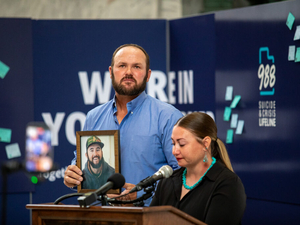
Edward Shantala, CEO of Ammonoosuc Community Health Services, speaks during a virtual event Aug. 31. (Screenshot)
After a set of tax credits designed to help Americans afford healthcare expired, 4,868 fewer New Hampshire residents were enrolled in ACA Marketplace healthcare plans, according to an analysis of federal data by KFF.
The analysis, which was released this summer, found that New Hampshire enrollment in ACA healthcare plans fell by 8% from 2025 to 2026. Across the country, enrollment fell from roughly 21.8 million in 2025 to 19.2 million in 2026, per KFF. The data does not capture the exact reasons people dropped or lost coverage. However, it’s the first time in seven years that enrollment in the marketplace, which was established by the 2010 Affordable Care Act, fell. Every state except New Mexico, which used state funding to replace the lost federal subsidy, saw an enrollment decrease this year.
The KFF analysis looked at effectuated enrollment data. Effectuated enrollment, as opposed to sign-up data, reflects not just how many people do not enroll in a plan but also how many fail to pay their premiums and lose coverage.
At the end of 2025, Congress let the ACA Enhanced Premium Tax Credit expire. The credit was established in 2021 to help Americans who use the government-run online ACA Marketplace afford their plans. In 2022, as it was renewing the tax credit, Congress set an end-of-2025 expiration date.
Late last year, congressional Democrats pushed to renew the tax credit again. When Republicans refused, Senate Democrats voted against Republicans’ federal budget legislation, which launched a shutdown of the federal government. For months Democrats tried to use the government shutdown as leverage to demand Republicans accede and renew the tax credit. However, as the government shutdown began to affect federal employees who were not receiving a paycheck, SNAP recipients, and others, a group of Democrats led by New Hampshire Sens. Jeanne Shaheen and Maggie Hassan caved and ended the shutdown. Republicans never agreed to renew the tax credits and they expired in January.
In New Hampshire, 49,757 people used the tax credit in 2025 before it expired, according to the U.S. Centers for Medicare and Medicaid Services.
Meanwhile, the One Big Beautiful Bill Act, which was pushed by President Donald Trump and passed by Congress in mid-2025, enacts major cuts to a swath of other federal health programs like Medicaid and SNAP. New Hampshire has also instituted state-level changes to Medicaid, which is funded and operated jointly by the states and federal government. Notably, certain Medicaid enrollees are now required to pay premiums in order to keep their coverage. Many local health officials worry about this convergence of major changes.
Edward Shantala, CEO of Ammonoosuc Community Health Services, which operates in rural Coös and Grafton counties, recently told a group of public health experts and reporters that as access to primary care diminishes, New Hampshire will see more people in the emergency room.
“When they get primary care, the return on investment is 13-to-1,” he said. “So when people get the primary care, they demand less emergent and acute care, and as such, they don’t need to go (to the emergency room), so that is a great return on investment.”
In late 2025, Ammonoosuc Community Health Services closed its Franconia location. Shantala blamed Medicaid cuts. This comes at a challenging time for rural healthcare providers nationwide. Last Month, Penobscot Community Health Care, a similar healthcare facility (known as a Federally Qualified Health Center) in neighboring Maine, said in an email to employees their current operations were “unsustainable,” local media reported. Shantala evoked the situation in his remarks.
“I’m concerned that it’s a bellwether,” he said. “They’re looking at filing for bankruptcy, so that worries me greatly because a lot of the FQHCs and critical access hospitals are on very thin margins. Dartmouth posted a negative operating margin, so it’s not just the small places that are hurting. So it’s going to adversely affect all of us, I’m afraid.”
Concord, NH