A 6-Month Vacation? Hawaiʻi Council Deadlocked On Short-Term Rental Bill
Nov 02, 2026 | 5:01 am ET

Description
Photo courtesy of Honolulu Civil Beat
The Hawaiʻi County Council is trying to clear up confusion over its vacation rental laws with a bill that would clarify operational standards and define what constitutes short-term. But after months of delays and amendments, the nine-member body is still split over whether to pass it.
Bill 147 would broaden the areas where vacation rentals are allowed and extend the rental period considered short-term to anything under 180 days instead of under 30 days.
Council members were hesitant to move the bill forward last week, raising concerns about confusing regulations and whether they were breaking promises made when the county first required rental owners to register.
The county planning director, Jeff Darrow, and Councilwoman Heather Kimball, the bill's author, say the measure is necessary to help the planning department enforce regulations and avoid ambiguity in the county code.
The council reluctantly passed the bill last week and is expected to make a final decision next month.
“It is vital that we move this bill forward to assist in our regulation of hosted rentals,” Darrow told the council.
Seeking Consistency
Vacation rental owners and critics of Bill 147 have called the legislation confusing and punitive. But Kimball says her intent with the bill was to clean up inconsistencies in the county code.
Under the county’s current land-use rules, unhosted short-term rentals — rentals where the owner does not live on the property — and hosted rentals, where the owner does live on the premises, are considered short-term if they rent for less than 30 days.
The county’s registration rules and state tax rules, however, identify short-term rentals as anything rented for less than 180 days. Bill 147 would align the county’s land-use rules with those laws.
“Having everything consistent, I think, is better for transparency and for the public's understanding,” Kimball said.

The bill also seeks to clarify and create operational standards. The county only has quiet hours, parking and good neighbor rules for unhosted rentals. Kimball said even those are too general.
Rental owners say the operational standards are unnecessary and punitive. The state and county already have rules about noise and parking, and rental owners should be held to the same standards as everyone else, critics said.
Kimball said the bill references existing rules and only adds on regulations for the types of events rental owners can throw. She said current rules for unhosted rentals are too general and Bill 147 seeks to make them clearer for owners. It also requires the planning department to provide a warning to owners in violation of the law before administering fines.
“Clearer standards make it easier to be in compliance,” Kimball said. “If you don't know what the standards are, then it's harder to follow the rules.”
The council has heavily amended Bill 147 over months of discussion. Many of the amendments are a direct result of community feedback and seek to make it easier for owners to operate.
Rental owners and council member James Hustace raised concerns that the current laws limit rental properties to five bedrooms. That would limit large homes in his district in North and South Kohala, he said. The council amended the bill to allow rental properties to have more than five bedrooms as long as they are in a resort area.
“Despite what some of the commentary has reflected, I'm actually trying to make this as easy as possible for our residents,” Kimball said during last week’s council meeting.
Eliminating Some Permit Requirments
Though critics of the bill say it restricts where vacation rentals are allowed, the bill would actually do the opposite. Bill 147 would allow hosted rentals in pre-1976 agricultural lots operating in a single-family dwelling and in residential zones.
Currently, vacation rentals are not allowed in areas zoned residential without a use permit. But the planning department, Kimball said, has not enforced those rules. With Bill 147, the department wouldn’t have to.
“The goal with 147 was just to align it with (the planning department’s) practice, which is to not require the use permit,” Kimball told Civil Beat.

Darrow declined an interview request. In a written statement, he said the department was awaiting the outcome of Bill 147 before pursuing enforcement of rentals in residential zones. Darrow also noted that the department was allowed to delay short-term rental enforcement until Dec. 31, 2026 due to Ordinance 26-63, which the council passed in September.
"We have not been actively enforcing "hosted rentals" in the residential zones during the process of Bills 121 and 147...The reason for this is that these bills provided an avenue to permit hosted rentals in residential zoned districts," Darrow said in his written statement.
Bill 121 was one of three bills in a package introduced by Kimball in 2024 that would have done much of what Bill 147 aims to do.
Bill 147 will allow hosted rentals to operate in residential areas without a use permit. That permit would have required rental owners to notify their neighbors and have a public hearing with the planning commission to be approved.
Council member Dennis Onishi raised concerns that eliminating the permit requirement would result in complaints from neighbors, who would no longer have a say over whether a vacation rental should operate in their community.
“They're going to be shocked because there's no notification anymore,” Onishi said.
Darrow assured Onishi that the planning department would have a public-facing platform that will allow people to see where rentals are operating and provide information on who is operating it.
“We haven't received a lot of complaints from active ongoing (vacation rentals),” Darrow told the council. “That's a good thing because it shows that these guys are operating in a non-impactful manner.”
The Planning Department has received 145 vacation rental complaints since January of 2025, according to Darrow. The majority of these complaints were unhosted rentals operating without a permit. Others were parking and noise complaints.
'Gone Back On Our Word'
Bill 147 is the latest bill for short-term rental regulations Kimball has introduced. Bill 108 and Bill 47 passed in 2018 and 2025, respectively. The 2018 law defined unhosted rentals, where they're allowed and created standards of operation.
Bill 47 required all vacation rentals to register with the county. Kimball attempted to pass a three-bill package regulating rentals but they failed after strong opposition. Critics called the package a gross overreach of government power and too confusing, resulting in a piecemeal approach.
Bill 147 requires a council majority to become law. While Kimball said she’s confident she has the five votes she needs, other council members were hesitant to vote in favor of the bill on its first reading last week.
Three council members raised concerns that the county had made promises it wasn’t keeping. Councilman Matt Kaneali'i-Kleinfelder, whose term in office ends the first week of December along with three other members, told Kimball that she had promised that her rental bills didn’t need to pass together and wouldn’t affect each other.
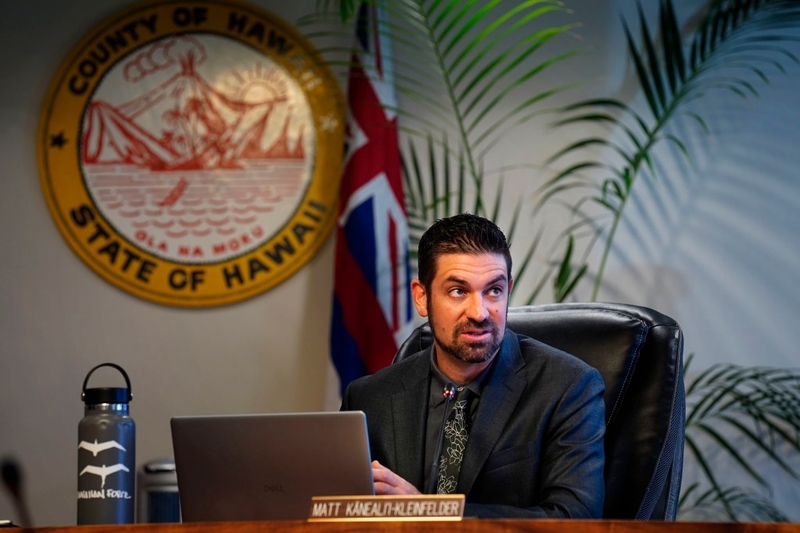
Kimball says the bills operate independently. While they affect one another, she said, one bill could fail without affecting the other pieces.
“They do play together, and that's inevitable,” Kimball said last week. “If Bill 147 doesn't pass, that registration process will still exist. It'll just be a little bit more burdensome.”
Rental registration opened on Sep. 1. So far, 180 properties have registered with the new system and 5,100 rentals that carried permits prior to recent legislation have been deemed registered.
Councilwoman Ashley Kierkiewicz was concerned about previous promises the council had made. She said they had assured residents that they would wait until after registration was complete before tacking on regulations.
“This flies in the face of all of that,” Kierkiewicz said. “It makes me feel very uncomfortable that I feel as if we have gone back on our word as a county when we said trust us, register.”
Testifiers echoed Kierkiewicz’s concern. In one written testimony, Krissie Anderson said the legislation was drawn out, confusing and complicated.
“The registration part passed before the operational part,” Anderson wrote. “So are we to understand that you want hosted rentals to pay their fees, submit their paperwork, site plans and more before they even know what they are signing up for?”
Onishi said the council had done the regulation process backward and that operational standards should have been set before registration was required.
“We should have done all this first,” Onishi said. “I can sympathize for the public … because if we're getting confused, can you imagine them?”
While Onishi, Kierkiewicz and Kaneali'i-Kleinfelder voted in favor of Bill 147 last week, they said they weren’t sure how they would vote on its final reading.
Despite heavy criticism of her regulations, Kimball isn’t done with short-term rentals. She also has plans to introduce legislation to ensure rentals are owned by people and not corporations and create special land-use areas that would allow rentals but not resorts. On Tuesday, voters will elect a new council, which will include four new members. The shake-up could shift the council's dynamic and priorities.
“We'll let the dust settle on 147, get all the registration done, and then I'll start working on those things,” she said.
Honolulu, HI