Lawsuit could save Medicaid for 140,000 in Ohio
Nov 02, 2026 | 4:00 am ET
Description
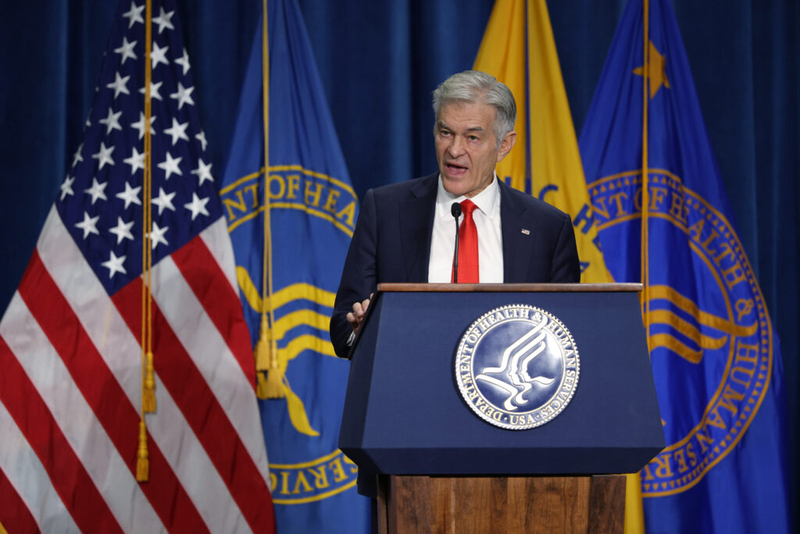
Dr. Mehmet Oz, administrator of the federal Centers for Medicare and Medicaid Services, speaks at the Department of Health and Human Services in Washington, D.C. (Photo by Alex Wong/Getty Images)
The American Medical Association says the Trump administration has unlawfully imposed a rule that could threaten health coverage for at least 140,000 Ohio Medicaid recipients.
The AMA made that statement last week in a friend-of-the-court brief in support of a lawsuit in which Columbus is a plaintiff. It seeks to stop an element of planned Medicaid work requirements that the city said will burden taxpayers and city services.
The requirements are a part of President Donald Trump’s One Big Beautiful Bill, which was passed with only Republican support in summer 2025.
The bill cut taxes on the richest 1% of Americans by $1 trillion over 10 years. It cut a similar amount from Medicaid and SNAP — healthcare and nutrition programs for the poor — over the same period.
A major way the Trump bill seeks to make cuts to Medicaid is through work requirements that mostly go into effect on Jan. 1. Past experiments with work requirements failed to produce additional employment, and the Congressional Budget Office estimates that they will cause 7.5 million Americans to lose healthcare by 2034. An analysis by the Commonwealth Fund said cuts to Medicaid and SNAP will actually result in job losses by reducing states’ economic output.
Bad as those predictions are, Secretary Robert F. Kennedy Jr.’s Department of Health and Human Services took an unlawful step further, Columbus and a group of health advocates said in a Sept. 18 lawsuit.
The Trump law was meant to exempt from the work requirement the “medically frail” who have coverage under Obamacare’s Medicaid expansion in states such as Ohio, said the suit, which was filed in U.S. District Court in Maryland.
But in its rules implementing the law, Health and Human Services requires such people to prove that their medical frailties make them unable to work, the suit said.
It defined “medically frail” as those who were “blind or disabled,” “with a substance use disorder,” “with a disabling mental disorder,” “with a physical, intellectual, or developmental disability that significantly impairs their ability to perform one or more activities of daily living,”; or those “with a serious or complex medical condition.”
The lawsuit said placing the burden on such recipients to prove their medical frailties make them unable to work will cause millions more to lose coverage than the Trump law contemplated.
“Independent experts project the statute, as enacted, would cause about 6.4 million people to lose coverage on an average annual basis between 2027 and 2034,” it said. “With the (rule’s) additional restrictions, those losses are estimated to increase to around 8.2 million people each year — a roughly 30 percent increase.”
Cleveland-based Center for Community Solutions in July said that 143,000 Ohioans who have coverage under Ohio’s Medicaid expansion are medically frail and another 172,000 would have to undergo additional evaluation before it can be determined whether they are or not. And it said many of the medically frail would have a tough time proving their frailties make them unable to work.
“The people most likely to qualify for medical frailty protections may also be individuals least able to navigate additional paperwork, documentation requests, and administrative reviews,” the Center for Community Solutions said in an appeal to loosen the requirements. “If the exemption process becomes too complex, coverage losses could occur even among individuals the exemption was intended to protect.”
The lawsuit said resulting coverage losses would fall on Columbus and the taxpayers who finance its medical and social infrastructure.
Among its services, the city operates a community health center that serves people regardless of ability to pay.
“Columbus receives compensation when it provides these services to Medicaid beneficiaries, but it is not compensated when it provides these services to uninsured individuals,” it said. “The increase in the number of uninsured individuals resulting from the rule would lead to a greater burden on those city services and lower reimbursement, which, in turn, will impose additional costs on the city.”
The friend-of-the-court brief was filed Tuesday by the American Medical Association and eight other doctors’ groups, including ones representing oncologists, emergency doctors and obstetricians. It said the rule promulgated by Kennedy’s agency stands the intent of the Trump law on its head when it comes to the medically frail.
“The statutory language of (the Trump law) excludes medically frail individuals from Medicaid work requirements, including everyone with a serious or complex medical condition or substance use disorder,” it said. “But — contrary to the statute — (the U.S. Centers for Medicare and Medicaid Services) added the requirement that individuals prove their medical condition significantly impairs their ability to work. This additional requirement converts what Congress intended to be an exclusion based on one’s medical status into an exclusion based on the individual’s ability to work.”
The rule also would add to the flood of paperwork which is already drowning practitioners, the AMA and other doctors’ groups said.
“At a time when excessive administrative tasks are a leading contributor to gaps in patient care and physician burnout, these additional responsibilities create new burdens for medically frail patients and the physicians who care for them,” it said.
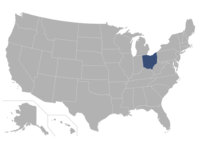
Columbus, OH