Up To 5 Billion Gallons Of Water Wasted By The Navy Since Red Hill Crisis
Jul 14, 2026 | 6:01 am ET
Description
Photo courtesy of Honolulu Civil Beat
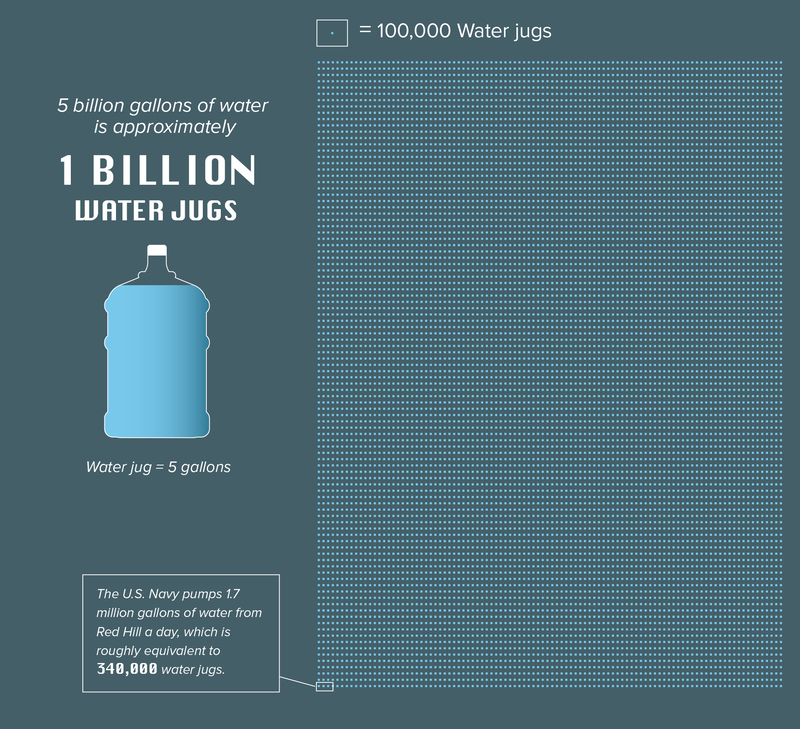
Every day on Oʻahu, the U.S. Navy pumps an average of 1.7 million gallons of water from the Red Hill well, filters it, and dumps it in a nearby stream – effectively sending it to the ocean.
Pump, filter, dump. Pump, filter, dump. Month after month. Year after year.
It’s a lingering response to the military’s 2021 water contamination crisis in which fuel from the Navy’s Red Hill fuel facility contaminated Pearl Harbor’s drinking water. Pumping the still-contaminated water out is meant to prevent a plume of fuel from traveling toward other wells.
Once filtered, the water has many potential uses, and the Hawaiʻi health department had asked the Navy to consider using it for some beneficial purpose. The Navy studied its options but decided not to pursue any of them.
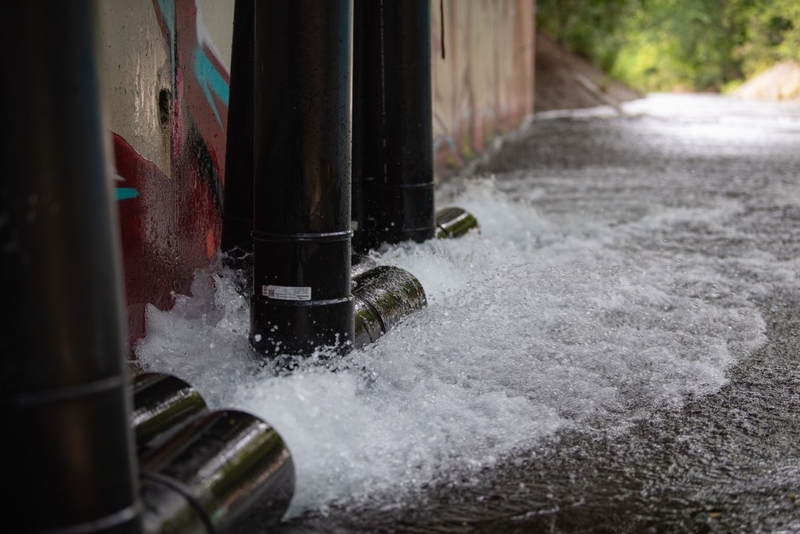
More than four years after the pumping began, the water waste has reached an extraordinary milestone: Between 4.5 and 5 billion gallons of filtered water have been dumped. Navy Closure Task Force spokesperson Lt. Cmdr. Michelle Tiemeyer said an unspecified portion of the water from Red Hill has been used to pressure wash the emptied Red Hill tanks.
Water is at a premium on Oʻahu. Last year, the Honolulu Board of Water Supply ran public service announcements asking the public to cut their water usage by 20%. Take shorter showers, the agency said. Don’t run the tap while brushing your teeth. Don’t water your plants during peak daylight hours.
This year, the agency is continuing to advocate for water conservation, although it isn’t pushing a specific benchmark.
“Every drop of fresh groundwater from underground aquifers is precious,” BWS Chief Engineer Ernie Lau told Civil Beat. “And we feel it should be treated as a gift and not wasted.”
A report obtained by Civil Beat shows military officials considered ways to put the filtered Red Hill water to good use. While it doesn’t meet state health standards for potable water, it is suitable for irrigation and could help reserve the millions of gallons of drinkable water the military currently uses on its golf courses, athletic fields and parks for other uses.
Navy officials were briefed in early 2022 that any of the beneficial use options for the filtered Red Hill water would take up to two years to set up, according to the report. The report says officials decided to do nothing because they didn’t know how much longer the pumping would be necessary.
Existing tunnels owned by the Navy and Board of Water Supply could have transported water to Joint Base Pearl Harbor Hickam, The Tripler Army Medical Center’s track and fields, Fort Shafter and other nearby areas, according to the beneficial use report.
If the Navy had started using the filtered Red Hill water for irrigation in those areas two years after the report – in April 2024 – it could’ve preserved more than 1 billion gallons of freshwater, according to a Civil Beat analysis.
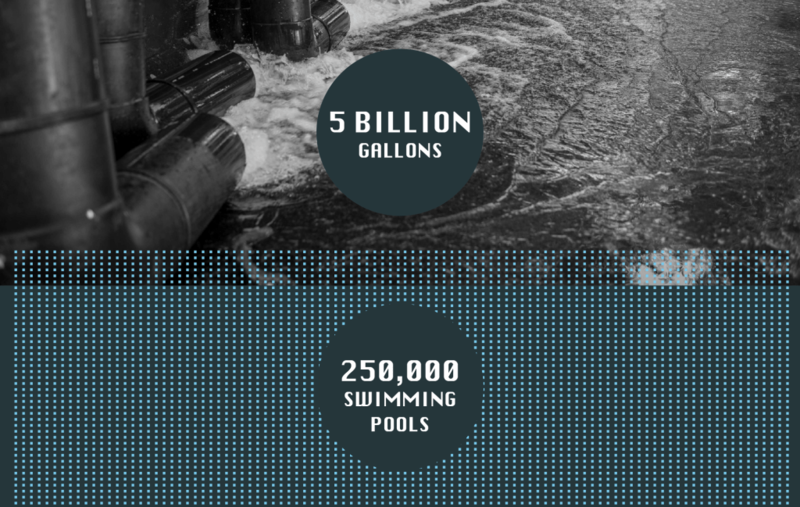
Instead, the Navy wasted approximately 5 billion gallons, an amount that is difficult to fathom. To give a sense of how much water that is, Civil Beat drew up some comparisons:
5 billion gallons is enough water to fill 1 billion 5-gallon water jugs.
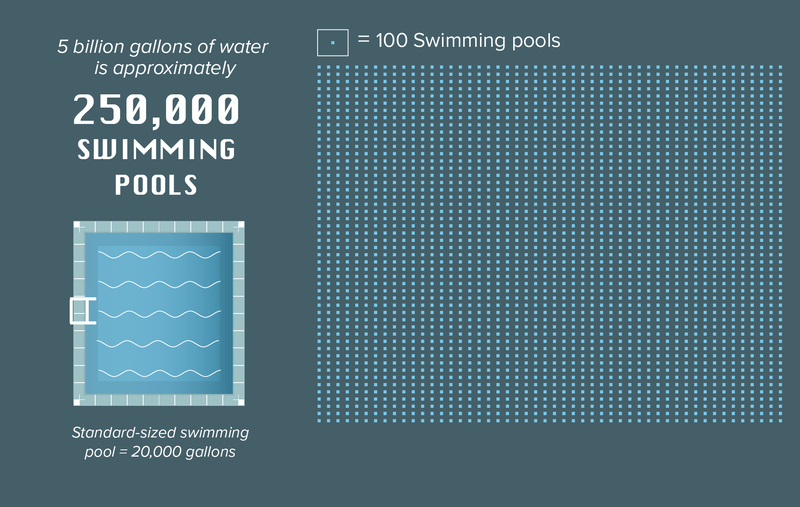
It is enough water to fill 250,000 swimming pools.
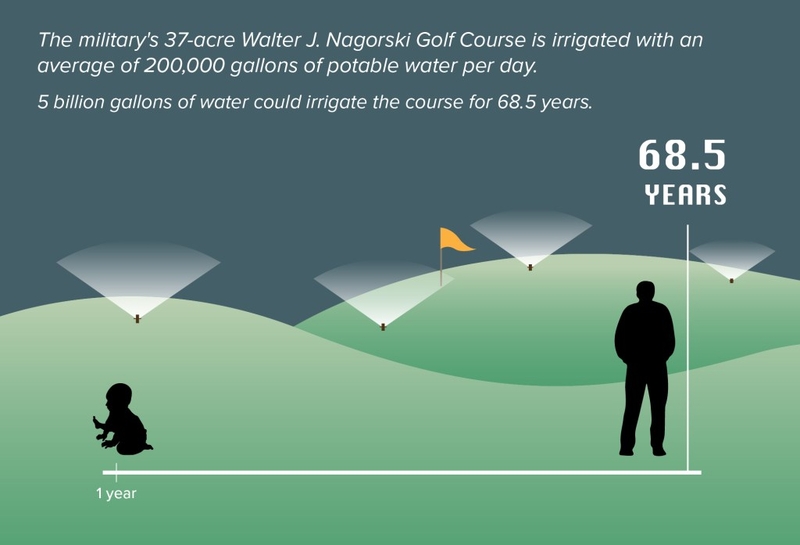
It’s enough water to irrigate the Walter J. Nagorski Golf Course every day for more than 68 years.
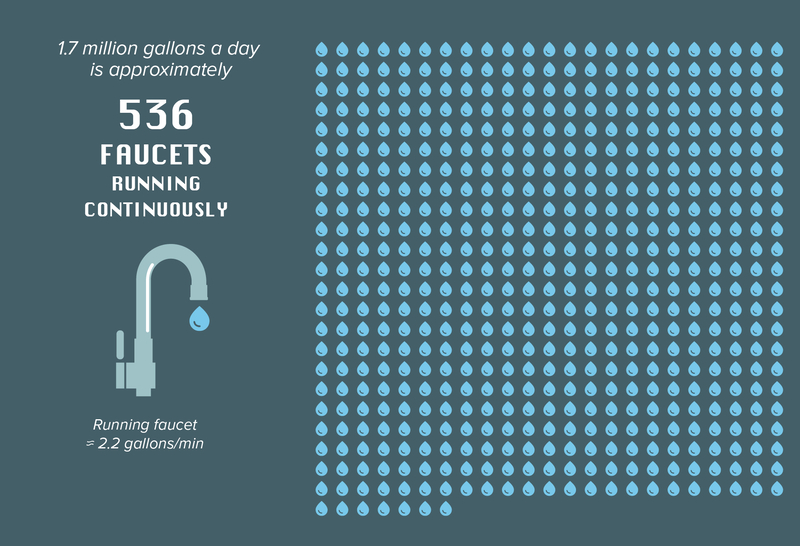
And the waste continues. While the pumping is intermittent, according to the health department, the Navy says it pumps an average of 1.7 million gallons of water from the Red Hill well per day.
That’s akin to 536 faucets running continuously, 24/7.
The water waste will continue into the foreseeable future, until the military can install a permanent water treatment system near the Red Hill well — the first major step in putting the well back into public use. That is still years away. The construction needs approval from the Hawaiʻi Department of Health and drinking water can't be provided to customers without the blessing of health officials.
According to a timeline submitted to the health department, the Navy expects that transition to occur in 2030.
If that timeline stands and water continues to be pumped at the current rate, another 2.5 billion gallons of water will be wasted.
The Navy completed its report exploring options for using its Red Hill water in 2022, but it tried to keep the results hidden. The Navy declined a Civil Beat request to disclose the report. However, Civil Beat obtained a copy that had been submitted to the state health department.
The Navy declined repeated requests to be interviewed for this story. However, Navy spokesman Chuck Anthony said last year that Joint Base Pearl Harbor-Hickam has reduced its water usage by 20 to 25% in recent years by dramatically reducing its landscaping and golf course irrigation. The base used to consume an average of 20 million gallons per day but cut that back to between 15 million and 16 million, he said.
The authors of the beneficial reuse report contemplated a water fill station for trucks but ruled it out as impractical. It would require approximately 100 trucks each carrying 5,000 gallons of water per day to divert just 500,000 gallons, the report said.
Other options, like sending some of the water to the nearby Hālawa Correctional Facility were ruled out because officials there did not respond to the military’s inquiries, suggesting a lack of interest, according to the report. Exactly how the jail would’ve used the water was not specified.
Oʻahu’s freshwater resources are not easily replaced. For a raindrop to hit the mountain top, percolate down through the soil into the porous volcanic rock and get pumped into someone’s home can take 25 years, according to Lau.
And with the island experiencing less than usual rainfall in recent years, the aquifer is further strained. When too much water is pumped in one location, the aquifer can experience saltwater intrusion — an effect that has, in the past, caused some wells to be abandoned.
Lau urged the military to consider establishing a non-potable source for its non-drinking water needs.
“Our freshwater resources are finite,” Lau said. “We want to save as much fresh water as we can.”
Civil Beat’s coverage of climate change and the environment is supported by The Healy Foundation, the Marisla Fund of the Hawai‘i Community Foundation and the Frost Family Foundation and its reporting on fresh water issues is funded in part by the Ulupono Fund at the Hawai‘i Community Foundation.
Honolulu, HI