2 women join lawsuit challenging Arkansas’ near-total abortion ban
Apr 09, 2026 | 12:35 pm ET
Description
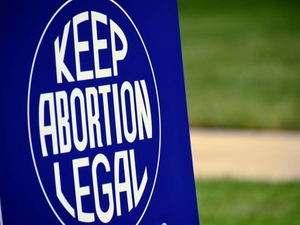
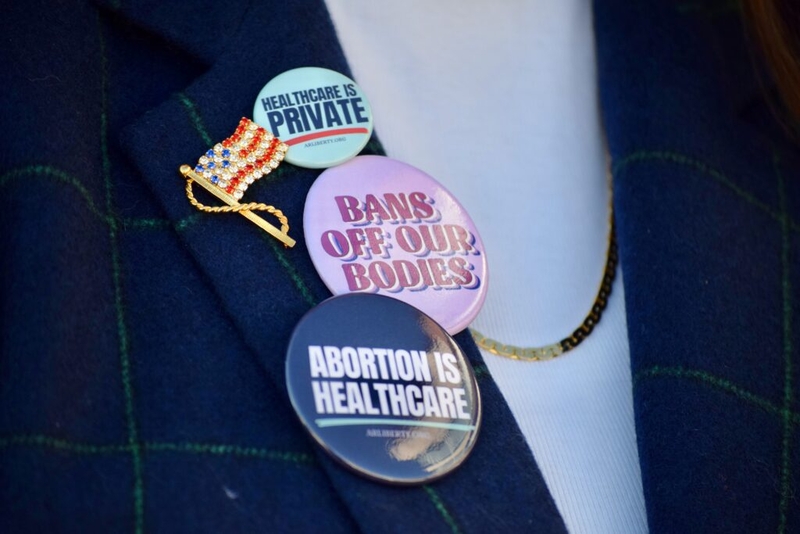
Arkansans for Limited Government kicked off its signature gathering initiative at a rally on Jan. 28, 2024 in Fayetteville. The group is behind a ballot initiative that would guarantee a limited right to abortion in Arkansas. (Antoinette Grajeda/Arkansas Advocate)
Two women who were unable to get abortions have joined the lawsuit filed earlier this year challenging Arkansas’ near-total ban on the procedure, according to an amended complaint filed Thursday.
Arkansas has banned abortion, with a narrow exception to save a pregnant person’s life, since June 2022 under a law that took effect when the U.S. Supreme Court overturned Roe v. Wade. Six women and a physician argue that the ban should be struck down in its entirety, and they ask for the law to be blocked for the duration of the court proceedings.
The lawsuit is the first filed by Amplify Legal, the litigation arm of Abortion in America, an abortion-rights advocacy group co-founded by former Planned Parenthood President Cecile Richards, who died last year.
Amplify Legal’s argument in the lawsuit is that the abortion ban violates the Arkansas Constitution’s provision that “enjoying and defending life and liberty [and] pursuing their own happiness” are “inherent and inalienable rights.”
One of the two new plaintiffs is an Oklahoma resident whose nearest source of obstetric care is in Fort Smith. She was denied care for her ectopic pregnancy in February because an OB/GYN feared prison time, according to the complaint.
Arkansas law makes it a felony punishable by a maximum prison sentence of 10 years, a maximum fine of $100,000 or both for a medical professional who performs an abortion.
The other new plaintiff is Kishaya Holloway of northwest Arkansas, who learned she was pregnant in late January. She decided years ago that she does not want children, she said in an interview.
Abortion is legal in Kansas up to 22 weeks of pregnancy. Holloway received an abortion there in February when she was nine weeks pregnant. She said she faced some anxiety-inducing obstacles, such as rescheduling the appointment due to bad weather and having to pay for the procedure on a credit card that she is still paying off.
“I felt like I had to go through all these loops and jump through all these hoops in order to live a life that I want for myself,” Holloway said.
She also said she is proud of her decision not only to have the abortion but to participate in the lawsuit.
Holloway’s participation is important because her reason for seeking an abortion differs from that of the other plaintiffs, said Molly Duane, the lawsuit’s lead attorney and the litigation director of Amplify Legal.
Emily Waldorf, the lead plaintiff in the case who lives in Fayetteville, received abortion care in Kansas in 2024 after she learned her pregnancy was nonviable at 17 weeks. Waiting five days for care in northwest Arkansas left Waldorf hemorrhaging and at risk of infection, according to the complaint.
Once you ban any type of reproductive health care, you effectively ban it all, particularly in the way that the ban here is written.
Roughly 2,600 Arkansans traveled to Illinois or Kansas to receive abortion care in 2024, according to data from the Guttmacher Institute, a reproductive rights policy and advocacy group.
Besides Holloway and Waldorf, three of the other four women plaintiffs received abortions out of state. Two had nonviable pregnancies and one had been sexually assaulted, according to the complaint.
The sixth woman, Theresa Van of Fort Smith, continued her pregnancy for seven weeks after learning it was nonviable because doctors denied her an abortion. She and her husband discussed plans for her funeral if she did not survive the pregnancy, according to the complaint.
The legal landscape
In addition to the inalienable rights argument, the plaintiffs’ case relies on the constitutional law principle that a criminal law cannot be too vague for people to know how to comply with it.
Act 387 of 2025 clarifies that doctors can perform abortions to save a pregnant Arkansan’s life within “reasonable medical judgment.” The Legislature passed the law with bipartisan support, and conservatives have said the new statute provided enough clarity to make Amplify Legal’s lawsuit unnecessary, Duane said in an interview.
However, the Oklahoma plaintiff’s experience “is crystal-clear evidence that that just simply is not true,” Duane said.
“Once you ban any type of reproductive health care, you effectively ban it all, particularly in the way that the ban here is written,” she said.
The lawsuit’s seventh plaintiff is Dr. Chad Taylor, an obstetrician-gynecologist practicing in Little Rock. He “regularly encounters patients with obstetrical complications where it is unclear to him and his colleagues if the standard of care for that patient — offering termination — is still legal,” the amended complaint states.
Lawsuit says Arkansas’ near-total ban on abortion violates state’s constitution
The defendants in the lawsuit are the state of Arkansas, Attorney General Tim Griffin, Gov. Sarah Huckabee Sanders, Health Secretary Renee Mallory, the Arkansas State Medical Board and the three prosecuting attorneys representing the home counties of the six plaintiffs who live in Arkansas.
The anti-abortion group Americans United for Life has consistently recognized Arkansas for its anti-abortion policies. Sanders spokesperson Sam Dubke mentioned this in a statement Thursday, the same statement he gave in response to the lawsuit’s initial filing.
“Arkansas was named the most pro-life state in the country for the sixth year in a row not just because the Sanders Administration offers complete protection for the unborn, but also because Governor Sanders has made needed investments in foster care and adoption, maternal health, and childhood wellbeing,” Dubke said. “Governor Sanders looks forward to defending Arkansas’ pro-life laws in court.”
Griffin issued a similar statement.
“Arkansas is the most pro-life state in the country, and I will continue to vigorously defend our laws that protect the lives of unborn children,” Griffin said through a spokesperson.
The defendants filed a motion in March to dismiss the complaint. The state has sovereign immunity, meaning it cannot be sued in its own courts, Arkansas Solicitor General Autumn Hamit Patterson wrote in the motion.
Pulaski County Circuit Judge Cara Connors is overseeing the case.
The lawsuit faces an uphill battle if it eventually winds up before Arkansas’ Supreme Court, where five of the seven justices have Republican ties.
The state also has anti-abortion language in its constitution. Arkansas Constitutional Amendment 68 mandates that no public funds shall be used for abortion except to save a pregnant person’s life. Attorneys for the women have said, however, that provision doesn’t override their fundamental rights enshrined in the state Constitution.
Amplify Legal is working on several other abortion-related legal challenges that will be filed later this year in other states, Duane said. The organization is also filing an administrative complaint with the U.S. Department of Health and Human Services, alleging that three hospitals — two in Fort Smith and one in Oklahoma City — violated the Emergency Medical Treatment and Labor Act by denying care for the Oklahoma woman’s ectopic pregnancy.
Last year, the federal health department rescinded guidance issued in July 2022 that emphasized hospitals are responsible for providing emergency abortion care despite state bans, saying it does not reflect the Trump administration’s policy.
- 12:19 pmThis story has been updated with comments from the governor's office and the attorney general.
Little Rock