Michigan environmental organizations urge newly-elected officials to act on PFAS contamination
Nov 29, 2026 | 11:00 am ET
Description
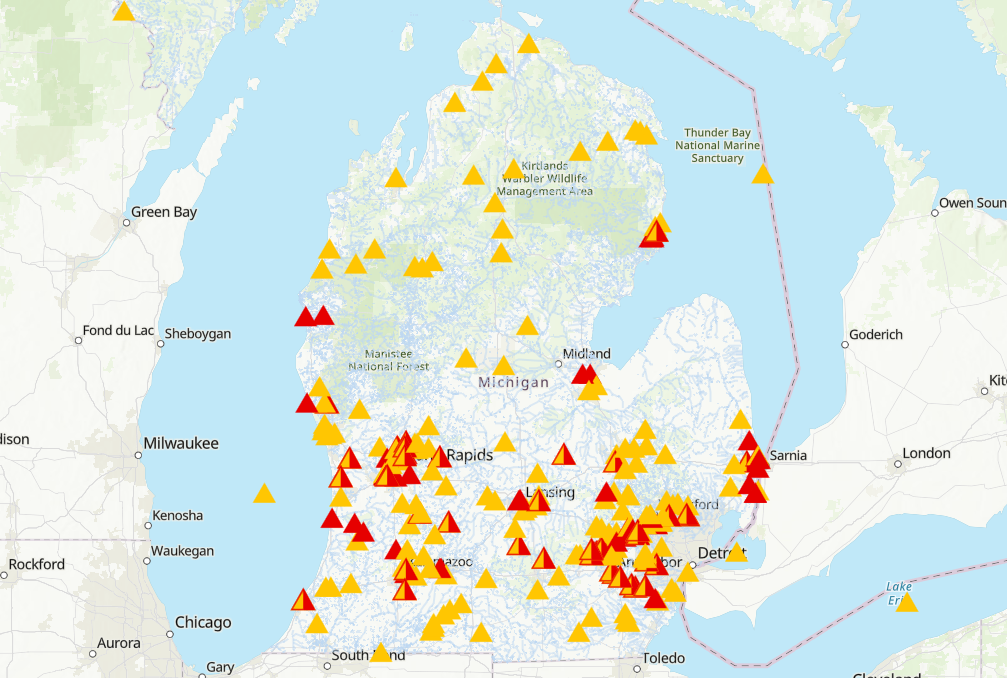
Screenshot of the Eat Safe Fish Interactive Map by the Great Lakes PFAS Action Network.
As the year draws to a close and lawmakers prepare to take office at both the state and federal level, a trio of organizations centered on environmental issues are pushing lawmakers to address the spread of PFAS pollution in Michigan.
The Great Lakes PFAS Action Network, the National Wildlife Federation and the Ecology Center are highlighting an online PFAS fish consumption advisory map as a visual representation of the extent of PFAS contamination and a call to action for policymakers.
Launched in 2025 in a collaboration between the network and the Ecology Center, the map collects information from the Michigan Department of Health and Human Service’s 2026 “Eat Safe Fish” guides into an interactive map, allowing anglers to view which waterways are subject to “Do Not Eat” warnings and other consumption advisories.
“For many Michiganders, fishing is not just recreation – it’s a tradition, a way of life, a means to put food on the table,” Tony Spaniola, co-chair of the Great Lakes PFAS Action Network said in a statement. “As thousands of anglers continue to fish Michigan’s lakes, rivers, and streams, this tool serves as a critical resource to ensure people know if the fish they are catching are safe to eat. But Michigan also needs stronger legislative action to stop toxic PFAS at its source, help address contamination impacting our communities, and ensure Michiganders are not alone in trying to protect their health.”
Per- and polyfluoroalkyl substances, or PFAS, are a family of chemicals used in a wide variety of products, ranging from nonstick cookware to firefighting foam. PFAS exposure has been linked to a number of harmful health effects including reproductive issues, immune system disorders and increased risk for multiple types of cancer.
Because these chemicals break down slowly, they are often referred to as forever chemicals. As a result, PFAS can build up in the bodies of humans and animals over time.
In addition to creating the map as a tool to help people make informed decisions about their health, Erica Bloom, the toxics campaign director for the Ecology Center, said the platform was also designed to to help lawmakers understand the extent of contamination in the areas they represent.
In addition to searching for a specific waterbody, users can also look at contaminated sites within the bounds of each U.S. House, state Senate and state House district.
As the Michigan Legislature begins a new session in 2027, the three environmental groups are encouraging lawmakers to take action to prevent further fish contamination and protect public health.

Lansing, MI