Montana to receive $239 million in rural federal healthcare money
Nov 27, 2026 | 3:19 pm ET
Description
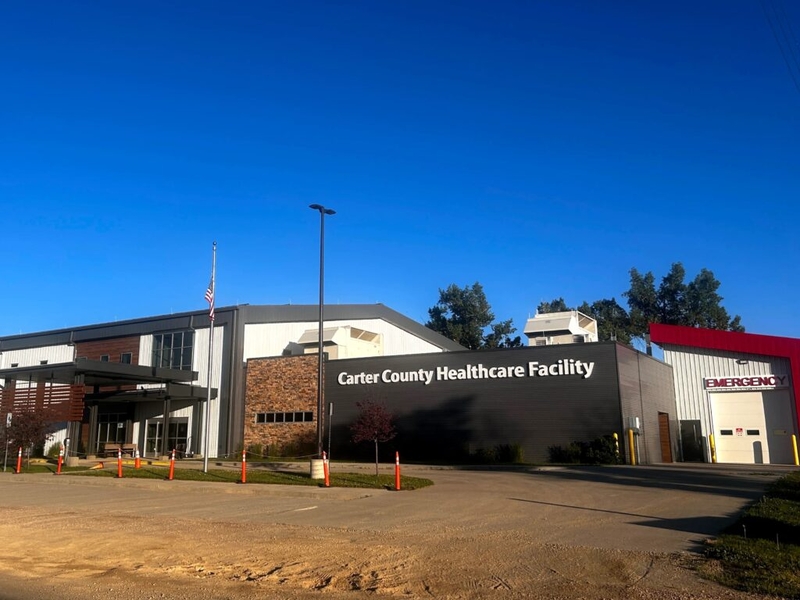
The hospital in Ekalaka, a small town in sprawling, rural southeastern Montana, sits at the intersection of two dirt roads. (Photo by Arielle Zionts | KFF Health News)
As Montana lands another massive grant for rural health care — $239 million this time — professionals in the field say providers and patients soon will feel benefits from the federal program.
The recent Rural Health Transformation Program award was third-highest among all states, following an award in the first round that totalled $233 million to Montana. Members of the health community say initial funding built the infrastructure to support rural care, and the additional dollars will pay for things such as patient care and EMS services.
The Governor’s Office, in a joint press release with the state’s Department of Public Health and Human Services, said the award will “support efforts to strengthen rural health care, expand access to services closer to home, and help providers build financially sustainable operations.”
In a press release, health department Director Douglas Harrington said the increase in funding was due to the state’s success in the first year of the grant program. The state has now received about $473 million in total from its two applications for the federal money.
“The increased award reflects our first-year performance, a clear plan for Year Two, and the hard work of Montana’s RHTP team,” Harrington of the Rural Health Transportation Program. “In the first year, we built partnerships, committed funds, and put tools in place to support long-term improvements. In Year Two, we will build on that foundation to help rural facilities strengthen their operations, modernize health records, and expand access to care in rural and tribal communities.”
Advocacy organizations, including the Montana Medical Association, say the funding stream has been beneficial.
“We’re really diving in, and all of the partners involved are really taking this as a very important effort and making sure that we can keep Montana healthy,” Montana Medical Association CEO Leeann Sherman said in an interview.
Workforce development is one key area Sherman identified, saying that when looking at the total number of people in the medical profession per capita, Montana is “at least 30 to 40% too low in physician care,” adding that includes nurse practitioners.
She added that the state health department has done a good job addressing the workplace shortages, but that conversation includes other topics such as where people choose to do their medical residencies, as well as student loan debt.
“A lot of people leave Montana to go do residency programs,” Sherman said. “Well, if you move to Chicago or New York or Arizona or somewhere else and you do your residency program, are the odds that you’re going to come back to Montana?”
She added that it’s a conversation that’s happening with them and the Graduate Medical Education Council.
“It’s a huge gap — very huge gap — of physicians and other medical professionals in Montana serving Montana communities,” Sherman said.
Workforce development received $22.1 million from the state’s first grant application, rural facility sustainability got $84.3 million, work geared towards innovative care delivery got $37 million, work to improve community health received $40.9 million and technology modernization was $35.5 million of the initial grant award. Administrative and other costs totaled $13.7 million.
There are questions about the money and how it’s trickling down, Sherman said, who preached patience.
“I think that there’s just an anticipation from people in the community, but also in our profession, that are saying, ‘Where’s the money? What’s happening? It’s been a year from the first (grant award), and now we’re getting awarded the second year, and we don’t see any benefit,’” Sherman said. “And I would just kind of temper that with, absolutely, and there will be transformation coming, but you have to set up an infrastructure, and we have to set up ways to be able to get that money out, and to be able to truly assess where the money needs to go.”
More than 130 providers, organizations, and agencies received grants in the first year of the award, health department spokesperson Jon Ebelt wrote in an email.
The second year of the cycle will shift into “operational expansion” across the state, Ebelt said. Investments from the grant highlighted by the state include money going to supporting rural EMS and an expansion of community-based care.
“A lot has happened to give us that foundation,” Sherman said. “And so now you’re going to start to see more and more things being brought to the public.
The state will be using the second year of the grant to produce community assessments of healthcare needs across the state, modernize recordkeeping, expand tribal healthcare initiatives and continue funding workplace development programs for the medical field.
“This investment builds on the partnerships we established in the first year of the Rural Health Transformation Program to strengthen emergency services, support our rural health care workforce, and help local providers deliver care for years to come,” Montana Gov. Greg Gianforte said in the press release.
Helena, MT